1985 Honda Civic CRX Si hatchback coupe

“Fuel injected fun.”

For 1985, Honda put one of its hottest four-cylinder engines into its tiny CRX, creating the Si. Si stood for Sports, injected, and the new EW3/4 engine was a multiport fuel-injected version of the carburetted 1.5 liter/91 ci engine that had been the top of the line in 1984.

Horsepower was 91 bhp at 5,500 rpm, up 20% from the carburetted engine. This increase doesn’t sound like much, but the CRX only weighed about 1,800 pounds—to get the same power-to-weight ratio in a 2025 Honda Civic sedan, you would need 150 bhp (interestingly, the 2025 Civic coupe has a … 150 bhp engine). Car and Driver recorded a 0-60 time of 9.1 seconds (Motor Trend reported 8.5 seconds) and a top speed of 112 mph. The EPA fuel economy rating with the required five-speed manual transmission was 32 city/36 highway by the day’s standards (27/33 by today’s measures).

Pages from the 1985 Honda CRX Si brochure

The CRX Si’s base price was $7,999—about $24,500 in 2025 dollars or almost exactly what a 2025 Civic sedan costs. Standard exterior equipment included a deep front air dam, halogen headlights, tinted glass, a power sunroof, a rear wiper/washer, and a rear spoiler molded of soft urethane instead of the hard plastic in other CRXs. Mechanical equipment included rack and pinion steering, power-assisted front disc/rear drum brakes, and 175/70R13 tires (a size last seen on the 2005 Hyundai Accent) on 5.0-inch-wide aluminum alloy wheels. Inside, reclining Sport bucket seats with adjustable headrests, a tachometer, and a trip odometer were standard.

Since the CRX Si came pretty loaded by Honda standards, there were no factory options. The Si received an exclusive black paint option in place of the white available in other CRXs—red or blue were also available. Air conditioning was available only as a dealer accessory, as were a rear speaker and a choice of various car stereos: Honda would continue to sell AC as a dealer accessory well into the 1990s.

The View From 2025

According to Hagerty’s valuation tools, all the money for a 1985 CRX Si in #1/Concours condition is an astounding $57,900, with a more normal #3/Good condition car going for $20,800. I don’t see many first-generation CRX Si’s come up for sale in either the Hemmings Motor News classifieds or on eBay Motors. However, there is good club support for the CRX at Red Pepper Racing, and they maintain a semi-regular presence on Bring a Trailer.

Make mine Black, please. It looks sharp with the red band on the new for 1985 charcoal gray body cladding.

Other Hondas I have written about include the 1982 Honda Prelude Sport Coupe, the 1983 Accord sedan, the 1983 Civic S hatchback coupe, the 1984 Civic DX hatchback coupe, the 1984 Civic CRX hatchback coupe, the 1986 Accord sedan, the 1986 Prelude Si coupe, and the 1988 Civic sedan.

Last updated August 2025.

1985 Toyota MR2 coupe

One of my favorite high-school teachers owned an MR2—she caused somewhat of a stir when she showed up in it the first time.

“Fun is taking the all-new MR2 out to play.”

The MR2 was undoubtedly one of the most interesting cars Toyota brought to market in the 1980s (development had begun in 1976). Visually evolved from the SV-3 concept car shown at the 1983 Tokyo Motor Show, MR2 stood for “midship runabout 2-seater”.

A small sports car (about thirteen inches shorter than a 2025 Toyota GR86 hatchback coupe) with an angular wedge body, the MR2 became available for the 1985 model year, entering a market that already included the Bertone (formally Fiat) X1/9 and the Pontiac Fiero.

The MR2’s engine was the 16-valve 1.6 liter/97 ci 4A-GE fuel-injected double-overhead-cam inline four, with 112 bhp. Paired with the standard five-speed manual transmission (a four-speed automatic transmission was optional) in the 2,400-pound “Mister Two,” this engine was good for 0-60 in under 9 seconds (Car and Driver recorded 8.2 seconds) and a top speed of about 120 mph. Fuel economy was impressive: 27 city/32 highway by the day’s standards (23/29 by modern measures). With a 10.8-gallon fuel tank, an MR2 owner could expect a range of 250 to 285 miles with a 10% fuel reserve.

1985 Toyota MR2 press release photo
1985 Toyota MR2 press release photo, courtesy of Toyota

The 1985 MR2 coupe’s base price was $10,999—about $33,700 in 2025 dollars or almost exactly what a 2025 Toyota GR86 Premium hatchback coupe costs. Standard exterior and mechanical equipment included tinted glass, rack-and-pinion steering, power disc brakes with ventilated front rotors, and 185/60R14 steel-belted radial blackwall tires (a size still readily available) on 14-inch alloy wheels. Inside, a 7-way adjustable driver’s seat, a leather-wrapped tilt steering wheel, dual power remote side mirrors, an electric rear defogger, and an AM/FM/MPX stereo radio were included in an interior that many considered roomy for the MR2’s size.

Options, A Package, Period Reviews, & Production Numbers

Individual options available for the 1985 MR2 included a moonroof with sunshade ($300), a rear spoiler ($150), automatic air conditioning ($840), cruise control ($185), power windows and locks ($305), and an AM stereo/FM stereo radio with cassette ($365). The Power Package ($305) included power windows and power locks. It wasn’t hard to load an MR2 up to $13,400 or so—about $41,000 in today’s dollars.

MR2s got really good reviews from the likes of Motor Trend (winning “Import Car of the Year”), Road & Track, and, later, Automobile—who famously compared it to a Ferrari 308 and found the MR2 to be the winner. Toyota sold 32,314 MR2s in 1985—impressive numbers for a brand-new product line.

The View From 2025

MR2s do have club support, including a reasonably active forum. According to Hagerty’s valuation tools, a 1985 MR2 in #1/Concours condition is $34,100, with a more normal #3/Good car going for $12,000.

Though MR2 sightings are relatively rare in the Hemming’s Motor News classifieds, first-generation MR2s (sold up until the 1989 model year) show up fairly often on eBay Motors and on Bring a Trailer. When I updated this blog entry in April 2025, there was a Super Red 1987 with black leather seats, a five-speed manual, and 181,000 miles on Hemmings, asking $15,500.

Make mine the same Super Red as the one owned by that high school teacher, please.

Other sporty Toyotas I’ve written about include the 1981 Celica Sport Coupe, the 1982 Celica Supra hatchback coupe, the 1984 Corolla SR5 Sport Coupe, and the 1988 Supra hatchback coupe.

Last updated August 2025.

1985 Oldsmobile Ninety-Eight Regency sedan

“It goes beyond the Ninety-Eight of your mind to the Ninety-Eight of your dreams.”

The 1985 Oldsmobile Ninety-Eight Regency sedan was substantially downsized from the previous year and switched to front wheel drive. Overall length dropped over two feet from 221.1 inches to 196.1 inches.

Standard power (if you could call it that) came from the LK9 110 bhp 3.0 liter/181 ci V6 with a two-barrel carburetor. Optional engines were the 125 bhp LG3 3.8 liter/231 ci multi-port fuel-injected V6 and the LS2 4.3 liter/261 ci V6 diesel (don’t do it!) putting out all of 85 bhp (at least it had 165 lb-ft of torque). All engines were teamed with a four-speed automatic transmission. Both the 3.0 liter V6 and the diesel V6 would be gone by the time the 1986 model year rolled around.

Mileage for the standard engine was 18 city/25 highway by the 1985 measures (16/23 by today’s standards). Hilariously, the upmarket 3.8 liter engine was rated at 19 city/26 highway, the multi-port fuel injection more than making up for the increased displacement. Buyers of the diesel could expect 22 city/32 highway. With an 18-gallon gas tank, a Ninety-Eight Regency owner could expect a range of about 315 to 350 miles with a 10% fuel reserve. The target market probably didn’t care about 0-60 times, which was a good thing; the best case was likely about 12 seconds.

Standard mechanical equipment on the $14,665 (approximately $44,800 in 2025 dollars) Ninety-Eight Regency included an automatic leveling system, power rack-and-pinion steering, power front disc brakes, and P205/75R14 steel-belted radial-ply white-stripe all season tires (a size still available thanks to Hankook and Kumho) on 14-inch wheels with bright deluxe wheel discs. Inside, four-season air conditioning, an AM/FM stereo radio, a six-way power driver’s seat, power door locks, power mirrors, and power windows were all standard.

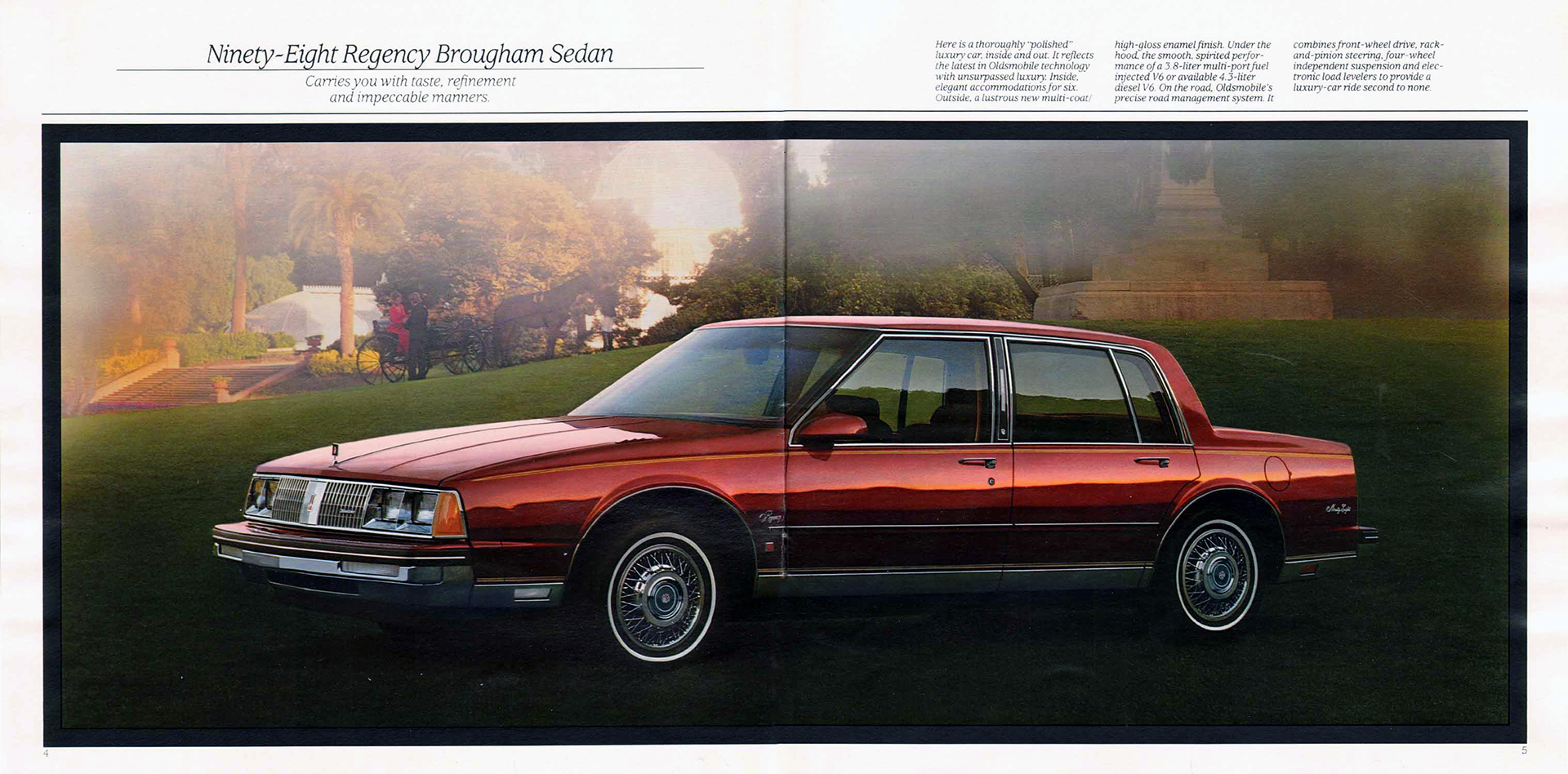
Brougham pages from 1985 Oldsmobile Ninety-Eight Regency brochure

Stepping up to the $15,864 (approximately $48,400 in today’s dollars) Ninety-Eight Regency Brougham made the 3.8 liter engine standard and added simulated wire wheels with locks, fancier seats, a deluxe steering wheel with tilt-away feature, and intermittent windshield wipers—along with over 300 pounds of weight.

Options & Production Numbers

Individual options included an Astroroof ($1,230), cornering lamps ($60), an electronic air conditioner ($125), and Twilight Sentinel headlamp control ($60).

These C-bodies (there were also Buick and Cadillac versions) had a stately appearance. Big and (I think) handsome, they had a lot of interior room despite the downsizing—at 110 cubic feet, they had only two cubic feet less than the 1984.

Sales of the 1985 Ninety-Eight Regency sedan were good—at almost 155,000, more than double the approximately 69,000 that had been sold in 1984. A little over 70% of Regency buyers opted to move up to the Brougham.

The View From 2025

1000 views badge

C-body Ninety-Eight Regency sedans sometimes come up for sale in the Hemming’s Motor News classifieds and on eBay Motors. Bring a Trailer has sold one of this era, and it was a diesel.

Make mine Platinum Metallic, please.

Other 1985 Oldsmobiles I have written about include the Cutlass Ciera sedan, the Cutlass Supreme coupe, and the Firenza ES sedan.

Last updated June 2025.

Some Long Distance Travel In An Eighties Car

Last month, my wife and I took a 6,281 mile “jaunt” in my eighties car – a 29 1/2 year old 1985 Light Blue Metallic Chevrolet Corvette coupe.

Last year, Lauren challenged me, causing me to me to write this … screed in May 2013:

“It’s Not The Same As It Was In 2004 …

… I took the 1985 out for some miles today and I noticed some things.

It’s a more tenuous feeling taking her out than it was in 2004. Of course, that was 33,000 miles ago, but the car seems more … fragile. I’m mindful of all that sweat equity (mine and many others) in it and the knowledge that it is now so … old. Less and less early C4s on the road for any reason and she’ll be thirty (!) years old in November 2014.

The car judges well and drives acceptably but the problems remain present and they are a litany: the “dumb as a bag of rocks” computer, the creaks and rattles in the interior, the passenger side power window near death, the console light that keeps slowly melting the console plastic, the seats and steering wheel not far from a recovery, the repaint that is who knows how many thousands of miles out, the characteristic droops on both front and rear bumpers that will need to be fixed with the repaint. They’re known problems and they can get fixed: but some of them (seats, repaint, bumpers) will require cubic dollars.

Continue reading “Some Long Distance Travel In An Eighties Car”

1985 Buick Somerset Regal coupe

Welcome, Jalopnik and Autoblog readers! We have many meh cars at Eighties Cars—the unloved category covers most of them.

I saw a reasonably original Buick Somerset Regal with Dark Gray Metallic paint on a side road in Philadelphia in March 2104. It was the first one I’d seen in many years.

“There has never been a Buick quite like the Somerset Regal”

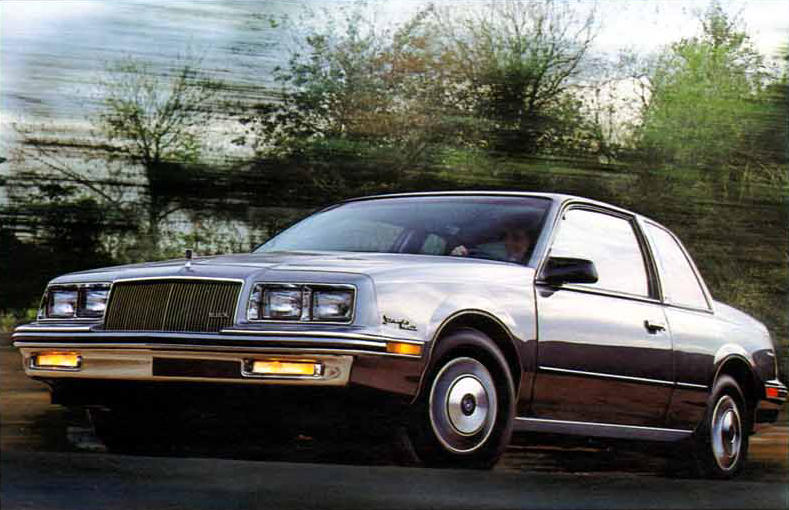
Buick’s Somerset Regal was a new model for 1985. Available initially in coupe form only, Buick’s version of the N-body (Oldsmobile had the Calais, and Pontiac had the Grand Am) was designed to at least partially replace the Skylark. It failed miserably, only surviving for three years before being subsumed back into the Skylark product line. Respectable first-year sales of 86,076 declined to 75,620 in 1986 and 46,501 in 1987.

Exterior photo of Somerset Regal from 1985 Buick brochure
Exterior photo of the Somerset Regal from the 1985 Buick brochure

The Somerset Regal was not a big car by today’s standards. With 180 inches of length and a 103.4-inch wheelbase, it is within shouting distance of a 2025 Honda Civic sedan, which is 184.8 inches long and has a 107.7-inch wheelbase. Of course, cars, in general, have gotten a lot bigger in these thirty years—the Somerset Regal was notably more substantial than the 1985 Honda Accord.

The standard powertrain was a Tech IV 92 bhp 2.5 liter/151 ci inline four with throttle body fuel injection (a slightly upgraded Iron Duke) paired with a five-speed manual transmission, but I believe most buyers went with the optional ($425) three-speed automatic instead. The hot set-up (if you could call it that) was the optional ($560) LN7 125 bhp 3.0 liter/181 ci multi-port fuel-injected V6, only available with the automatic. 0-60 times ranged from 11 to 13 seconds.

Mileage for the inline four and five-speed manual combination was an impressive 24 city/34 highway by the day’s standards (21/31 by 2025 measures). Choosing the more realistic three-speed automatic cost two mpg, while upgrading to the V6 dropped you all the way down to 20 city/26 highway. With a 13.6-gallon gas tank, owners of the most profligate powertrain combination could expect a range of between 255 and 280 miles with a 10% fuel reserve.

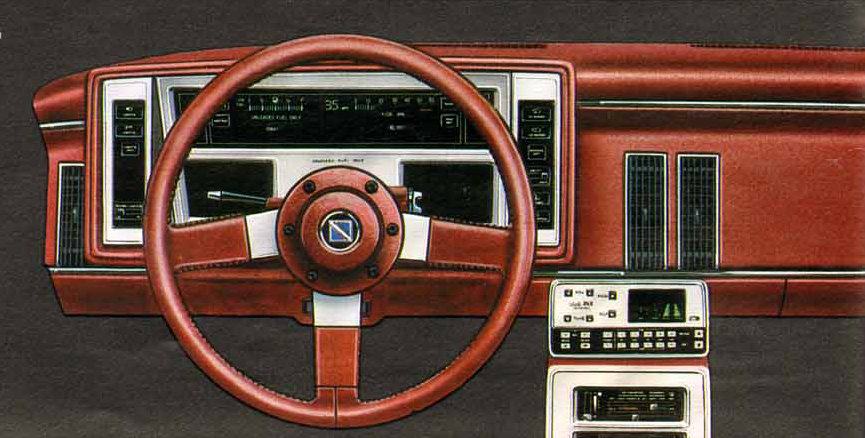
Interior of the Somerset Regal brochure from the 1985 Buick brochure
Interior of the Somerset Regal from the 1985 Buick brochure

For the Somerset Regal’s $8,857 base price (about $27,100 in today’s dollars), standard equipment included power brakes, power steering, tungsten-halogen headlights, and body-colored bumpers. The interior included cloth or vinyl bucket seats, a center console, brushed metal accents, electronic digital instrumentation (somewhat upmarket at the time), and an AM radio. Moving up to the Limited trim added dual horns, chrome bumpers, and courtesy lamps, along with snazzier cloth seats and an upmarket steering wheel.

Standard features that date the Somerset Regal included the Delco Freedom II Plus battery, front and rear ashtrays in the console, and the P185/80R13 tires (now considered a trailer size) on 13-inch wheels.

Options

Options included the $645 air conditioning (in the mid-1980s not yet standard on most cars), cruise control ($175), leather seats ($275 and only available with the Limited), power door locks ($130), power windows ($195), Vista-Vent sunroof, Delco GM/Bose Music System AM/FM stereo cassette ($995!), cast-aluminum wheels ($229), and a Gran Touring suspension ($27).

The View From 2025

Badge for 2,500 web hits

These Somerset Regals are now almost completely gone. Bring a Trailer did sell a very rare 1986 Somerset T-Type (Buick removed the Regal part of the name after only one year) in mid-2023. I haven’t seen one in the Hemming’s Motor News classifieds or on eBay Motors in several years.

Make mine Medium Blue Metallic, please.

I have also written about the 1985 Pontiac Grand Am coupe, which had a lot more success. Other smaller front wheel drive Buicks I have written about include the 1983 Skylark T TYPE coupe and the 1984 Skyhawk coupe.

Last updated in August 2025.

1985 Chevrolet Camaro IROC-Z hatchback coupe

“Make the earth move.”

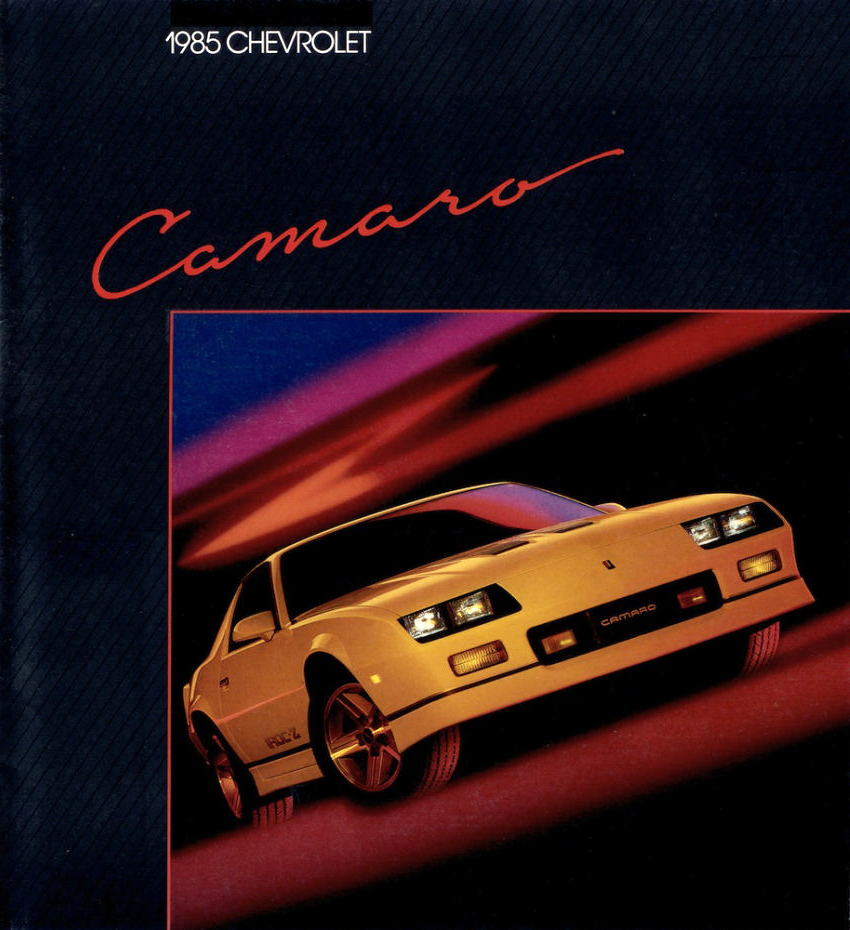
In 1985, Chevrolet kicked the third-generation Camaro up a notch (or more) with the release of the IROC-Z, inspired by the International Race Of Champions race series. The IROC-Z was an option package (B4Z) for the Z28 and cost $659 in addition to the Z28‘s $11,281 base price.

Front cover of the 1985 Chevrolet Camaro brochure

Suspension upgrades specific to the IROC-Z included Delco/Bilstein shock absorbers for the rear wheels and 16-inch wheels all around with Goodyear Eagle GT P245/50VR16 tires—large for the day and a size still readily available.

The IROC-Z also included louvered hood inserts and more aggressive ground effects and spoilers than the Z28. Finally, it was lowered half an inch compared to the Z28.

Three engines were available in 1985 for the IROC-Z, all sized at 5.0 liter/305 ci: standard was the LG4 carburetted motor at 155 bhp. The optional engines available depended on transmission—if you chose the five-speed manual, you could get the High Output carburetted L69 with 190 bhp ($680 and not available on the garden variety Z28) while if you went with the four-speed automatic ($425), you could choose the Tuned Port Injection LB9 at 215 bhp ($695).

Performance with the LB9 was impressive—Motor Trend recorded a 0-60 time of 6.9 seconds. If you cared (and I think most of the target market did not), mileage wasn’t great: the EPA ratings of the day were 16 city/22 highway for the LG4, 15/24 for the L69, and 16/22 for the LB9. With a 16.1-gallon gas tank, the proud new owner of an IROC-Z could expect a range of 250 to 275 miles with a 10% fuel reserve.

Standard equipment on all versions of the Z28 included Sport mirrors, rack and pinion steering, power front disk/rear drum brakes, reclining front bucket seats, a folding rear seat, and an AM radio with dual front speakers.

Options & Production Numbers

Options included four-wheel disk brakes ($179), Custom cloth front bucket seats ($359), a six-way power driver’s seat ($225), air conditioning ($750), Comfortilt steering wheel ($115), power door lock system ($130), power windows ($195), electronic speed control with resume speed ($175), and a rear window wiper and washer ($125). A range of stereos was offered up to an electronically tuned AM/FM stereo radio with seek and scan, a cassette tape player, a clock, and a graphic equalizer ($469).

Chevrolet sold 21,177 IROC-Z versions out of 68,199 Z28s in the 1985 model year, marking an impressive debut. One year later, the IROC-Z would account for 56% of Z28 sales, and in 1988, Chevrolet would phase out the Z28 in favor of the IROC-Z.

The View From 2025

According to Hagerty’s valuation tools, all the money for a 1985 IROC-Z with the top-of-the-line TPI motor and t-tops in #1/Concours condition is $52,500, with a far more normal #3/Good condition version going for $20,200. IROC-Zs regularly appear in the Hemming’s Motor News classifieds, on eBay Motors, and at online auctions such as Bring a Trailer that cater to the eighties car market. As I update this blog entry in June 2025, there’s a Yellow 1985 IROC-Z with 66,000 miles for sale on Hemmings, asking $29,500.

Please make mine Red, with the optional and expensive when new ($846) t-tops. I know they often leak, but I like the look.

Other third-generation Camaro hatchback coupes I have written about include the 1982 Z28 Indy 500 Commemorative Edition, the 1984 Sport Coupe, and the 1986 Berlinetta. I have yet to write about any of the 1987 through 1989 Camaro convertibles.

Last updated June 2025.

1985 Ferrari Testarossa coupe

When it debuted for the 1985 model, the Ferrari Testarossa had big shoes to fill—it replaced the undeniably beautiful Berlinetta Boxer, which itself had replaced the undeniably beautiful Daytona.

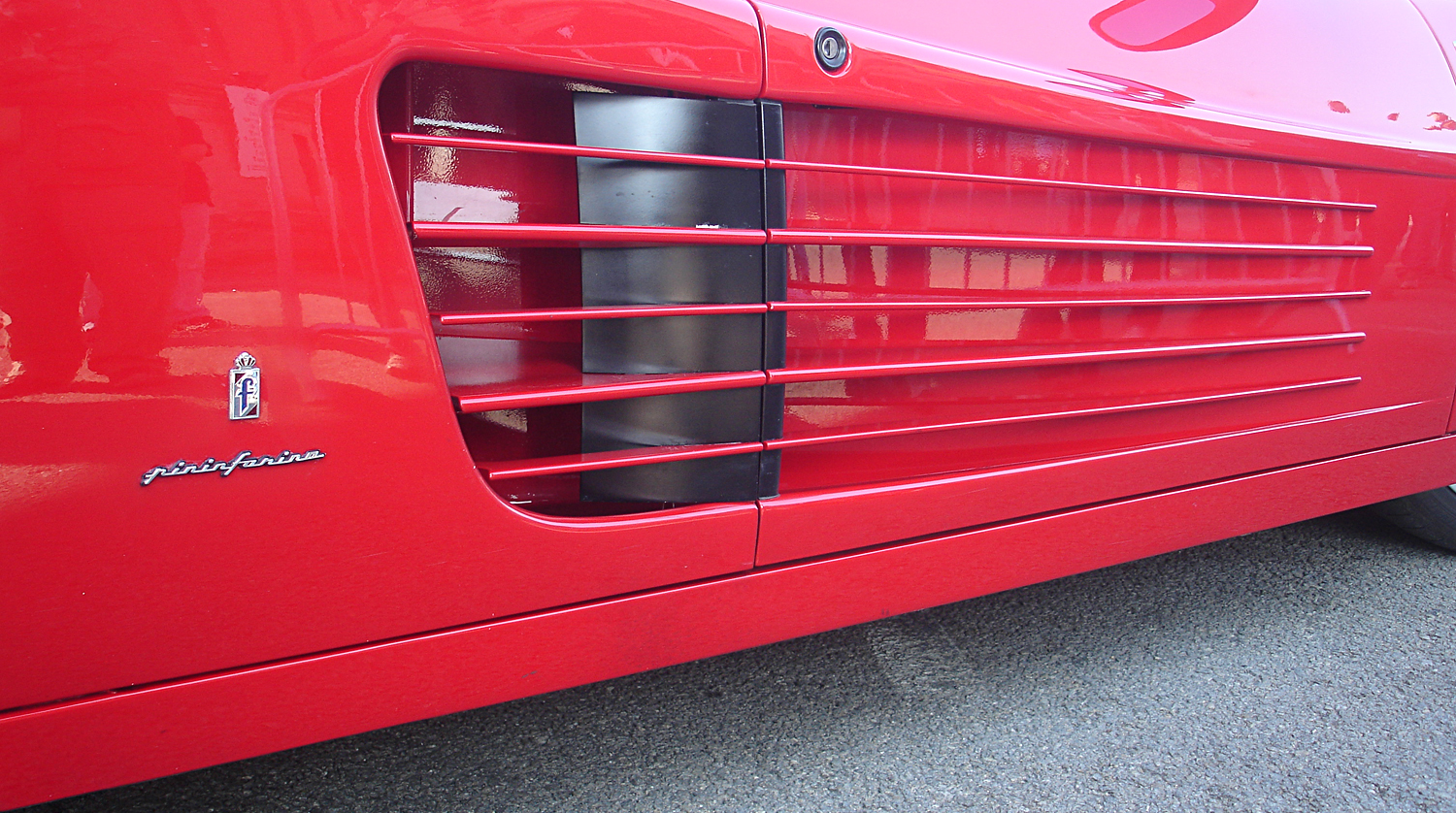
testarossaintake
Close up of the “cheese grater” side strakes on the Ferrari Testarossa.

Sergio Pininfarina’s styling for the Testarossa was not undeniably beautiful, but it definitely was striking. The defining feature was the side strakes covering the radiator intakes, often referred to as “cheese graters.”

The strakes were at least functional, feeding the two side radiators that cooled the Bosch K-Jetronic port fuel-injected 4.9 liter/302 ci 380 bhp flat 12 cylinder engine—crazy power for the mid-1980s. Mileage (not that the target market cared) was flat-out awful10 city/15 highway by the day’s standards (9/14 by today’s standards). At least the 30.4-gallon gas tank meant you could go around 315 to 340 miles before looking for more fuel.

The Testarossa was a Ferrari that reflected the times—it was big (almost six inches wider and 200 pounds heavier than the Berlinetta Boxer it replaced) and flashy. It was also pricey; at $90,000 and up (over $272,000 in 2025 dollars), four times as expensive as a 1985 Corvette (not that too many buyers were cross-shopping the two). You did get at least a little comfort for your money—air conditioning, power seats, and power windows were all standard.

There continues to be disagreement over how good a car—or, more importantly, how good a Ferrari—the Testarossa was. It was undoubtedly fast: 0-60 came in 5.2 seconds, and top speed was about 180 mph.

The View From 2025

There is strong club support for the Testarossa, as there is for all Ferraris. According to Hagerty’s valuation tools, all the money for a 1985 Testarossa in #1/Concours condition is $253,000, with a more “normal” (if any Ferrari can be normal) #3/Good condition car going for $106,000. You see them advertised in the Hemming’s Motor News classifieds, though often it’s a notice of an auction. Bring a Trailer also auctions a reasonable amount of Testarossas.

Make mine that same Rosso Corsa, with the tan interior. My ex-wife prefers the “Miami Vice” white, but I think Testarossas (along with many Ferraris) left our list forever when she found out that you or your very expensive mechanic have to remove the engine from the car to do a “major service” every five years or 30,000 miles.

Other eighties Ferraris I have written about include the 1983 Berlinetta Boxer 512i coupe and the 1985 308 GTB Quattrovalvole coupe.

Updated in March 2025.