1983 Oldsmobile 15th Anniversary Hurst/Olds coupe

“A specialty car should be extra special.”

For 1983, Oldsmobile decided to add some glamor to the Cutlass Supreme line by bringing back the Hurst/Olds for the eighth time. Cars & Concepts took black Oldsmobile Cutlass Supreme Calais coupes and modified them to create a Hurst/Olds, adding silver lower paint accented by red and silver pinstripes. By far the most distinctive interior feature of the 15th Anniversary Hurst/Olds was the Hurst Lightning Rods automatic shifter with three separate gear levers—a transmission that required a page of instructions in the owner’s welcome brochure.

The powertrain was the LV2 180 bhp 5.0 liter/307 ci V8 with a Rochester 4MV four-barrel carburetor, mated to a four-speed automatic transmission. Special features for the Hurst/Olds engine included a long-duration camshaft, high-rate valve springs, and a specific ignition distributor—all of which made for a 29% horsepower gain over the “normal” 307. Car and Driver recorded a 0-60 time of 8.8 seconds in a car with a curb weight of 3,525 pounds. Fuel economy ratings were 17 city/27 highway by the day’s standards. With an 18.1-gallon gas tank, a 15th Anniversary‘s proud new owner could expect a range of 295 to 320 miles with a 10% fuel reserve.

1983 Oldsmobile Hurst/Olds print advertisement

The 1983 15th Anniversary Hurst/Olds coupe retailed for $11,844.60—about $39,200 in today’s dollars. Standard exterior and mechanical equipment included a front air dam, tungsten halogen headlamps, a hood power bulge, dual Sport mirrors, a rear decklid wing, a quick ratio steering box for the power assisted recirculating ball steering, power front vented disc/rear drum brakes, and P215/65R15 Goodyear Eagle GT raised white letter steel belted radial tires on chrome plated 15 x 7 Super Stock wheels. Inside, reclining front bucket seats, a Sport steering wheel, a full length center console, Rallye cluster gages with a tachometer, a quartz clock, and a 15th Anniversary dash plaque were included.

1983 Hurst/Olds buyers could choose between a Maple Red or a Sand Gray interior, but the gray is fairly rare. Mandatory options included the Four-Season air conditioner ($725).

Options & Production Numbers

Individual exterior and mechanical options included Soft-Ray tinted windows ($105), removable roof panels ($825), and a limited slip differential. Inside, a driver side 6-way power seat adjuster ($210), power door locks ($120), power side windows ($180), a tilt-away steering wheel ($105), and cruise control ($170) could be ordered. A range of stereos was available, along with a power front fender antenna ($60). All of these options meant things could get pricey—many 15th Anniversary coupes stickered for over $15,000 (about $49,600 in 2025 dollars).

Oldsmobile planned to produce 2,500 of the 15th Anniversary Hurst/Olds coupes, but eventually sold 3,001 units during the 1983 model year due to strong demand.

The View From 2025

There is definite collector interest in the 1983 Hurst/Olds, with forum support. According to Hagerty’s valuation tools, a 1983 15th Anniversary Hurst/Olds in #1/Concours condition is $48,100, with a far more normal #3/Good condition version going for $22,800. Eighties Hurst/Olds coupes are often available in the Hemmings Motor News classifieds, on eBay Motors, and at online auctions such as Bring a Trailer that cater to the eighties car market. As I write this blog entry in October 2025, there’s a 1983 15th Anniversary Hurst/Olds coupe with 40,000 miles for sale on Hemmings, asking $40,000.

Other rear-wheel-drive Cutlass-based Oldsmobiles I have written about include the 1980 Cutlass coupe, the 1981 Cutlass Supreme coupe, and the 1985 Oldsmobile Cutlass Supreme coupe. Another 1983 performance-oriented coupe from GM was the Chevrolet Monte Carlo SS.

1983 Chevrolet Camaro Z28 hatchback coupe

“… just about everything a road car should be.”

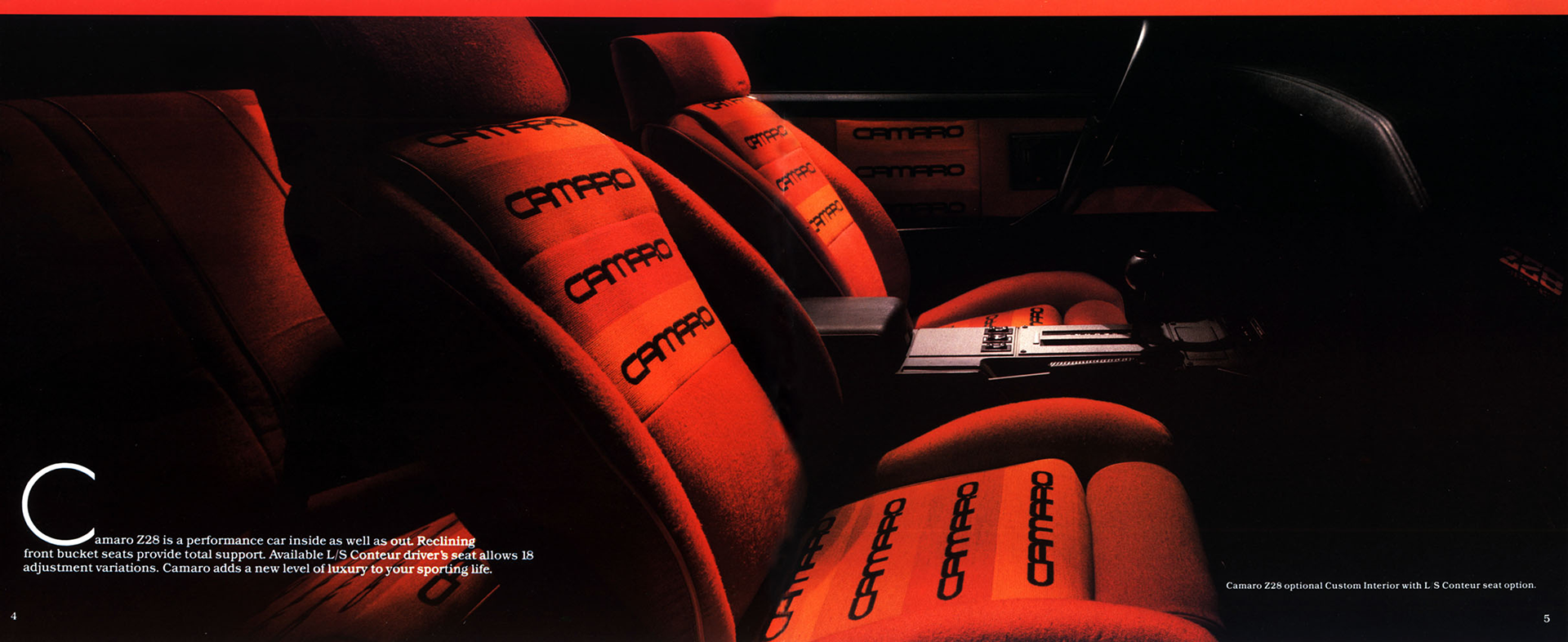
In its second year, changes to the third-generation Chevrolet Camaro Z28  centered on the powertrain. The Z28 gained a new standard Borg-Warner five-speed manual transmission and a new optional four-speed automatic. Both carryover V8 engines gained horsepower, and a new top-of-the-line H.O. engine became available mid-year. Detail changes included new patterns for the optional L/S Conteur bucket seats that repeated the Camaro name in the design. Chevrolet refined the instrument panel graphics, and electronically tuned stereo radios were newly available.

All Z28 engines for 1982 were variations of the Chevrolet’s 5.0 liter/305 ci V8. The Z28‘s standard engine was the LG4 with a four-barrel carburetor, uprated five bhp to 150 bhp. An optional $450 LU5 Cross-Fire with throttle-body fuel injection gained 10 bhp to 175 bhp and required the $295 automatic. In April 1983, the L69 H.O. with 190 bhp became available for $505 and required the five-speed.

Motor Trend recorded a 0-60 time of 7.4 seconds with the top-of-the-line H.O. motor and the five-speed—about 1.5 seconds faster than the best from 1982. Fuel economy ratings for the H.O. were 16 city/26 highway by the day’s standards—the highway rating two mpg better than 1982’s base engine. With a 16.1-gallon gas tank, a Z28 owner with the H.O. could expect a range of 250 to 270 miles with a 10% fuel reserve.

Z28 cutaway pages from the 1983 Chevrolet Camaro brochure

The 1983 Z28‘s base price was $10,336—about $34,200 in 2025 dollars. Standard exterior and mechanical equipment on all 1983 Z28s included a front air dam, “ground effects” rocker molding design, body-color dual Sport mirrors, a rear deck spoiler, power steering, a power front disc/rear drum brake system, and P215/65R-15 steel-belted radial ply white letter tires (a size still readily available) on 15 x 7 inch 5-spoke aluminum wheels. Inside, every 1982 Z28 came with vinyl reclining front bucket seats, a fold-down rear seat, a leather-wrapped steering wheel, special instrumentation, and a quartz analog electric clock.

Options & Production Numbers

Exterior and mechanical options available for the Camaro Z28 include tinted glass ($105), electric twin remote Sport mirrors ($89), removable glass roof panels ($825!), a rear window wiper/washer ($120), a power antenna ($60), a limited slip differential ($95), and four-wheel power disk brakes ($179). Interior options included power windows ($180), a power door lock system ($120), an electric rear window defogger ($135), automatic speed control with resume speed ($170), air conditioning ($725), a Comfortilt steering wheel ($105), and Deluxe luggage compartment trim ($164).

Z28 Custom interior pages in the 1983 Chevrolet Camaro brochure

The Custom interior included the Berlinetta-style seats, seat trim, and door trim, and then added some Z28-specific touches. Pricing for a Custom interior depended on which seats were paired with it, and topped out with the cloth L/S Conteur bucket seats ($650). Five different radios were available, with the fanciest being an electronically tuned AM/FM stereo radio with seek/scan and clock ($520). A loaded Z28 could easily hit $15,000—real money in 1983 and almost $50,000 in today’s dollars.

Chevrolet sold 62,100 Z28s in the 1983 model year. However, the most popular Camaro remained the base Sport Coupe, which moved 63,806 units. The somewhat more luxurious Berlinetta sold another 27,925 copies.

The View From 2025

Third-generation Camaros attract plenty of collector interest, and there is substantial club support. According to Hagerty’s valuation tools, a 1983 Camaro Z28 hatchback coupe with the H.O. motor and t-tops in #1/Concours condition is $46,400, while a far more typical #3/Good condition version goes for $14,600. 1983 Camaro Z28s are often available in the Hemmings Motor News classifieds, on eBay Motors, and at online (Bring a Trailer) and in-person auctions. As I write this blog entry in October 2025, a Silver Metallic Z28 with the Cross-Fire, an automatic, and 4,200 miles is for sale on Hemmings, asking $28,000.

Make mine Red, please.

Other Camaros I have written about include the 1980 Rally Sport coupe, the 1980 Z28 coupe, the 1982 Z28 Indy 500 Commemorative Edition hatchback coupe, the 1984 Sport Coupe hatchback coupe, the 1985 IROC-Z hatchback coupe, and the 1986 Berlinetta hatchback coupe.

1983 Dodge Shelby Charger hatchback coupe

“It ain’t just paint.”

Dodge released the Shelby Charger hatchback coupe in February 1983. Based on the Dodge Charger 2.2, the Shelby Charger marked the reunion of Lee Iacocca and Carroll Shelby, years after their legendary success with the 1965 to 1970 Ford Mustang. It was the first vehicle to emerge from the Chrysler-Shelby technical center in Santa Fe Springs, CA.

Motive power was provided by a 107 bhp 2.2 liter/135 ci inline four with a two-barrel carburetor, which was mated to a five-speed manual transmission. With the aid of a 2,400-pound curb weight, Car and Driver recorded a 0-60 mph time of 9.0 seconds—sprightly for a reasonably priced sports coupe in 1983 and faster than the class-leading Volkswagen GTI. As usual, most other testers were notably slower—Road & Track listed a 10.0 second 0-60 time.

Fuel economy ratings were an impressive 25 city/40 highway by the day’s standards. With a 13-gallon gas tank, the owner of a Shelby Charger could expect a range of 310 to 340 miles with a 10% fuel reserve.

1983 Dodge Shelby Charger print advertisement

The Dodge Shelby Charger’s base price was $8,290—about $27,400 in today’s dollars, or about 9% less than a 2025 Dodge Hornet GT crossover goes for. Standard exterior and mechanical equipment included a front air dam, halogen headlamps, tinted glass on all windows, a rear spoiler, a special handling sport suspension, quick ratio power rack and pinion steering, heavy duty power front disc/rear drum brakes, and 195/50VR15 Goodyear Eagle GT tires (a size still readily available) on 15-inch cast aluminum wheels. Inside, front cloth bucket seats featured a CS logo, a Sport steering wheel, a console, a Rallye instrument panel cluster with a tachometer, clock, and trip odometer, and a power liftgate release were included.

Options, Period Reviews, & Production Numbers

Options included air conditioning ($632), automatic speed control ($176), and a series of four radios ranging up to an electronically tuned AM/FM stereo with a cassette player ($485).

Period reviews were generally positive, with many magazines pleased to see Carroll Shelby back in the automotive modification business. Car and Driver stated that the Shelby Charger was “built to slay giants.” Road & Track‘s tag line was “Carroll helps Chrysler bring back the Sixties,” which seems like just a bit of overreach. R&T also compared the Shelby Charger with the Nissan 200SX and the Toyota Celica GT-S. All was not perfect, and just about everyone complained about the seats and the steering wheel.

Dodge produced 8,251 Shelby Chargers for the 1983 model year, making the shortened first year of production the highest of the five years the model was available. 63% of 1983 Shelby Chargers were Santa Fe Blue Crystal Coat, with the rest being Silver Metallic. After 1987, the front-wheel-drive Charger would be gone, replaced by the Shadow, which would have its own Shelby version.

The View From 2025

Though Hagerty doesn’t track their values, Shelby Chargers do have their own following as part of Dodge’s storied high-performance history. They are often available in the Hemmings Motor News classifieds, on eBay Motors, and on Bring a Trailer. As I update this blog post in October 2025, there’s a Ruby Red Pearl Coat 1985 Shelby Charger with a grey and tan interior and 134,000 miles for sale on Hemmings, asking $19,000.

Make mine Santa Fe Blue Crystal Coat, please. That also gets me the silver stripe.

Other sporty Dodges I have written about include the 1984 Daytona Turbo Z hatchback coupe, the 1985 Shelby Charger hatchback coupe, and the 1985 Omni GLH hatchback sedan. I should write about the Shadow, and maybe the Mirada.

Last updated October 2025.

1983 BMW 320i coupe

“Performance: The Unabridged Version”

By the 1983 model, BMW’s E21 320i coupe was showing some of the vicissitudes of age. What had been almost mind-blowing for 1977 no longer seemed quite as differentiating.

The 320i’s engine continued to be BMW’s M10B18 1.8 liter/108 ci inline four with Bosch K-Jetronic fuel injection, making 101 bhp and 100 lb-ft of torque. Car and Driver recorded a 0-60 mph time of 9.8 seconds and a top speed of 105 mph. Mileage by the day’s standards was pretty good: 25 city/36 highway with the five-speed manual transmission. With a 15.3-gallon gas tank, the proud new owner of a 320i could expect between 345 and 375 miles of range with a 10% fuel reserve.

1983 BMW 320i print advertisement

The 320i’s base price was $13,290—about $43,700 in 2025 dollars, which is almost exactly what a 2026 BMW 230i xDrive coupe goes for. Standard exterior and mechanical equipment included tinted glass all around, a four wheel independent suspension, rack and pinion steering, power front disc/rear drum brakes, and 185/70X13 steel belted radial tires (a size still available) on 13-inch wheels. Inside, fully reclining front seats, a flow thru ventilation system, a rear window defroster, an electronic tachometer, and an LED digital quartz clock were included.

Packages, Options, & Model History

BMW offered two packages for the 1983 320i:

  • The $2,620 S Package included a front air dam, a limited-slip differential, a sport suspension, BBS wheels, Recaro sport seats, and a leather-wrapped steering wheel
  • The $1,685 Luxus Touring Group Package included fog lamps, air conditioning, and an AM/FM stereo cassette player

Individual options included a manual sunroof ($555) and metallic paint ($440).

The 320i was in production from the 1977 to the 1983 model years. Initially, the engine was the same 2.0 liter inline four that had been in the sainted 2002. In 1980, BMW moved to the 1.8 liter inline four that the 320i would have until its production ended. The E30 318i would replace the 320i from 1984 forward.

The View From 2025

The 320i is rarely seen on eBay Motors, but examples do show up in the Hemmings Motor News classifieds and on Bring a Trailer. According to Hagerty’s valuation tools, a 1983 320i in #1/Concours condition is $35,400, with a more normal #3/Good condition car going for $11,700.

Make mine the extra-cost Baltic Blue Metallic, please.

Other BMWs I have written about include the 1982 733i sedan, the 1983 633CSi coupe, the 1984 325e coupe, the 1985 535i sedan, the 1987 L6 coupe, the 1987 M6 coupe, the 1988 750iL sedan, and the 1988 M3 coupe.

1983 Chrysler Cordoba coupe

“We’ve Re-Engineered The American Luxury Car”

Chrysler’s Cordoba changed little in its final model year. The lower-priced LS version was no more. Some options were also gone—there was no more four-spoke steering wheel.

The spectacular success of the Cordoba in the mid-seventies—and all the hope it brought to Chrysler—was long gone by 1983. The first-generation’s mid-life refresh in 1978 was far from a success, but the results of the 1980 downsizing were even worse.

The Cordoba’s standard powertrain was the Slant Six 90 bhp 3.7 liter/225 ci inline six with a one-barrel carburetor mated to a three-speed TorqueFlite automatic transmission. Fuel economy ratings with the Slant Six were 18 city/24 highway by the day’s standards—not really competitive with GM’s intermediate coupes and showing the strain of a smaller engine in a relatively heavy (3,380 pound) car. With an 18-gallon gas tank, a Cordoba owner could expect a range of 280 to 305 miles with a 10% fuel reserve.

The optional engine was an LA 130 bhp 5.2 liter/318 ci V8 with a two-barrel carburetor. Fuel economy ratings with the V8 were 17 city/26 highway by 1983 standards, making the V8 a good choice if you could afford the extra $225.

1983 Chrysler Cordoba brochure cover

The 1983 Cordoba’s base price was $9,580—about $30,800 in today’s dollars. Standard exterior and mechanical equipment included a Special Edition landau roof, power steering, power front disc/rear drum brakes, and P195/75R15 glass belted radial white sidewall tires (a size now generally only available from specialty companies such as Coker Tire) on 15-inch wheels with Sport wheel covers. Inside, a cloth and vinyl front 60/40 seat with a folding center armrest and a passenger recliner, a two-spoke Luxury steering wheel, and an AM radio were included.

Packages, Options, & Production Numbers

Chrysler offered four packages for the 1983 Cordoba:

  • The $1,121 Basic Group included semi-automatic air conditioning, Deluxe wipers with intermittent wipe, and Light Group
  • The $114 Protection Group included color-keyed front and rear accessory floor mats and a litter container
  • The $143 Light Group included an underhood light, a door-ajar warning light, a map light, a glove box light, and a trunk light
  • The $587 Convertible Roof Package included a vinyl simulated convertible roof with simulated roof bows and a simulated rear convertible window

Individual exterior and mechanical options included wire wheel covers ($244), forged aluminum wheels ($107), and a power antenna ($60). Inside, leather and vinyl bucket seats ($529), a console ($75), a leather-wrapped steering wheel ($60), a tilt steering wheel ($99), semi-automatic air conditioning ($877), Deluxe wipers with intermittent wipe ($52), power windows ($180), and power door locks ($120). Three optional radios ranging up to an Electronic Search-Tune AM/FM stereo radio with a cassette player with Dolby system were available, with all including four speakers.

Chart of Chrysler Cordoba sales by model year

Chrysler sold 13,471 1983 Cordobas—less than one-tenth as many as were sold in each of the first three model years. Given those sale numbers—and those of the related Imperial and Mirada—it’s easy to see why all of these mid-size coupes would be gone in the 1984 model year.

The View From 2025

These Cordobas don’t seem to have made it as collectible cars. They’re seldom seen in either the Hemmings Motor News classifieds or on eBay Motors. Bring a Trailer has yet to auction a second-generation Cordoba.

Make mine Silver Crystal Coat, please.

Other real-wheel-drive eighties Chryslers I have written about include the 1980 Cordoba coupe, the 1981 New Yorker sedan, the 1983 Imperial coupe, and the 1987 Fifth Avenue sedan.

1983 Chrysler E Class sedan

“Chrysler’s largest front-wheel drive sedan.”

Chrysler’s E Class sedan was all-new for 1983, along with the closely related Chrysler New Yorker sedan and Dodge 600 sedan. Heavily based on the K-car, the E-body featured a wheelbase that was three inches longer than that of the LeBaron, Aries, and Reliant.

The standard powertrain consisted of the 94 bhp K 2.2-liter/134 ci inline four with a two-barrel carburetor paired with a TorqueFlite three-speed automatic transmission. A Mitsubishi 4G54 93 bhp 2.6 liter inline four with a two-barrel carburetor and more torque was a $259 option.

Making a larger and heavier car while retaining the same engine was not a recipe for performance—Consumer Guide recorded a 0-60 time of 17 seconds with the 2.2 liter engine. EPA fuel economy was rated at 24 city/32 highway by the day’s standards. With a smallish 13-gallon gas tank, an E Class owner could expect a range of 270 to 290 miles with a 10% fuel reserve.

1983 Chrysler E-Class brochure cover
Cover of the 1983 Chrysler E Class brochure

Standard exterior and mechanical equipment on the $9,341 Chrysler E Class (about $30,600 in today’s dollars) included halogen high and low beam headlamps, power rack-and-pinion steering, power front disc/rear drum brakes, and P185/70R14 steel belted radial ply tires on 14-inch wheels with Luxury wheel covers. Inside, the headlining Electronic Voice Alert System, a cloth front bench seat with a center armrest, a corporate Luxury steering wheel, a digital electronic clock, and a manually-tuned AM radio were included.

Options, Market Positioning, & Production Numbers

Exterior and mechanical options included two-tone paint ($170), tinted glass ($104), and cast aluminum wheels ($363). Inside, buyers could choose a cloth 50/50 bench seat with dual armrests and dual recliners ($267), tilt steering wheel ($105), air conditioning with bi-level ventilation ($732), Automatic Speed Control ($174), power windows ($255), power door locks ($170), the Electronic Travel Computer Cluster ($206), and three radios ranging up to an electronically tuned AM/FM stereo radio with a cassette player.

I recall Chrysler marketing these cars as a more contemporary alternative to the New Yorker, which shared the same platform but had a more traditional bent—a Chrysler press release stated that the E Class had “smart Euro styling.” Chrysler does this a lot—they did it again about 15 years later with the 300M and LHS.

Chrysler produced 39,258 E Classes for the 1983 model year, making it the second most popular Chrysler sedan—in 1983, the rear-wheel drive New Yorker Fifth Avenue remained the sales leader. Chrysler would sell another 32,237 in 1984, and then the E Class would leave the Chrysler marque and become the Plymouth Caravelle for 1985 (as it had been in the Canadian market from 1983 forward).

The View From 2025

The E Class was a common sight for about ten years, but they’re gone from the streets now—I haven’t seen one for decades. They’re almost never seen in either the Hemmings Motor News classifieds or on eBay Motors. As I write this blog entry in July 2025, Bring a Trailer is auctioning its first E Class—a 1984.

Make mine Nightwatch Blue, please.

Other K-platform related Chryslers I have written about include the 1982 LeBaron convertible, the 1984 Laser hatchback coupe, and the 1986 Town & Country convertible.

1983 Pontiac Parisienne sedan

“It’s clean, uncluttered and handsome.”

In 1983, Pontiac’s Parisienne nameplate, a Canadian presence since 1958, became available in the United States. The story, of course, was not that simple. For the 1982 model year, Pontiac had moved the Bonneville nameplate from the full-size B-platform to the mid-size G-platform and discontinued the slightly less expensive Catalina altogether. Dealers were unhappy with losing the full-size car, and the sales numbers told the reason why.

19811982
Catalina coupe (B-platform)1,073
Catalina sedan (B-platform)6,456
Catalina Safari wagon (B-platform)2,912
Bonneville coupe (B-platform)14,317
Bonneville/Bonneville Brougham sedan (B-platform)55,451
Bonneville Safari wagon (B-platform)6,855
Bonneville G/Bonneville G Brougham sedan (G-platform)64,413
Bonneville G wagon (G-platform)16,100
LeMans/Grand LeMans coupe (G-platform)4,397
Le Mans/LeMans LJ/Grand LeMans sedan (G-platform)47,427
LeMans Safari/Grand LeMans Safari wagon (G-platform)30,041
Totals168,92980,513

By condensing the two platforms into one and dropping the admittedly low-selling coupes, Pontiac cut sales by more than half. Yes, the front-wheel-drive mid-size 6000 was introduced for 1982, but its 57,534 sales didn’t come close to making up for the rear-wheel-drive losses. So, halfway through the 1983 model year, Parisienne’s started to be sold in the United States.

The Parisienne’s base engine was the LD5 110 bhp 3.8 liter/231 ci V6 with a two-barrel carburetor. The LG4 150 bhp 5.0 liter/305 ci V8 with a four-barrel carburetor and the LF9 105 bhp 5.7 liter/350 ci diesel V8 were optional. A three-speed automatic was standard with the V6 and the diesel. A four-speed automatic was required with the gas V8 and optional for the diesel. Mileage with the gas V8 was 18 city/29 highway by the day’s standards (15/21 by today’s measures); with a 25.1-gallon fuel tank, a Parisienne owner could expect a range of about 405 to 530 miles with a 10% fuel reserve.

Page from the 1983 Pontiac Parisienne brochure

Standard exterior and mechanical equipment on the $9,609 base Parisienne sedan included two-tone paint, power steering, power front disc/rear drum brakes, and 205/75R15 blackwall steel-belted radial tires (a size still readily available) on 15-inch wheels with Deluxe wheel covers. Inside, a 50/50 split front seat, an instrument panel with simulated woodgrain trim, a glove compartment with lock and light, and an electric clock were included.

Moving up to the $9,879 Brougham added a 60/40 Luxury cloth front seat with a fold-down center armrest and a passenger recliner, along with Deluxe acoustical insulation.

Options & Production Numbers

Options were many (Pontiac only consented to list “major options” in the brochure), and included tungsten halogen headlamps, air conditioning, cruise control with resume speed feature, power windows, power door locks, an electric rear window defogger, a power antenna, and a choice of three radios ranging up to a Delco-GM stereo with a cassette player and a four-speaker system.

The Parisienne was not nearly as sporty (“We Build Excitement”) as most other products in Pontiac’s 1983 model line, but you could add a limited-slip differential axle, body color Sport mirrors, a gage package, and the Rally handling package, which required slightly wider P225/70R15 whitewall steel-belted radial tires.

Pontiac did feel that they needed to state the obvious about the Parisienne’s badge engineering. In fine print at the bottom of the last page of the brochure was this quote:

“Pontiac Parisienne models are equivalent to models offered by Chevrolet under the nameplate Caprice.”

With little differentiation and a short sales period, Parisienne sales were not high in 1983. Pontiac sold 9,279 base sedans, 5,139 Brougham sedans, and 3,027 station wagons. Sales would climb notably in the full-length 1984 model year—18,713 base sedans, 25,212 Brougham sedans, and 16,599 station wagons.

The View From 2025

Parisienne’s occasionally appear for sale in the Hemming’s Motor News classifieds, on eBay Motors, and on Bring a Trailer.

Other B-platform cars I have written about include the 1983 Chevrolet Caprice Classic sedan, the 1985 Chevrolet Caprice Classic station wagon, the 1987 Chevrolet Caprice Classic coupe, and the 1982 Oldsmobile Delta 88 Royale coupe. I have yet to write about the rear-wheel-drive Buick LeSabre.

1983 Mazda 626 coupe

“A concept crystallized.”

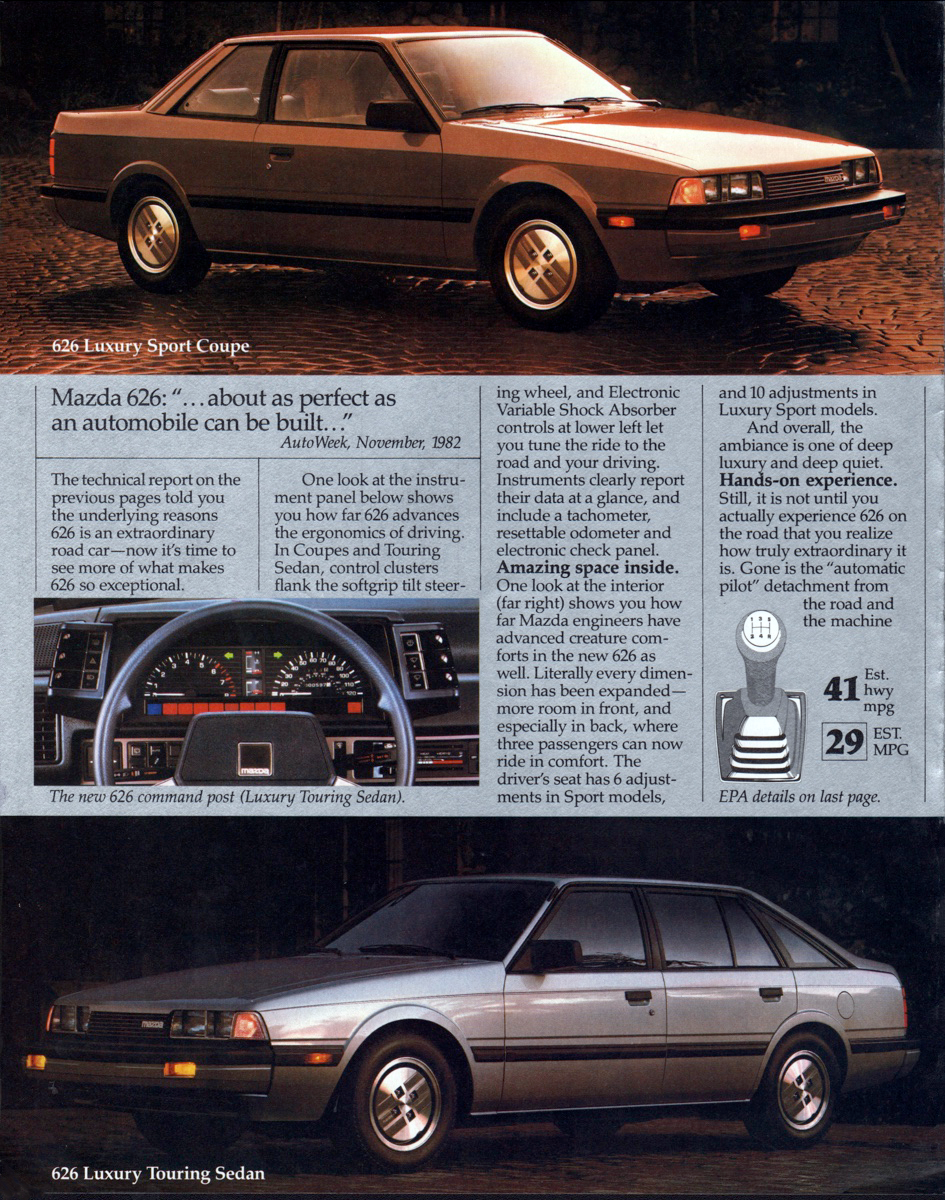
For 1983, Mazda’s 626 coupe, sedan, and liftback were all new as they switched from rear-wheel-drive to front-wheel-drive. Styling was also more aerodynamic, with the coupe receiving a 0.34 Cd. Finally, almost every interior dimension was expanded.

The 626’s standard powertrain was the FE 83 bhp 2.0 liter/121 ci inline four with a two-barrel carburetor paired with a five-speed manual. 0-60 mph took about 12.5 seconds in a car with a 2,545-pound curb weight. EPA fuel economy ratings were 29 city/41 highway by the day’s standards. With a 15.8-gallon fuel tank, a new 626 coupe owner could expect an impressive range of 405 to 450 miles with a 10% fuel reserve.

626 page from the 1983 Mazda brochure

Standard equipment on the $9,295 626 DL coupe (about $30,100 in today’s dollars or about what a 2025 Mazda3 2.5 S Carbon Edition sedan goes for) included rack-and-pinion steering, vacuum-assisted front disc/rear drum brakes, and 185/70R-14 tires (a size still available) on 14 x 5.5 inch wheels. Inside, electric window lifts, electric adjustable mirrors, cruise control, and an AM/FM stereo cassette were included.

The LX coupe added power steering, cruise control, and the trick Electronic Variable Shock Absorber (EVSA) suspension.

Options & Period Reviews

Options included 15 x 6 inch cast alloy wheels with uprated 195/60R-15 tires (a combination that yielded class-leading skid pad results and is still readily available), an electric sunroof ($430), and air conditioning ($650).

The third-generation 626 got a very good reception from the automotive press, with Road & Track stating that it was “an impressive update” that had been “delivered as promised.” AutoWeek gave Mazda a splash quote they used in advertisements—”about as perfect as an automobile can be built.”

The View From 2025

The third-generation Mazda 626 was once quite common (at least in the Philadelphia suburbs), but I haven’t seen one in over a decade. This era of 626 is sometimes available in the Hemmings Motor News classifieds, on eBay Motors, and at online auctions such as Bring a Trailer that cater to the eighties car market.

Make mine Silhouette Blue Metallic, please.

The only other Mazda I have written about is the 1985 RX7 GSL-SE hatchback coupe. I’ve got to get to a GLC at some point.

Last updated March 2025.

1983 Jaguar XJ6 sedan

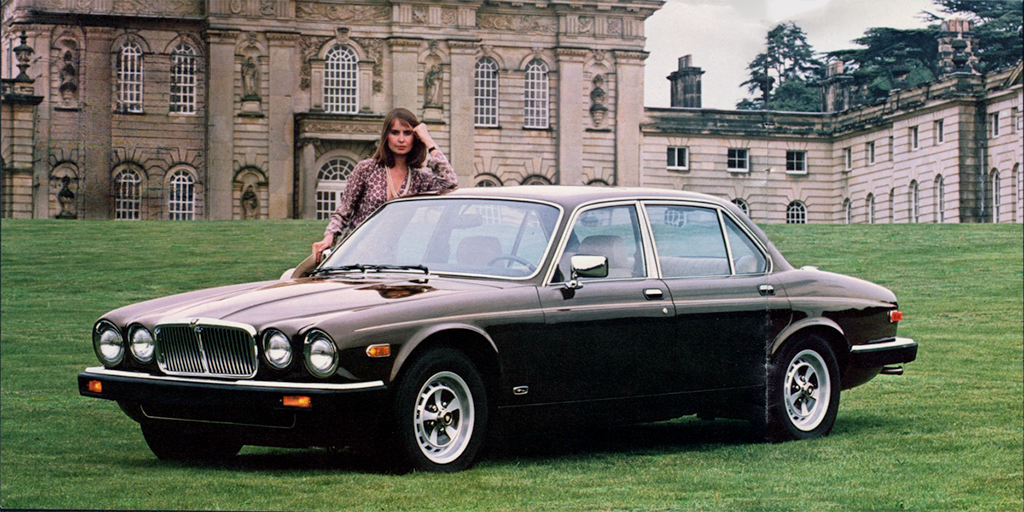
When I was growing up, I was aware of more prestigious sedans than the Jaguar XJ6. However, none were as gorgeous.

“… the best Jaguar ever built.”

For 1983, Jaguar’s XJ6 sedan received a new center console, a thicker steering wheel rim, and newly standard Pirelli tires. Other than that, there were few changes to the Pininfarina-designed Series III version of the XJ6 that had been introduced in 1980.

The only powertrain available in North America was an XK 176 bhp 4.2 liter/258 ci inline six with fuel injection mated with a three-speed automatic transmission. 0-60 mph came in a little under 11 seconds in a sedan with a curb weight of 4,065 pounds. Fuel economy was rated at 17 city/24 highway. With both 12-gallon gas tanks full, an XJ6 owner could expect a range of 360 to 395 miles with a 10% fuel reserve.

XJ6 brochure pages from the 1983 Jaguar brochure

The XJ6’s base price was $30,500—about $100,800 in today’s dollars. Standard mechanical equipment included a four wheel independent suspension, power rack and pinion steering, four wheel power disc brakes, and Pirelli P5 205/70VR15 tires (a size still available thanks to Vredestein) on 15-inch wheels. Inside, a power sunroof, centrally controlled door locks, power side mirrors, cruise control, and leather front bucket seats were included.

Packages & Period Reviews

The $33,500 Vanden Plas version of the XJ6 kicked things up a notch, adding special metallic paint colors, upgraded seats, individual swivel based reading lamps for the rear passengers, and burled walnut in the dashboard, the console, and the door panels. Jaguar described the Vanden Plas as “frankly opulent.”

By 1983, Jaguar’s quality overall had sharply improved under the management of chairman John Egan (knighted in 1986), so purchasing an XJ6 was a relatively safe decision. The Series III XJ6 was well-liked—Car and Driver pronounced it as “one of the Western World’s more delightful mechanical manifestations.” However, it was not particularly large inside—the EPA classified it as a subcompact car.

The View From 2025

According to Hagerty’s valuation tools, all the money for a 1983 Jaguar XJ6 sedan in #1/Concours condition is $39,500, with a far more normal #3/Good condition version going for $8,300. A Vanden Plas is believed to be worth about 2% more—far less than the cost it added back in 1983.

All vintage Jaguars have strong forum support, and there is definite collector interest in the XJ sedans. Eighties XJ6s are often available in the Hemmings Motor News classifieds, on eBay Motors, and at online auctions such as Bring a Trailer that cater to the eighties car market.

Make mine Racing Green, please. Can there be any doubt?

The other eighties Jaguars I have written about are the 1982 XJ-S H.E. coupe and the 1989 XJ-S convertible.

Last updated October 2025.

1983 Chevrolet Monte Carlo SS Sport Coupe

A 1983 Chevrolet Monte Carlo SS with 156 miles sold on Bring a Trailer for $32,000 in early 2021.

“Chevy SS tradition comes alive …”

In the middle of the 1983 model year, Chevrolet announced the Monte Carlo SS. Designated RPO Z65, the SS was designed to help Chevrolet compete better in NASCAR on Sundays—and sell more Monte Carlos on Mondays. There were only two exterior color choices—White and Medium Dark Royal Blue. The changes in the front end and the addition of a rear spoiler cut the drag coefficient by 15% compared to the “civilian” Sport Coupe, making it a respectable 0.375, though not quite the Ford Thunderbird coupe‘s 0.35 Cd.

Aside from the exterior looks, the powertrain was the star—an L69 “H.O.” 175 bhp 5.0 liter/305 ci V8 with a four-barrel carburetor paired with a three-speed automatic transmission. Period road tests resulted in 0-60 mph times of about 8 seconds—about as quick as the Monte’s Buick Regal T-Type and Oldsmobile Cutlass Calais Hurst/Olds platform-mates in the same year. Fuel economy was rated at 17 city/25 highway by the day’s standards (14 city/18 highway by 2025 measures). With an 18.1-gallon gas tank, the enthused new owner of a Monte Carlo SS could expect a range of 260 to 340 miles with a 10% fuel reserve.

1983 Chevrolet Monte Carlo SS flyer

The Monte Carlo SS had a base price of $10,249—about $34,900 in today’s dollars. Standard exterior and mechanical equipment included Sport mirrors, a rear spoiler, a dual outlet exhaust system, power steering, the F41 sport suspension, power front disc/rear drum brakes, and Goodyear Eagle GT P215/65R15 white letter tires (a size still readily available) on 15 x 7 inch stamped steel wheels. Inside, the SS was less differentiated, but it did get a gage package with a tachometer. The standard seat was a blue cloth bench seat with white vinyl inserts and matching door trim.

Options, Period Reviews, & Production Numbers

Many of the standard Sport Coupe’s options were also available for the SS. Exterior examples included tinted glass ($105), hi-beam halogen headlamps ($10), and twin remote Sport mirrors ($60). Inside, options included an intermittent windshield wiper system ($49), an electric rear window defogger ($135), power windows ($180), an electric power door lock system ($120), a power trunk opener ($40), automatic speed control with resume speed ($170), a Comfortilt steering wheel ($105), and air conditioning ($725).

A blue cloth 55/45 seat with white vinyl inserts was available for an extra $133, but no bucket seats were available for the 1983 Monte Carlo. A series of four radios were available, with an AM/FM stereo radio with stereo cassette tape and four speakers ($298) being the top of the line. A fixed mast black antenna was an SS-only option and was included with all radios.

The sportier Monte Carlo was generally received in the press, though many scribes noted the lack of a console, bucket seats, Positraction, and a four-speed automatic—all issues Chevrolet promised to fix. Motor Trend‘s title was “Mid-American GT Revival,” and much of the coverage agreed.

Along with the late introduction, there were production problems in 1983, so the first year total for the fourth-generation Monte Carlo SS was only 4,714. SS sales would hit their stride in the following year, with Chevrolet moving 24,050 out the door.

The View From 2025

These Monte Carlos have enthusiastic forum support, and there is definite collector interest. According to Hagerty’s valuation tools, a 1983 Chevrolet Monte Carlo SS Sport Coupe in #1/Concours condition is $33,300, with a far more normal #3/Good condition version going for $16,400. Monte Carlos SS coupes are often available in the Hemmings Motor News classifieds, on eBay Motors, and at online auctions such as Bring a Trailer that cater to the eighties car market. As I update this blog entry in August 2025, there’s a White 1983 Monte Carlo SS Sport Coupe with 53,000 miles for sale on Hemmings, asking 29,000.

Make mine Medium Dark Royal Blue, please.

I’ve written about one other Monte Carlo—the 1981 Sport Coupe. Other sporty G-platform cars I have written about include the 1980 Pontiac Grand Prix SJ coupe and the 1982 Buick Regal Grand National coupe.

Last updated August 2025.