1982 Pontiac Phoenix SJ coupe

In this post, we’re once again revisiting interesting versions of mass-market eighties vehicles that just about nobody bought. This one is on the sportiest version of Pontiac’s X platform entry, which means I have now treated every GM marque’s X car entry at least once.

“… for people who absolutely love to drive.”

For the 1982 model year, the sporty SJ version of Pontiac’s Phoenix compact became its own model, instead of the trim option it had been for the previous two years. Aside from being a specific model, the biggest news was almost certainly that the 2.8 liter High Output V6 was standard for the SJ.

That new standard engine was the GM corporate LH7 135 bhp 2.8 liter/173 ci V6 with a Rochester E2SE two-barrel carburetor. It was paired with either a standard four-speed manual or an optional three-speed automatic. With the manual, 0-60 came in about 9 seconds—respectable for 1982.

Standard exterior and mechanical equipment on all Phoenix coupes included body-color front and rear bumpers, front-wheel-drive, single rectangular halogen headlamps, rack-and-pinion steering, front disc/rear drum brakes, and 185/80R13 tires on 13-inch wheels with hubcaps. Inside, Pontiac included a full-width front seat, a Deluxe steering wheel, and a Delco-GM AM radio with dual front speakers.

The mid-range LJ coupe included custom wheel covers, additional acoustical insulation, a Luxury cushion steering wheel, and a full-width luxury notchback front seat with center armrest.
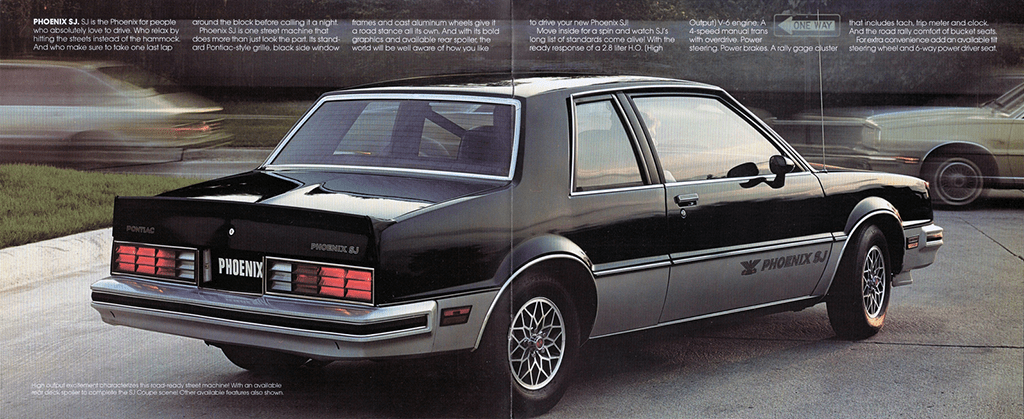
1982 SJ pages from the Pontiac Phoenix brochure
SJ pages from the 1982 Pontiac Phoenix brochure

For $8,723 (about $29,800 in today’s dollars), the top-of-the-line SJ coupe added two-tone paint and specific graphics, a front air dam, power brakes, power steering, a special suspension, and 205/70R13 tires (now essentially unavailable) on 13-inch cast-aluminum wheels. Inside, additional standard features for the SJ included gauges (rally cluster, clock, tachometer, and trip odometer), a Formula steering wheel, and bucket seats.

Options & Production Numbers

Exterior and mechanical options for the SJ coupe included a removable glass sunroof, tinted glass, and a rear deck spoiler. Inside, Custom air conditioning, an electric rear window defogger, power door locks, power windows, a six-way power driver’s seat, a tilt steering wheel, and a Delco-GM AM/FM stereo with a cassette stereo tape player were among the many options available.

Of course, the SJ designation had been around for a long time—and not just for Pontiac. Duesenberg had used SJ in the early 1930s to describe the supercharged versions of their spectacular cars. By 1969, Pontiac had started (shamelessly—no surprise) using SJ for the top-of-the-line version of their Grand Prix coupe. The SJ designation for the top-of-the-line Grand Prix continued through the 1980 model year.

Despite Pontiac’s evident efforts to market the Phoenix SJ, it simply did not sell. With 994 produced, it was less than 6% of Phoenix coupe sales, with the vast majority going to the base version. Obviously, Pontiac had other things going on in 1982, including the introduction of a brand new Firebird and Trans Am.

The View From 2025

Front-wheel-drive Phoenixes of any sort have now almost completely vanished from the nation’s roads, and they rarely show up in the Hemming’s Motor News classifieds or eBay Motors. Bring a Trailer has sold a grand total of one front-wheel-drive Phoenix. The Phoenix does have one differentiator for me—it’s the single most commented post on Eighties Cars.

Make mine Dark Jadestone Metallic over Gray, please.

Other X platform cars I have written about include the 1980 Chevrolet Citation hatchback sedan, the 1981 Chevrolet Citation X-11 hatchback coupe, the 1983 Buick Skylark T Type coupe, the 1984 Oldsmobile Omega sedan, and the 1985 Chevrolet Citation II hatchback sedan.

Last updated March 2025.
1982 Porsche 928 hatchback coupe

“the finest Porsche ever built”

1982 was the final model year for the first-generation Porsche 928, which would be replaced by the slightly more powerful Porsche 928 S in 1983. Despite the aerodynamic look of Wolfgang Möbius’ exterior design, the 928’s drag coefficient was a middling 0.41.

The standard powertrain remained the 228 bhp M28 4.5 liter/273 ci V8 with Bosch L-Jetronic port fuel injection mated to either a five-speed manual transmission or a Mercedes-Benz sourced three-speed automatic. To the eternal horror of many enthusiasts, the automatic was ordered about twice as often as the manual—something that probably didn’t shock Porsche.

In a car that weighed 3,197 pounds with the manual transmission, 0-60 mph came in approximately 7 seconds, with a top speed of just over 140 mph. Fuel mileage was rated by the EPA at a class-competitive 16 city/25 highway—with a 22.7-gallon gas tank, the proud new owner of a 928 could expect a range of about 380 to 415 miles with a 10% fuel reserve.

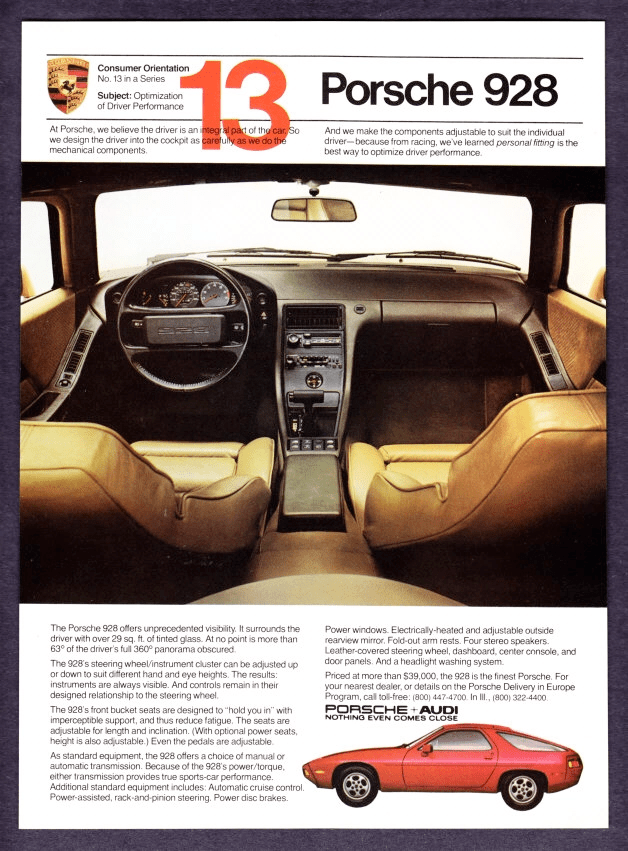
1982 Porsche 928 advertisement

The 928 came well-equipped—a good thing considering it had a base price of $39,500 (about $135,200 in today’s dollars or a little less than a 2025 Porsche 911 Carrara T coupe costs). Standard exterior equipment included halogen headlamps, a headlight washing system, and a rear window defogger with a rear wiper. Mechanical equipment included power-assisted rack-and-pinion steering, four-wheel disc brakes, and P225/50VR16 tires (a size still readily available) on 16 x 7 inch wheels.

Inside, automatic cruise control, adjustable pedals, power windows, a central door locking system, and automatic full climate control were all standard. Bucket seats with a driver’s side power seat, a partial leather interior, a leather-covered steering wheel, a steering column that adjusted along with the instrumentation, and an AM/FM stereo radio with a cassette player, four speakers, and a power antenna were also included.

Exterior and mechanical options included an electrical sliding roof, protective side moldings ($195), and pressure-cast alloy wheels ($795). Inside, options included a front passenger power seat, sports seats (either leatherette/cloth or leather), an alarm system ($300), and a Hi-Fi sound system with eight speakers.

The View From 2025

There is excellent club support for the Porsche 928, as there is for all Porsches. According to Hagerty’s valuation tools, all the money for a 1982 Porsche 928 in #1/Concours condition is $68,000, with a more normal #3/Good condition car going for $22,000. Porsche 928s frequently show up for sale in the Hemmings Motor News classifieds, on eBay Motors, and on Bring a Trailer. As I update this blog entry in April 2025, a Guards Red 1982 with black leather seats, an automatic, and 41,000 miles is available on Hemmings, asking $35,000.

Make mine the rare Rosewood Metallic, please.

Other eighties Porsches I have written about include the 1980 924 hatchback coupe, the 1982 924 Turbo hatchback coupe, the 1985 911 Carrera Cabriolet, the 1986 944 Turbo hatchback coupe, the 1987 911 3.2 Carrera coupe, and the 1988 944 hatchback coupe. Other sports cars from the 1982 model year that I have written about include the Chevrolet Corvette coupe and the Fiat X1/9 coupe.

Last updated April 2025.

1982 Fiat X1/9 coupe

“Nothing moves you like a Fiat Sportscar.”

1982 was the final model year that the X1/9 coupe that had debuted in 1974 was sold under the Fiat name—after that, it would be marketed under the Bertone name as Fiat withdrew from the United States. The X1/9 was small; at 156.3 inches in length, it was more than three inches shorter than today’s Fiat 124 Spider.

1982 Fiat X1/9 advertisement.

With its wedge shape, the X1/9 was part of a design trend in inexpensive sports coupes that included the Triumph TR7/TR8, the Pontiac Fiero, and the Toyota MR2.

The only powertrain available on the X1/9 continued to be a 75 bhp 3.5 liter/91 ci inline four with Bosch L-Jetronic fuel injection paired with a five-speed manual. An X1/9 owner could expect a 0-60 time of a little over 11 seconds in a coupe with a curb weight of 2,209 pounds.

Mileage wasn’t as good as you would think: rated at 26 city/37 highway by 1982 standards (20/26 by today’s calculation). With a 12.7-gallon gas tank, the driver of an X1/9 could expect a range of between 265 and 360 miles with a 10% fuel reserve.

Standard equipment on the $10,900 X1/9 (about $29,400 in today’s dollars or about what a 2019 Fiat 124 Spider Abarth convertible goes for) included pop-up headlights, a removable targa roof, rack-and-pinion steering, four-wheel disc brakes, and Pirelli Cinturato P3 P165/70R13 tires (a size still available thanks to Vredestein) on 13 x 5.5 inch wheels. Inside, bucket seats, a four-spoke padded steering wheel, a lockable glove box, and full instrumentation were included.

Options included metallic paint, tinted glass, air conditioning, and an AM/FM stereo radio.

The X1/9 has a following in both its Fiat and Bertone versions. According to Hagerty’s valuation tools, all the money for a 1982 X1/9 in #1/Concours condition is $19,800, with a more normal #3/Good car going for $6,300. X1/9s come up for sale every once in a while in the Hemming’s Motor News classifieds or on eBay Motors. As I write this in February 2019, there’s a 1979 Black Metallic X1/9 with tan/black vinyl seats and 83,000 miles available for $10,500.

1982: What Cars Are Collectible?

The question always arises: what cars are considered collectable? One way is to look at what Hagerty tracks with their valuation tools. For 1982 cars, the full list is below—I have added a few comments.

question mark graphic

Alfa Romeo; GTV-6 hatchback coupe, Spyder convertible

Alpine; A310 coupe

Aston Martin; Lagonda sedan, V8 coupe and convertible

Avanti; Avanti II coupe

Bentley; Corniche convertible, Mulsanne sedan

Bitter; SC coupe

BMW; 320i coupe

Bristol; 412 convertible

Buick; Regal coupe, Riviera coupe and convertible

Cadillac; Cimarron sedan, DeVille coupe and sedan, Eldorado coupe, Fleetwood coupe and sedan, Seville sedan (yes, Hagerty really tracks the Cimarron)

Checker; Marathon sedan

Chevrolet; C10/K10 pickup truck, C10/K10 Blazer SUV, C10/K10 Suburban SUV, C20/K20 pickup truck, C20/K20 Suburban SUV, C30/K30 pickup truck, Camaro hatchback coupe, Corvette coupe, El Camino pickup truck

Chrysler; Imperial coupe

Clenet; SII convertible. SIII coupe and convertible

Datsun; 280ZX hatchback coupe

Delorean; DMC-12 coupe

DeTomaso; Deauville sedan, Pantera coupe

Dodge; Ramcharger SUV

Duesenberg; LaGrande convertible

Excalibur; Series IV convertible

Ferrari; 308 GTBi/GTSi coupe, 400i coupe, 512 BB coupe, Mondial coupe

Fiat; X1/9 coupe

Ford; Bronco SUV, F-100 pickup truck, F-150 pickup truck, F-250 pickup truck, F-350 pickup truck, GT40 coupe and convertible, Mustang hatchback coupe, Thunderbird coupe

GMC; C1500/K1500 pickup truck, C2500/K2500 pickup truck, C3500/K3500 pickup truck, Caballero pickup truck

Jaguar; XJ-S coupe

Jeep; Cherokee SUV, CJ-5 SUV, CJ-7 SUV, CJ-8 Scrambler pickup truck, Wagoneer SUV

Lamborghini; Countach coupe, Jalpa coupe

Lancia; Beta coupe, convertible, and station wagon, Gamma coupe and sedan

Lincoln; Continental sedan, Continental Mark VI coupe and sedan, Town Car sedan

Lotus; Esprit coupe

Maserati; Quattroporte III sedan

Matra; Murena coupe

Mazda; RX-7 hatchback coupe

Mercedes-Benz; 240D sedan, 300CD coupe, 300D sedan, 300SD sedan, 300TD station wagon, 380SEL sedan, 380SL convertible, 380SLC coupe

Morgan; 4/4 convertible, Plus 8 convertible

Panther; DeVille convertible and sedan, Kallista convertible

Peugeot; 504 convertible

Pontiac; Firebird hatchback coupe

Porsche; 911 coupe, 924 hatchback coupe, 928 hatchback coupe

Puma; GT coupe, GTC coupe and convertible

Renault; Fuego hatchback coupe

Rolls-Royce; Camargue coupe, Corniche I convertible, Phantom VI sedan, Silver Spirit sedan, Silver Spur sedan

Stutz; Bearcat convertible, Blackhawk coupe, IV-Porte sedan

Subaru: BRAT pickup truck

Toyota; Celica hatchback coupe, Land Cruiser SUV

TVR; 280i coupe and convertible

Hagerty casts a wide net, except when they don’t. Coupes are dominant—32% of 117 models listed with an additional 9% being hatchback coupes. Unsurprisingly, the rarest body style is a station wagon, at 2%.

1982 Cadillac Cimarron sedan

Hemmings Motor News published an extended discussion on the Cadillac Cimarron in their always interesting Hemmings Daily blog, so I figured I’d bring one of my first posts up to a more current location.

“A new kind of Cadillac for a new kind of Cadillac owner.”

Ah—the poor Cadillac Cimarron, rushed to market for CAFE and other reasons without much thought as to who would actually buy it. When released in 1982, it was just a nice as possible, relatively well equipped Chevrolet Cavalier.

Inside page from the 1982 Cadillac Cimarron brochure

The only engine available for 1982 was the 88 bhp L46 1.8 liter/112 ci inline four with Rochester Varajet II two-barrel carburetor. When paired with the standard four-speed manual transmission, mileage was an impressive 26 city/42 highway by the standards of the day (about 21/31 by modern standards), but the car was slow—0-60 mph took about 14 seconds. A three-speed automatic transmission was optional and likely even slower (estimates come to about 16 seconds). The 13.7-gallon fuel tank gave a range of between 330 and 420 miles with a 10% reserve.

The $12,181 base price (about $32,900 in today’s dollars—just a little under what a base 2018 Cadillac ATS sedan costs) included standard exterior and mechanical features such as power brakes, power steering, power mirrors, intermittent windshield wipers, and P195/70R13 tires on 13-inch aluminum wheels. Air conditioning, leather seating areas, a leather steering wheel, a tachometer, and an AM/FM stereo radio with four speakers were all standard in the interior.

Options included a sunroof ($261), cruise control (about $150), power door locks ($12—why bother making them an option?), power windows (yes, the base 1982 Cimarron came with roll-up windows—power windows were an extra $216), six-way power seats ($366), tilt steering wheel ($88), and an AM/FM stereo radio with cassette ($153). It wasn’t hard to load a Cimarron up to almost $13,500—real money in 1982 and about $36,400 in 2018 dollars.

In typical General Motors fashion, the Cimarron improved each year (sometimes significantly). However, the stench of that horribly failed initial release stayed with the car until Cadillac finally stopped selling them at the end of the 1988 model year. By that point, the Cimarron had upgraded from the fairly awful four-cylinder to a decent (and standard) V6 and had exterior styling that was at least somewhat more differentiated from Chevrolet’s.

So, the Cimarron remains a spectacularly easy target—routinely making those “worst ten cars of all time” lists and suchlike. I have yet to see a Cimarron at a serious classic car show, but I’m betting some intrepid soul will save one and bring it back.

Surprisingly, Hagerty does track the Cimarron with their valuation tools—according to them, all the money for a 1982 in #1/Concours condition is $6,100, with a far more typical #3/Good car going for $1,600. I can’t remember ever seeing one for sale in the Hemmings Motor News classifieds—they’re treated by Cadillac folks like Ford folks treat the Mustang II from the 1970s. You do occasionally see them on eBay Motors.

Save

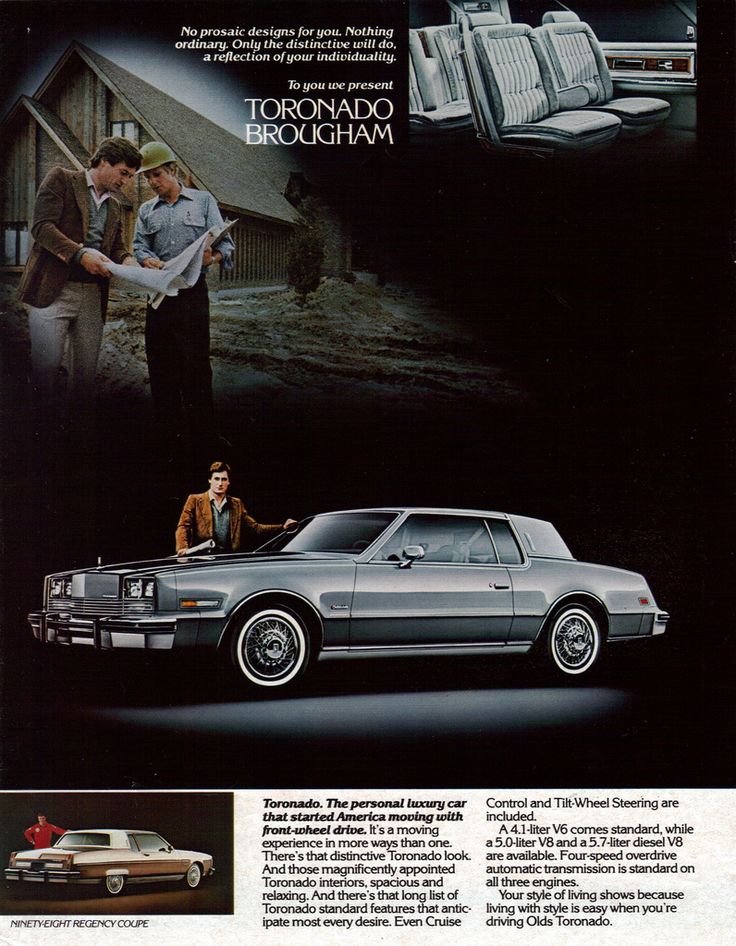
1982 Oldsmobile Toronado Brougham coupe

Barrett-Jackson’s second Northeast auction at the Mohegan Sun casino in Connecticut in late June 2017 included a 1982 black Oldsmobile Toronado Brougham coupe with a tan interior, a 5.0 liter/307 ci V8, an automatic, and 12,000 miles. It sold for $10,000. I can’t remember the last time I’ve seen an eighties Toronado up for auction, though the “sister” Buick Riviera and Cadillac Eldorado are often present. Time to write a blog entry, methinks.

“Nothing ordinary”

For 1982, Oldsmobile gave up on the (slightly) sportier XSC variant that they had offered for two years and made the Brougham the only available version of the Toronado. Changes included a new chrome/argent grille with more horizontal bars, a new memory seat option with two memory positions, a revised instrument panel, and a new optional radio.

The standard engine was the LC4 125 bhp 4.1 liter/252 ci V6 with a Rochester four-barrel carburetor. Optional power included the LV2 140 bhp 5.0 liter/307 ci V8 with a Rochester four-barrel carburetor at no additional charge and the (don’t do it!) LF9 105 bhp 5.7 liter/350 ci diesel V8 ($825). A four-speed automatic transmission with overdrive was standard with all three engines. The Toronado was not light—curb weight was 3,705 pounds—so even with the more powerful V8, 0-60 mph took about 13 seconds. With the gasoline V8, mileage was rated at 16 city/27 highway by the standards of the day; with the 21.1-gallon fuel tank, Toronado owners could expect to travel about 400 miles with a 10% fuel reserve.

Toronado Brougham page from the 1982 Oldsmobile full-line brochure

Standard exterior and mechanical equipment included in the $14,462 base price (about $49,400 in today’s dollars) included Soft-Ray tinted glass, tungsten high beam halogen headlamps, power front disc/rear drum brakes, power steering, and P205/75R15 steel-belted radial-ply white-stripe tires (still readily available) on 15 by 6-inch steel wheels. Inside, Four-Season air conditioning, power door locks, cruise control, a tilt steering wheel, divided cloth seats, an electric digital clock, and an AM-FM stereo radio were standard.

Options & Production Numbers

Options included Twilight Sentinel ($57), Tempmatic air conditioning ($50), power Astro Roof with sliding glass panel, and leather seats.

Oldsmobile sold 33,928 1982 Toronado Broughams, down from over 42,000 the previous year. In 1982, Buick sold 42,823 Riviera coupes along with another 1,246 convertibles, while Cadillac sold 52,018 Eldorado coupes, so the Toronado was not holding up its end of the E-body platform bargain.

The View From 2025

Third-generation Toronados from 1979 to 1985 have a following, though (a little strangely) models after 1980 are not rated in Hagerty’s valuation tools. These Toronados sometimes show up for sale in the Hemmings Motor News classifieds, on eBay Motors, and on Bring a Trailer. As I update this blog entry in March 2025, Hemmings is listing a 1983 Toronado with an Autumn Red Firemist exterior, a white vinyl top, red leather seats, and 26,000 miles for $17,500.

I like these big front-wheel-drive coupes, though I think the Toronado may have too closely resembled the Eldorado for its own good—something that had not been true in the 1960s. Make mine Medium Slate Firemist, please.

Other big Oldsmobiles I have written about include the 1982 88 Royale coupe and the 1984 Ninety-Eight Regency coupe.

Last updated March 2025.

Sav

Save

Save

Save

Save

Save

1982 Cadillac Eldorado Touring Coupe

“Created for the person who loves to drive.”

Though Cadillac’s eighth-generation Eldorado had been in production since the 1979 model year, 1982 was the first year for the Touring Coupe edition of the Eldorado. The Touring Coupe marked the first even remotely sporting Eldorado in many years.

Newly standard for the 1982 Eldorado and available on all Cadillacs except the Cimarron was the HT-4100 4.1 liter/249 ci V8 with throttle-body fuel injection. Unfortunately, horsepower for this all-new engine was an unimpressive 125 bhp—somewhat of an issue when considering the Eldorado’s platform mates. Buick’s Riviera T TYPE had a 170 bhp turbocharged V6, and Oldsmobile’s Toronado was available with a 150 bhp V8. Car and Driver clocked a 0-60 time of 15.2 seconds in the approximately 3,800-pound Eldorado, while the Riviera T TYPE was about five seconds faster.

Fuel mileage with the new engine was 17 city/27 highway by the day’s standards. With a 20.4-gallon gas tank, an Eldorado owner could expect a range of 330 to 360 miles with a 10% fuel reserve.

1982 Cadillac Eldorado brochure page
Touring Coupe page from the 1982 Cadillac Eldorado brochure

Standard exterior and mechanical equipment in the $20,666 Eldorado Touring Coupe (about $71,900 in 2025 dollars) included the Touring Suspension and P225/70R15 blackwall tires (a size still readily available) on 15-inch aluminum alloy wheels. Inside, reclining bucket seats, a leather-wrapped steering wheel, and a front seat console were all part of the Touring Coupe experience.

Standard exterior and mechanical equipment on any 1982 Eldorado included front-wheel drive, a four-wheel independent suspension, a four-speed automatic transmission, power steering, tungsten halogen highbeam headlamps, and four-wheel power disc brakes. Inside, Twilight Sentinel, power door locks, power windows, side window defoggers, remote trunk release, electronic climate control with an outside temperature display, a six-way power seat for the driver, and an electronically tuned AM/FM stereo radio with power antenna were all included.

Options, Period Reviews, & Production Numbers

Options included Astroroof ($1,195), electronic cruise control ($175), tilt/telescope steering wheel ($169), and Symphonic Sound System ($290).

The Eldorado Touring Coupe got reasonably even-handed (perhaps a little surprised) reviews from the “buff books,” but didn’t sell very well. First-year sales of 1,700 units (about 3% of overall Eldorado production) declined every year until eighth-generation production ended with the 1985 model year.

The View From 2025

Eighth-generation Eldorados definitely have a following. According to Hagerty’s valuation tools, a 1982 Eldorado in #1/Concours condition is $31,400, with a more normal #3/Good condition car going for $7,800. Eldorado Touring Coupes sometimes show up for sale in the Hemmings Motor News classifieds, on eBay Motors, on Bring a Trailer, and at auction.

There was only one color available for the 1982 Eldorado Touring Coupe (later years had more choices), so make mine Sterling Silver.

Other Eldorados I have written about include the 1984 Biarritz convertible, the 1986 coupe, and the 1988 coupe.

Last updated October 2025.

Save

Save

Save

Save

Save

Save

Save

Save

1982 Chrysler LeBaron convertible

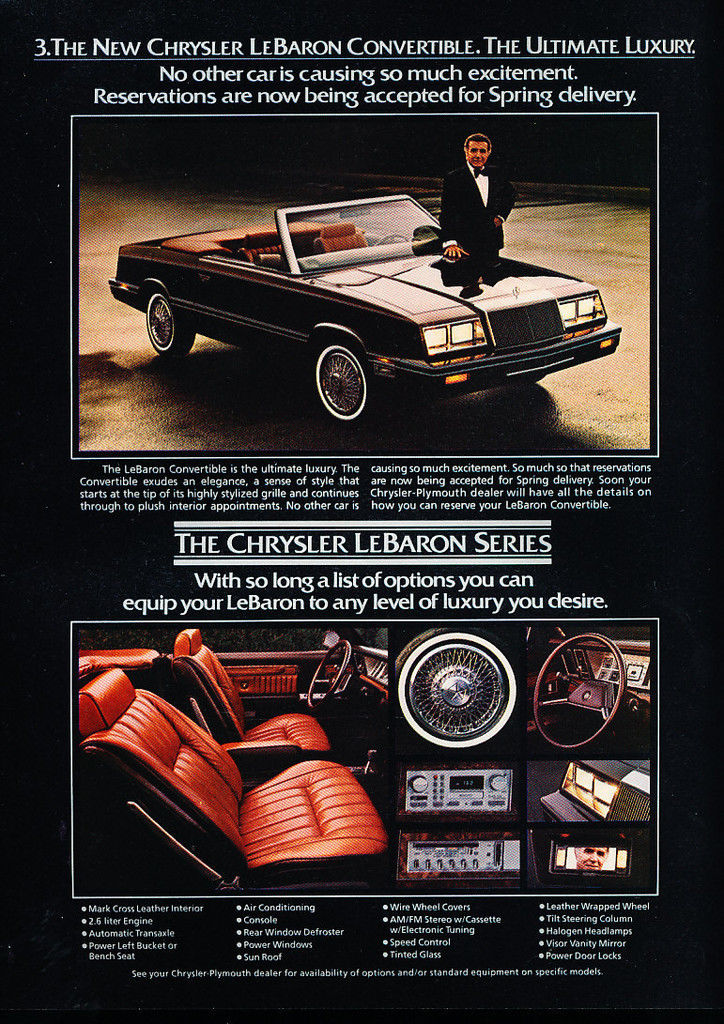
“No other car is causing so much excitement.”

The Chrysler LeBaron convertible was a mid-year introduction, becoming available in the spring of 1982. It was the first factory convertible from an American manufacturer available for sale in the United States since the 1976 Cadillac Eldorado.

All LeBarons were all-new for 1982. Based on the more plebeian Dodge Aries/Plymouth Reliant front-wheel-drive K cars that had been on sale for a year, the LeBaron (sometimes described as the Super-K) was a move at least slightly upmarket. Most exterior body panels were the same as the K. Notable styling differences were a waterfall-style grill (somewhat resembling that of the previous year’s rear-wheel-drive LeBaron), quad headlamps, relocation of the parking lamps and turn signals to the front bumper, and a full-width tail-lamp housing.

Chrysler used almost all of the standard K pieces inside the LeBaron. Recessed door handles and rocker type door locks were among the few changes, along with a different style of armrest and door pull. There was less vinyl trim, and the carpeting and other fabrics were of somewhat higher quality. A significant difference was the attention paid to noise, vibration, and harshness: between soundproofing, better parts, and suspension tuning, the LeBaron was upgraded from the base K in 26 separate ways.

Cars & Concepts in Brighton, Michigan heavily modified two-door LeBaron coupes on their way to becoming convertibles—the process included 32 steps. They installed a boxed-in backbone along the center of the car and welded a three-piece windshield header to the A-pillars. Next, Cars & Concepts installed new door glass and added door wedges. Finally, they added a new fiberglass panel to hold the rather small rear seats and mounted the convertible motor on the floor pan behind the rear bulkhead.

The convertible top itself had a plastic rear window and broad rear quarter panels; Car and Driver wrote that this created “a sort of Conestoga-wagon effect.” A button on the console actuated the top, and a padded top boot snapped into place when the top was lowered.

The base engine was a K 2.2 liter/135 ci inline four with a two-barrel Holley carburetor, producing 84 bhp. A two-barrel carburetted Mitsubishi G54B 2.6-liter/156 ci inline four with 92 bhp and 20 additional ft-lbs of torque was available for an added $171. Chrysler paired both engines with the TorqueFlite three-speed automatic transmission. Mileage with the base engine was 25 city/36 highway by the day’s standards. The optional engine was rated at 23 city/31 highway and brought the 0-60 time down from about 17 (aargh!) seconds to about 15 seconds.

1982 Chrysler LeBaron convertible advertisement

The LeBaron convertible’s base price was $11,698 (about $40,100 in today’s dollars and about 44% more than the 1982 LeBaron coupe). Standard exterior and mechanical equipment included dual outside mirrors (borrowed from the Dodge Omni 024), power brakes, power rack-and-pinion steering, and P185/70R14 whitewall tires (a size still readily available, though finding whitewalls might be tricky) on 14-inch wheels. Inside, vinyl front bucket seats with a folding center armrest, a digital clock, and an AM radio were included. 76% of convertible drivers moved up to Medallion trim, which boosted the price to $13,998 (about $48,000 in 2025 dollars) and added halogen headlamps, better gauges, and snazzier wheel covers.

Packages, Options, & Production Numbers

The Mark Cross package cost an additional $861, moved the sticker to a non-trivial $14,859 (about $50,900 in today’s dollars), and added the 2.6-liter engine, air conditioning, power windows, power door locks, and attractive Mark Cross leather/vinyl seats. Other options included cornering lamps ($57), cast aluminum wheels ($344), automatic speed control ($155), and an AM/FM stereo radio with electronic tuning and cassette player ($455).

First-year sales of LeBaron convertible were a respectable 12,825, especially given the shortened year and the relatively high price. In a piece of general eighties trivia, the first commercial cell phone call in history was made from a LeBaron convertible in October 1983.

The View From 2025

These convertibles started Chrysler’s long tradition of making convertibles that might occasionally be sporty but were not sports cars—a market niche they exited in 2014 with the demise of the Chrysler 200 convertible. I still like what Chrysler was trying to do, and I appreciate how these cars look, at least with the top down.

These cars are being collected and shown—I see them often at AACA judging meets. You see them for sale in the Hemming’s Motor News classifieds, on eBay Motors, and on Bring a Trailer: as I update this blog entry in October 2025, there’s a Pearl White 1982 LeBaron with 68,000 miles for sale on Hemmings, asking $6,900.

Make mine Mahogany Metallic, please, with the Mark Cross package.

Other K cars I have written about include the 1981 Plymouth Reliant coupe, the 1985 Dodge 600 Club Coupe, the 1986 Chrysler Town & Country convertible, and the 1987 Dodge Aries LE sedan.

Last updated October 2025.

Save

1982 Chevrolet Corvette coupe

“Cross-Fire injection adds to the Corvette performance equation.”

1982 was the final year for the “shark” Corvette, but the first year for the L83 Cross-Fire 5.7 liter/350 ci V8—a throttle body fuel-injected design that put out a respectable for the day 200 bhp and 285 lb-ft of torque. The downside was that it was only available with a four-speed automatic transmission; a manual transmission would not return until the middle of the 1984 model year.

Top speed for the 1982 Corvette was 125 mph, and Road & Track managed a 0-60 time of 7.9 seconds. Estimated fuel economy was 15 city/26 highway by the day’s standards—not bad for a fairly large V8 with primitive engine controls. With a 23.7 gallon gas tank, a 1982 Corvette owner could expect a range of 355 to 390 miles with a 10% fuel reserve—notably better than one year earlier.

The heavily-hyped Cross-Fire was an intermediary step for General Motors on the way to true multi-port electronic fuel injection for Chevrolet’s small-block V8. For Corvette, it brought the best horsepower in a standard engine since 1972, though it was not the relative screamer that the L82 (optional from 1973 to 1980) had been. However, the flat intake manifold design compromised fuel injection’s potential fuel economy gains—real improvements would wait until 1985’s L98.

Other changes for 1982 included the availability of the Collector Edition, as well as many new exterior paint colors and interior color options. Lost in the Cross-Fire publicity was the move from a three-speed automatic to a four-speed automatic transmission.

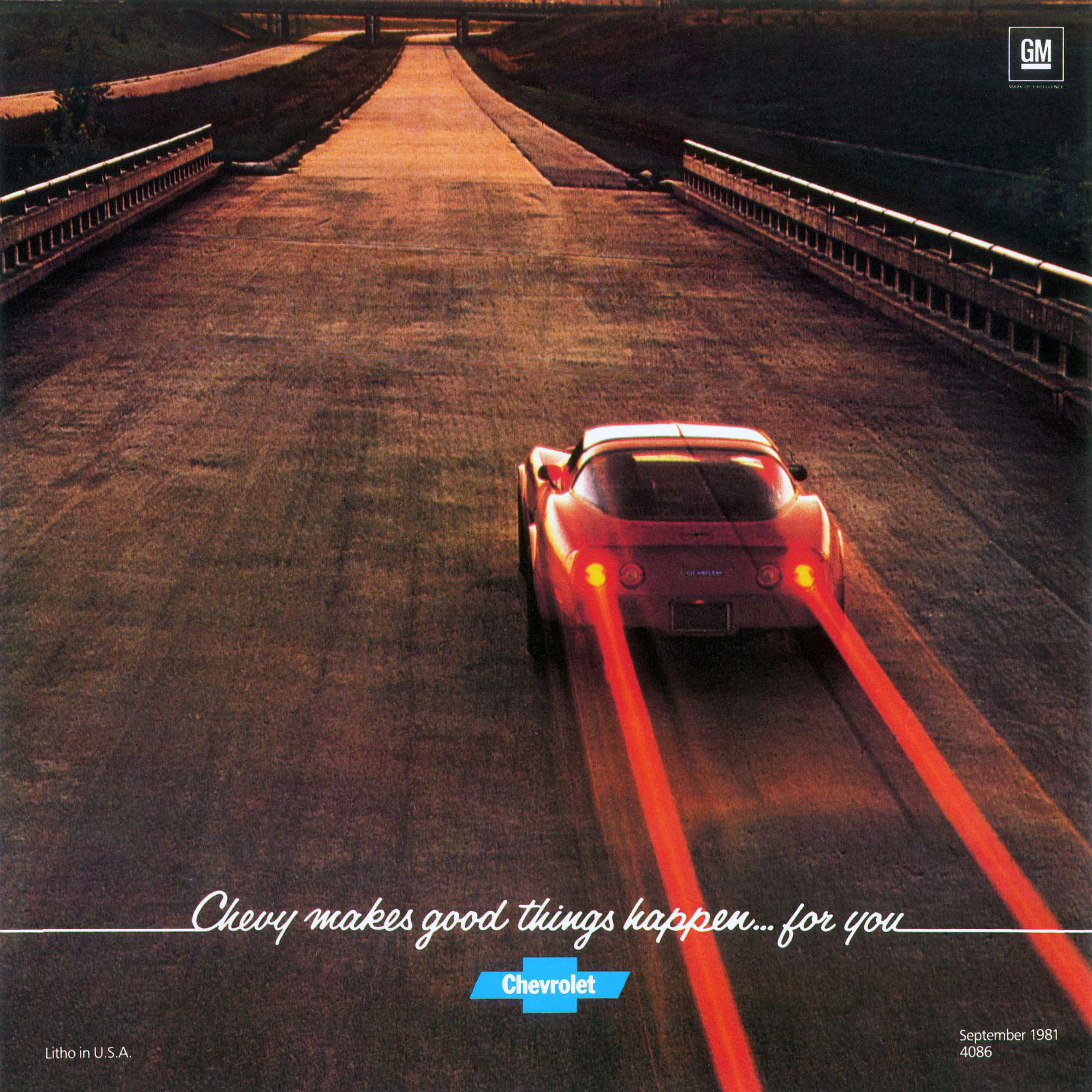
rear cover of 1982 Chevrolet Corvette brochure
Rear cover of 1982 Chevrolet Corvette brochure

Standard exterior and mechanical equipment in the $18,290 base Corvette (about $63,400 in today’s dollars) included tinted glass for all windows, removable roof panels, a Delco Freedom II battery, power steering, four-wheel power disc brakes, and P225/70R15 tires (a size still readily available) on 15-inch by 8-inch steel rally wheels. Inside, air conditioning, power windows, a Tilt-Telescopic steering wheel with a leather-wrapped rim, a quartz analog clock, and an AM/FM stereo radio with dual front speakers were all included.

The Collector Edition, Individual Options, & Production Numbers

The $22,538 Collector Edition (about $78,200 in 2025 dollars and about what a 2026 Corvette Stingray 2LT coupe goes for) added a functional hatchback (a first for Corvette), P255/60R15 Goodyear Eagle GT tires, aluminum wheels, and specific Silver Beige paint, striping, seats, and interior trim—along with a 23% addition to the base price.

Individual exterior and mechanical options included power sport mirrors ($125), power door locks ($155), cruise control ($165), electric rear window defogger ($129), gymkhana suspension (only $61 for specially tuned shock absorbers, higher-rate rear spring, and a rear stabilizer bar), two-tone paint ($428), aluminum wheels ($458), and  P255/60R15 Goodyear Eagle GT tires ($543). Optional interior equipment included a six-way power driver’s seat ($197) and an AM/FM stereo radio with a cassette player ($423).

Options that date this car include the stereo radio with a cassette player and Citizens Band radio ($755), the stereo radio with an 8-track player ($755), and the radio delete (-$124). Corvette buyers piled on the options in 1982: the average buyer ordered $2,195 worth, raising the sticker to $20,485 (about $71,100 in today’s dollars).

In its final year, the shark still sold decently—but the end for a car that featured many design components from 1963 was in sight. Chevrolet moved 25,407, of which 6,759 (about 27%) were the pricey Collector Edition.

The View From 2025

There is strong club support for the 1982 Corvette, as there is for all Corvettes. According to Hagerty’s valuation tools, a loaded non-Collector Edition 1982 Corvette in #1/Concours condition is $42,700, with a more typical number #3/Good condition car going for $17,200. 1982 Corvettes are regularly featured in the Hemmings Motor News classifieds, eBay Motors, and Bring a Trailer. As I update this blog entry in September 2025, there’s a Silver Metallic over Dark Claret Metallic two-tone Corvette with red cloth seats and 15,000 miles for sale on Hemmings, asking $30,000.

Make mine one of the relatively rare (and absolutely gorgeous) Silver Green Metallic cars, with the silver green leather seats.

Other Corvettes I have written about include the 1980 coupe, the 1981 coupe, the 1984 hatchback coupe, the 1986 convertible, and the 1988 35th Anniversary hatchback coupe.

Last updated September 2025.

1982 Ford Mustang GT hatchback coupe

This post was one of the earliest in this blog. I’ve updated it to reflect both changes in my posting style and substantial improvements in available data.

“If excitement is your master key, this one opens all the doors.”

The 1982 Ford Mustang GT marked the return to form of America’s definitive pony car and ignited a second round of the power wars with the then brand new third generation Camaro and Firebird. Along with the new GT trim level, the new high output (H.O.) version of the venerable 4.9 liter/302 ci V8 was up to 157 bhp—quite an upgrade from 1981’s 4.2 liter/255 ci engine.

157 bhp feels quaint these days—the lowest horsepower engine for the 2025 Mustang is the 315 bhp turbo four. Still, the 1981 Mustang had topped out at (oog…) 120 bhp and as tested 0-60 times in the 2,600 pound GT dropped by over 3 seconds for 1982, with Motor Trend recording a 6.9-second time in a test car they acknowledged might be a little warmed over. Road & Track timed an 8.0 second 0-60 time in a more civilian GT.

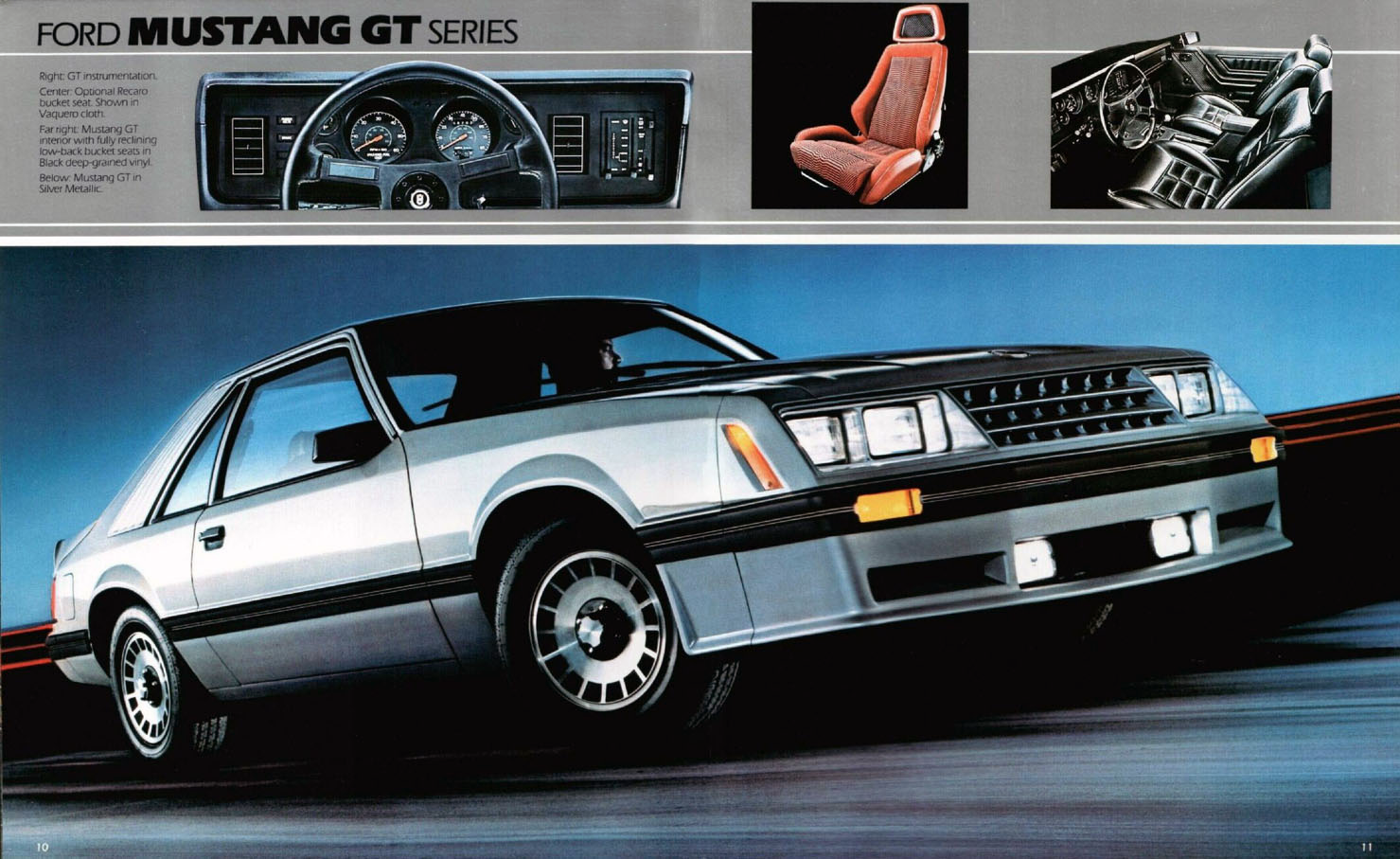
GT pages from the 1982 Ford Mustang brochure

You could get the H.O. engine with any Mustang, but the hot setup was with the GT, which offered a four-speed manual transmission and a 3.08:1 rear axle ratio with a Traction-Lok limited slip differential. Other options that were standard with the $8,308 GT (about $28,800 in today’s dollars) with the 302 were power steering and traction bars. The GT also received cast aluminum wheels, a front air dam, dual fog lamps, a forward-facing hood scoop, and the same rear spoiler initially featured on the first year of the Fox-body Mustang 1979 Pace Car.

Options, Period Reviews, & Production Numbers

Options for the Mustang GT included the SelectAire Conditioner ($676), snazzy Recaro high-back bucket seats ($834), power side windows ($165), and an AM/FM stereo with either 8-track or cassette player ($178)—it seems that 1982 was Ford’s crossover year for 8-track versus cassette.

Period reviews were overwhelmingly positive—Motor Trend stated that the 1982 GT was “it’s the best-balanced, most capable Mustang ever done.” Road & Track mentioned that Ford was leading the “U.S. industry in restoring exhilarating engine performance to the list of options.”

Ford built 23,447 Mustang GTs in the 1982 model year, marking a solid success and attracting a lot of notice. At 45,901 produced, the best seller continued to be the far more vanilla GL fastback.

The View From 2025

This generation of the Mustang GT often appears in the Hemming’s Motor News classifieds, on eBay Motors, and on Bring a Trailer. According to Hagerty’s valuation tools, a 1982 Ford Mustang GT in #1/Concours condition is $44,700, with a more normal #3/Good car going for $12,700.

I only have four exterior color choices with a 1982 Mustang GT—make mine Bright Red, please.

Other Mustangs I have written about include the 1980 Cobra hatchback coupe, the 1981 coupe, the 1983 GT convertible, the 1984 SVO hatchback coupe, and the 1987 LX coupe.

Last updated September 2025.