End of the Year Review: 2025

Typewriter icon with 2025 date

2025 was a good year for Eighties Cars, with page views up a substantial 91% over 2024. We managed an all-time high of 76 new blog entries in 2025—one every five days on average.

Post counts were divided into 66 featuring a specific car, 4 covering auctions, and 6 miscellaneous posts. Three marques made their first appearance in a specific post in 2025—Lamborghini, Rolls-Royce, and Yugo. You cannot say that we don’t discuss a wide range of vehicles on Eighties Cars

I look at the end-of-year results for the blog’s most-viewed posts every December. For 2025, it once again looked like the key to an individual post’s popularity was often in the rarity of the other coverage available for that particular vehicle. We’ll discuss this year’s top ten most-viewed posts in reverse order.

10) 1989 Buick Electra Park Avenue Ultra sedan—this 2020 post about the top-of-the-line Buick for 1989 (more expensive than the Riviera) dropped five spots in 2025.

9) 1989 Chevrolet Celebrity sedan—this 2016 post, which was inspired by a work colleague’s Celebrity, returned to the top ten after a five-year pause. Most Celebrity coverage I have seen is about the sporty Eurosport version, not the far better selling base car.

8) 1983 Ford Eddie Bauer Bronco SUV—the highest ranking SUV this year is a new entrant to the top ten list.

7) 1980 Pontiac Grand Prix SJ coupe—a relatively recent post from early 2022 shows some staying power. Down three spots in 2025 for Pontiac’s final SJ version of the Grand Prix.

6) 1985 Buick Somerset Regal coupe—this post has been picked up by other websites a few times, including in 2018 by Jalopnik. Hilariously, I’m not sure I would have ever gotten around to writing about the Somerset Regal if I hadn’t seen one on the streets of Philadelphia back in 2014. Down three steps this year, this post is the fourth most popular entry since Eighties Cars debuted over a decade ago.

5) 1987 Mercury Lynx XR3 hatchback coupe—Mercury is, of course, an orphan make, but this blog entry has been viewed about six times more than my write-up on the related 1981 Ford Escort hatchback coupe. Down four spots this year.

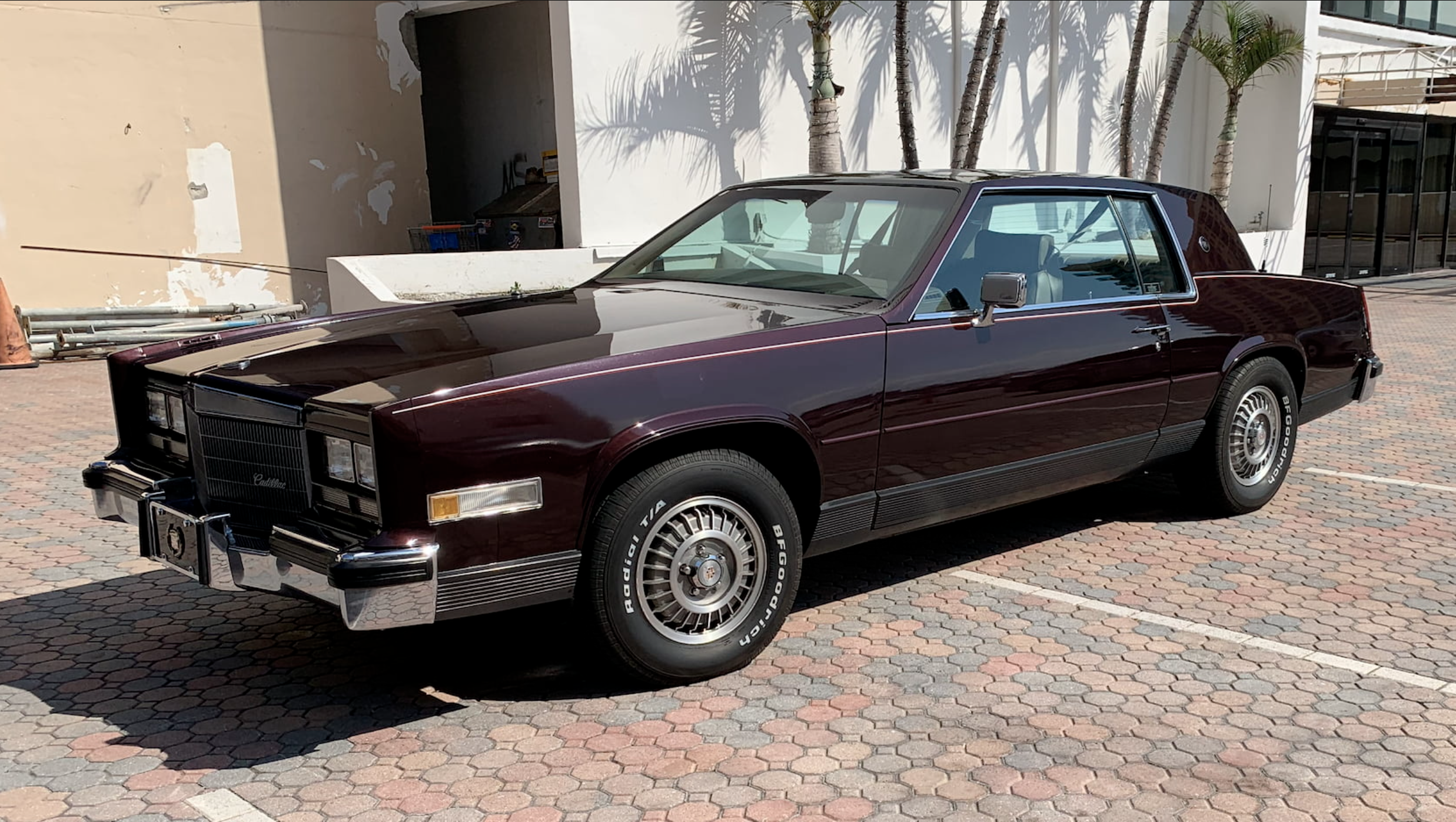
4) 1988 Cadillac Eldorado coupe—this late 2018 post on the emergency 1988 Eldorado restyle never stood out until this year, when its views went up 279%. It edged the far more glamorous 1984 Eldorado Biarritz convertible by a solid 28% (we won’t talk about how the 1986 Eldorado coupe did).

3) 1989 Cadillac Sedan de Ville—this post on the final de Ville of the decade did well, but not great, for eight years after it was first written. This year, somewhat inexplicably, it is this year’s highest-ranking new entrant.

2) 1981 Oldsmobile Cutlass Supreme coupe—this post is #1 all-time (over 5,700 views), and repeats at number two for 2025. Popularity when new does not always equal collectability now, and Hagerty has yet to track the values of “civilian” (non-Hurst/Olds, 442) eighties Cutlass Supreme.

1) 1980 Pontiac Sunbird Sport Hatch—up nine slots this year (top five all-time with over 4,100 views). Perhaps the salient example of my rarity theory—any first-generation Sunbird coming up for sale is now a rare sight.

Five posts that did not make it into the top ten in 2025 after doing so in 2024 were the 1983 Honda Civic S hatchback coupe (still the best performing Asian vehicle at #12), the 1984 Dodge Daytona Turbo Z hatchback coupe, the 1985 Chevrolet C20 Suburban Silverado SUV, the 1988 Mercury Cougar XR-7 coupe, and the 1989 Buick Park Avenue Ultra sedan. The top European car for 2025 was the Jaguar XJ6 Series III, at #11. An entry coming on strong at the end of 2025 was a recent post on the 1980 Porsche 911 SC coupe.

Thanks to all who viewed this blog in 2025!

80s Car Stereos: Alpine

Unlike the Delco/GM Bose, Alpine’s presence in the eighties car stereo market was associated with many individual models released over the decade.

1981 Alpine print advertisement

Between the early 1980s and the end of the 1990s, Alpine supplied car audio to Lamborghini and used their Countach as its mascot car, featured in every product brochure, advertisement, and poster. The Alpine-equipped Countach was also a regular presence at trade and public shows.

Alpine had come a long way by the early eighties. Established in 1967 as Alps-Motorola—a joint venture between Alps Electric and Motorola—it became Alpine Electronics, Inc. in 1978 when Alps bought out Motorola’s share of the company. Alpine’s stereos had distinctive green faces, first seen with the 7128 cassette player in 1980.

Sales Numbers & Period Reviews

The eighties were salad days for Alpine. The combination of the highly visible Lamborghini affiliation and substantial technical innovation yielded impressive sales numbers of fairly high-priced stereos. A select set of authorized car audio installers ensured that Alpine’s systems worked well in the generally higher-end vehicles they were installed in.

Stereo equipment review magazines of the age were generally impressed with Alpine’s products. Audio magazine stated that 1984’s $600 Model 7347 car stereo did much to “advance the science and art of car stereo equipment design.” A late 1986 write-up in Stereo Review observed that the $800 Model 7900 compact disc player was “thoroughly insulated from road shock and vibration.”

The View From 2025

Alpine is still very much with us, though the green faces are long gone. For those looking to the past, eBay’s vintage section does pretty well. There are also repair shops that will fix these now forty-year-old stereos.

Make mine an Alpine 7900, please—one of the very first car stereo compact disc players.

Refreshing Some Golden Oldies

Typewriter icon

It’s now almost 12 years (!) since I began posting on Eighties Cars. Over that time, my style of posting has changed, and I’ve discovered better sources for much of the information. Below are ten early posts from those first two years that I have significantly updated over time:

1985 Ferrari Testarossa coupe—in late 2013, this was my first post on a specific car. At this point, it is about 90% longer than it was initially, and, of course, the pricing guidance is more current—and far more stratospheric.

1988 BMW 750iL sedan—this was my fourth post about a specific car and introduced me to how hard it is to find specifics about options in high-end German vehicles from the 1980s. Much modified, it’s now about 76% longer than the original.

1986 Porsche 944 Turbo print advertisement

1986 Porsche 944 Turbo hatchback coupe—my first Porsche post was also quite an education. Writing about the 1986 944 Turbo led me to finding the superb source of data that is excellence, which I’ve used in every Porsche blog post since.

1985 Chevrolet Camaro IROC-Z hatchback coupe—this post from late 2013 was the seventh I made about a specific car. IROC-Z values and the information about them have gone crazy in the last twelve years, resulting in a current post that is just about exactly twice the length of the original.

1985 Buick Somerset Regal coupe—this early 2014 post got both Autoblog and Jalopnik references at a point when both of those sites were extremely popular. Welcoming readers from those two sites and making some other changes makes that post more than 40% longer than when it was first published.

1983 Honda Civic brochure cover

1983 Honda Civic S hatchback coupe—this post was initially a “short take” because information about the first sporty Civic was tough to find. That’s changed to at least some extent, and the post is now two and a half times as long. No more short take …

1986 Ford Taurus sedan—at about 600 words, this might have been my first relatively long-form post, in part because Ford’s trim levels and options were so complex. What’s changed since is mostly the writing style.

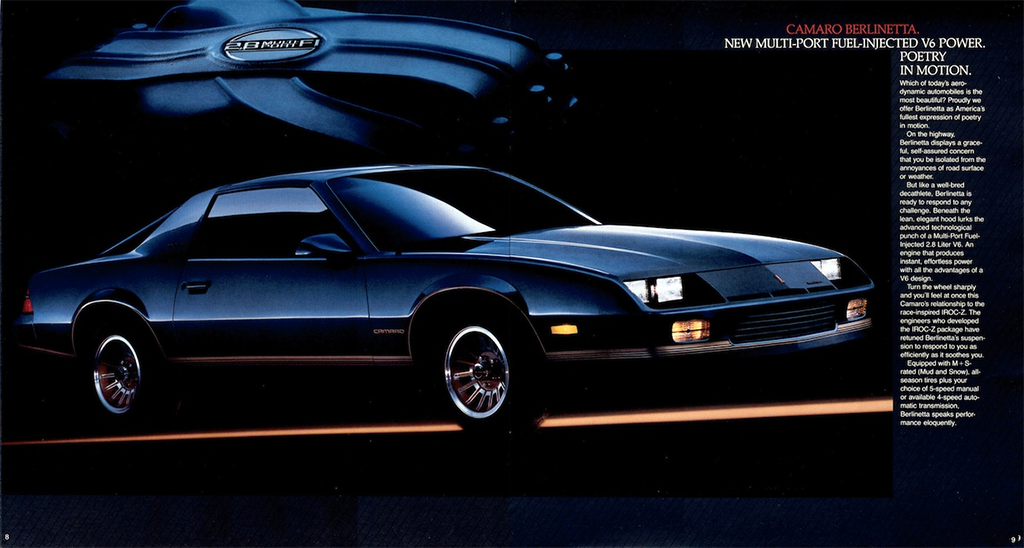
1986 Chevrolet Camaro Berlinetta hatchback coupe—this was another successful post about a car that is rarely written about (the attention goes to Z28s and IROC-Zs). Now over 40% lengthier than the original, it remains #2 overall.

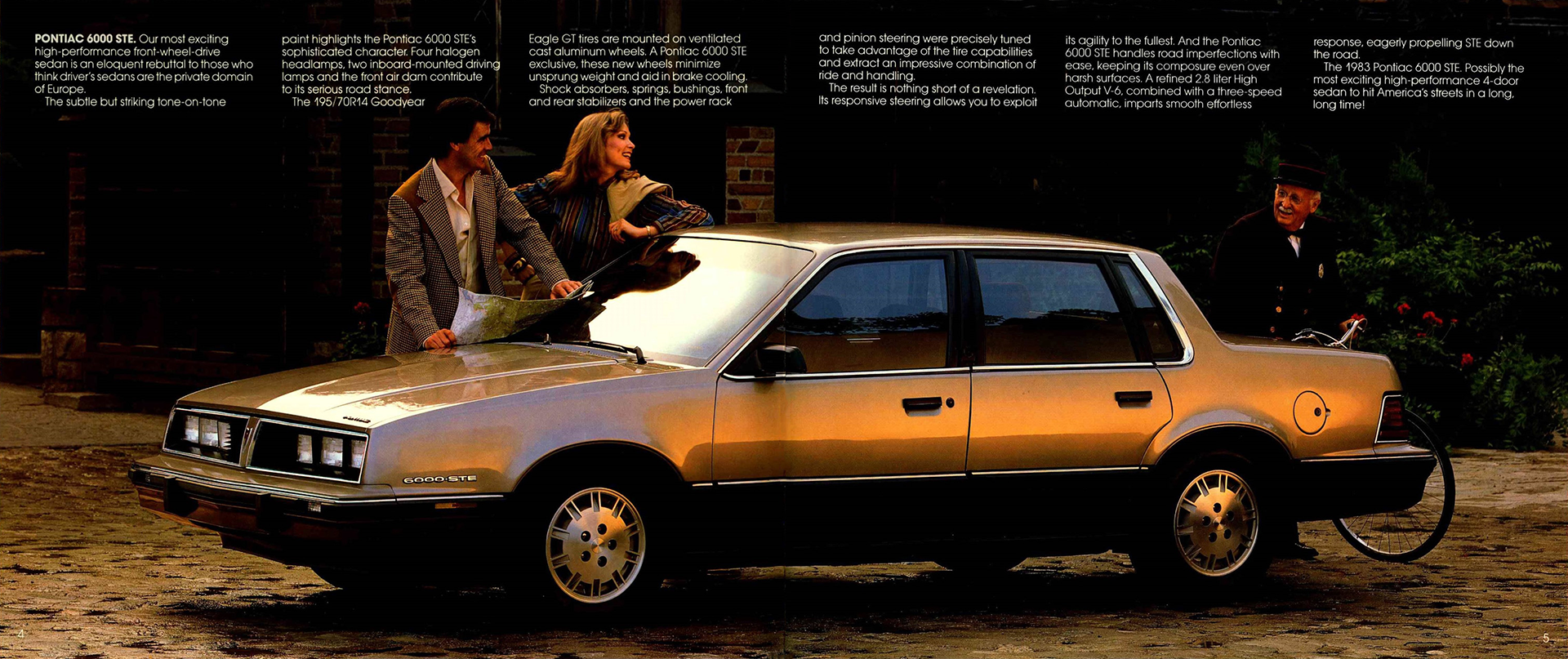
Pages from the 1983 Pontiac 6000 STE brochure

1983 Pontiac 6000 STE sedan—this was an early challenge, as there were very few reliable sources for the STE‘s first year when I was writing in early 2014. Over time, that changed, resulting in a blog post that is now 50% longer and far more accurate than the original.

1981 Oldsmobile Cutlass Supreme coupe—this post from mid-2015 is the single most popular post on Eighties Cars. It’s actually not too much longer than the original (a little over 20%), but the style is now far different.

Do you see other older posts about specific cars on Eighties Cars that need a revision or update? There are about 300 out there …

1986 Oldsmobile Delta 88 Royale sedan

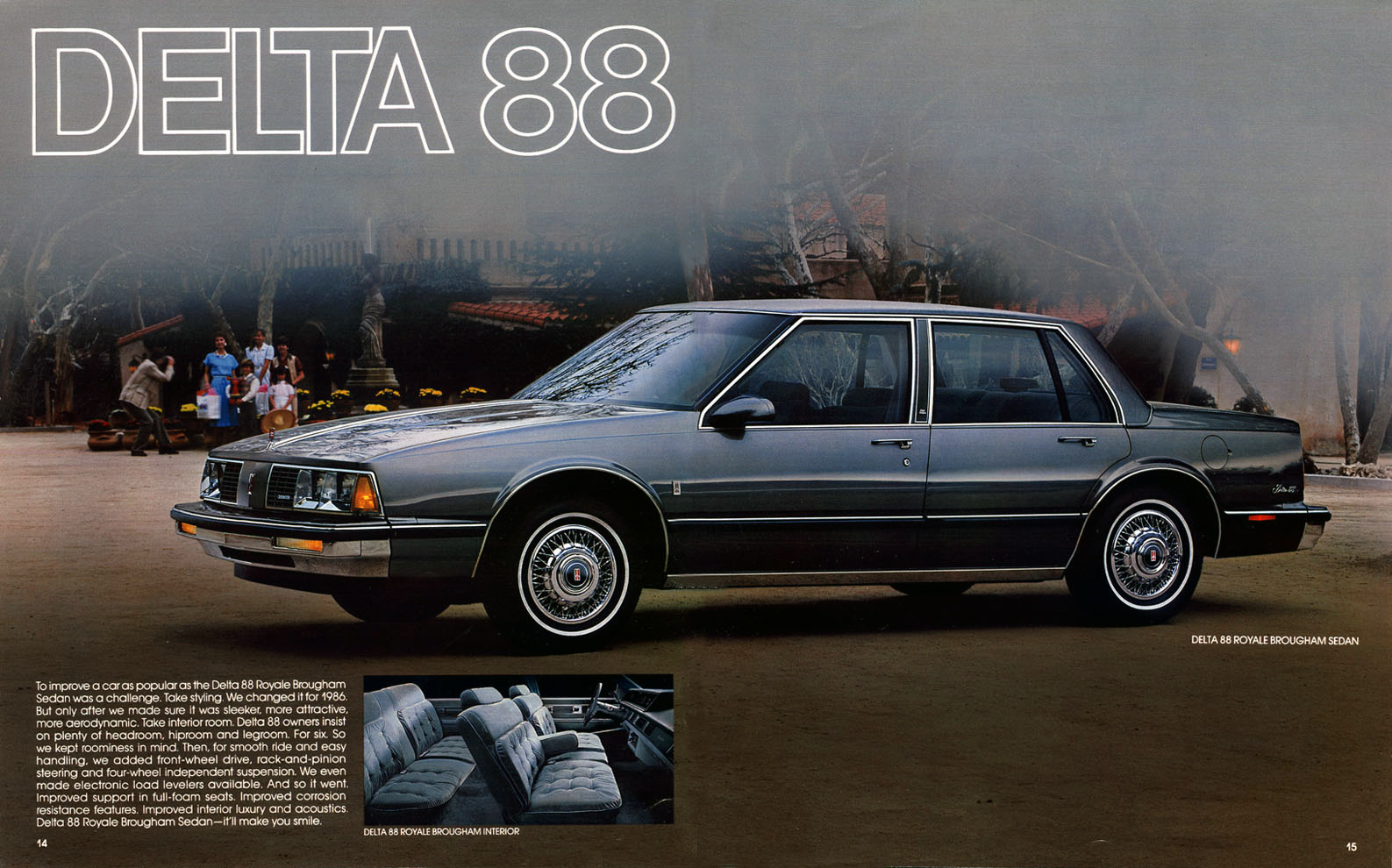
For unclear reasons, one, but only one, of the supermarkets in my area often has interesting eighties cars parked outside. In late July 2025, there was a 1986 Oldsmobile Delta 88 Royale Brougham sedan on “display”—good enough reason for this blog entry.

“Sleeker, more attractive, more aerodynamic”

Oldsmobile’s long-running Delta 88 was all-new for 1986. Downsized for the second time, the ninth generation also moved from rear-wheel drive to front-wheel drive. For 1986, the base Delta 88 was the Royale, while the top-of-the-line was the Royale Brougham.

The Delta 88’s base engine was the LN7 125 bhp 3.0 liter/181 ci V6 with multiport fuel injection. Optional power was the $370 LG3 150 bhp 3.8 liter/231 ci V6 with sequential fuel injection. Both engines were mated to a four-speed automatic. EPA fuel economy ratings for the base engine were 18 city/27 highway by the day’s standards (16/24 by today’s measures). Hilariously, the more powerful upmarket 3.8 liter V6 was rated at 19 city/30 highway by 1986 standards (17/27 by 2025 measures). With an 18-gallon fuel tank, a Delta 88 owner who had sprung for the optional engine could expect a range of between 360 and 395 miles with a 10% fuel reserve.

This “buy the more expensive engine and you’ll get more power and better mileage” thing happened a lot with bigger GM cars in the eighties—both front-wheel-drive and rear-wheel-drive. Car and Driver recorded a 0-60 time of 10.3 seconds in a 1986 Royale coupe with the larger engine. The somewhat heavier 3.8 liter sedan was likely about 10.5 seconds, the 3.0 liter sedan around 12.1 seconds. No (further) comment.

Delta 88 Royale pages from the 1986 Oldsmobile brochure

Standard exterior and mechanical equipment on the $12,760 Delta 88 Royale sedan (about $31,900 in today’s dollars) included Soft-Ray tinted windows, power rack-and-pinion steering, power front disc/rear drum brakes, and P205/75R14 steel belted radial ply all season blackwall tires on 14-inch wheels with bright Deluxe wheel discs. Inside, a Custom bench seat with a center armrest, a Four-Season air conditioner, a side window defogger, a Deluxe steering wheel, and an AM/FM stereo radio with four speakers were included.

The $13,461 Royal Brougham added the Convenience Group, a 55/45 divided front bench seat with a center armrest, and Royale Brougham identification.

Options & Production Numbers

Among the many exterior and mechanical options were a tinted glass removable panel sunroof, a full vinyl rooftop covering, a Level III suspension, aluminum styled wheels, and P205/75R14 steel-belted radial-ply all season white-stripe tires. Inside, power door locks, power side windows, a tilt-away steering wheel, a Tempmatic air conditioner, an electronic instrument cluster, electronic cruise control with resume and acceleration features ($175), and the all-conquering Delco/Bose Music System ($875) were all available. Custom leather trim in the seating areas was only available with the Royale Brougham.

The Delta 88 Royale sedan sold well, with 88,564 Royales sold and 108,344 Royale Broughams moved—up 12% from the 171,983 in 1985. The Delta 88 was Oldsmobile’s second best-selling sedan, behind only the Cutlass Ciera, which sold an astounding 268,493 units. The final Delta 88 of any kind came off the production line on January 6, 1999.

The View From 2025

Hagerty’s valuation tools do not track any Delta 88 after the 1975 convertible, and Delta 88s of this generation rarely show up in the Hemming’s Motor News classifieds or on eBay Motors. Bring a Trailer has sold more stock cars of this generation of Delta 88 than production cars.

Make mine Dark Teal Blue Metallic, please.

Other H-platform cars I have written about are the 1987 Buick LeSabre T Type coupe and the 1987 Oldsmobile Delta 88 Royale Brougham coupe. Other Oldsmobiles covered include the 1980 Cutlass coupe, the 1981 Cutlass Supreme coupe, the 1982 Toronado Brougham coupe, the 1984 Omega sedan, the 1985 Cutlass Ciera sedan, the 1985 Cutlass Supreme coupe, the 1985 Firenza ES sedan, and the 1985 Ninety-Eight Regency sedan.

80s Car Stereos: The Bose

For the 1983 model year, the Delco-GM/Bose Music System became available for the Buick Riviera coupe, the Cadillac Eldorado coupe, the Cadillac Seville sedan, and the Oldsmobile Toronado coupe. The industry’s first custom-engineered, factory-installed sound systems, “the Bose” marked the first time that an audiophile (or someone who aspired to be one) wouldn’t automatically remove the factory stereo, call a local car stereo installer, and order something from Crutchfield upon vehicle delivery.

Most higher-end automotive stereo systems of the day combined various high-quality components and hoped to generate good sound from them. Instead, the Delco/Bose alliance developed both the imaging and the equalization via iterative testing specific to each make and model. Interestingly, the equalization between fairly close platform-mates varied considerably—seemingly minor details in the three different coupes’ interiors made a significant difference.

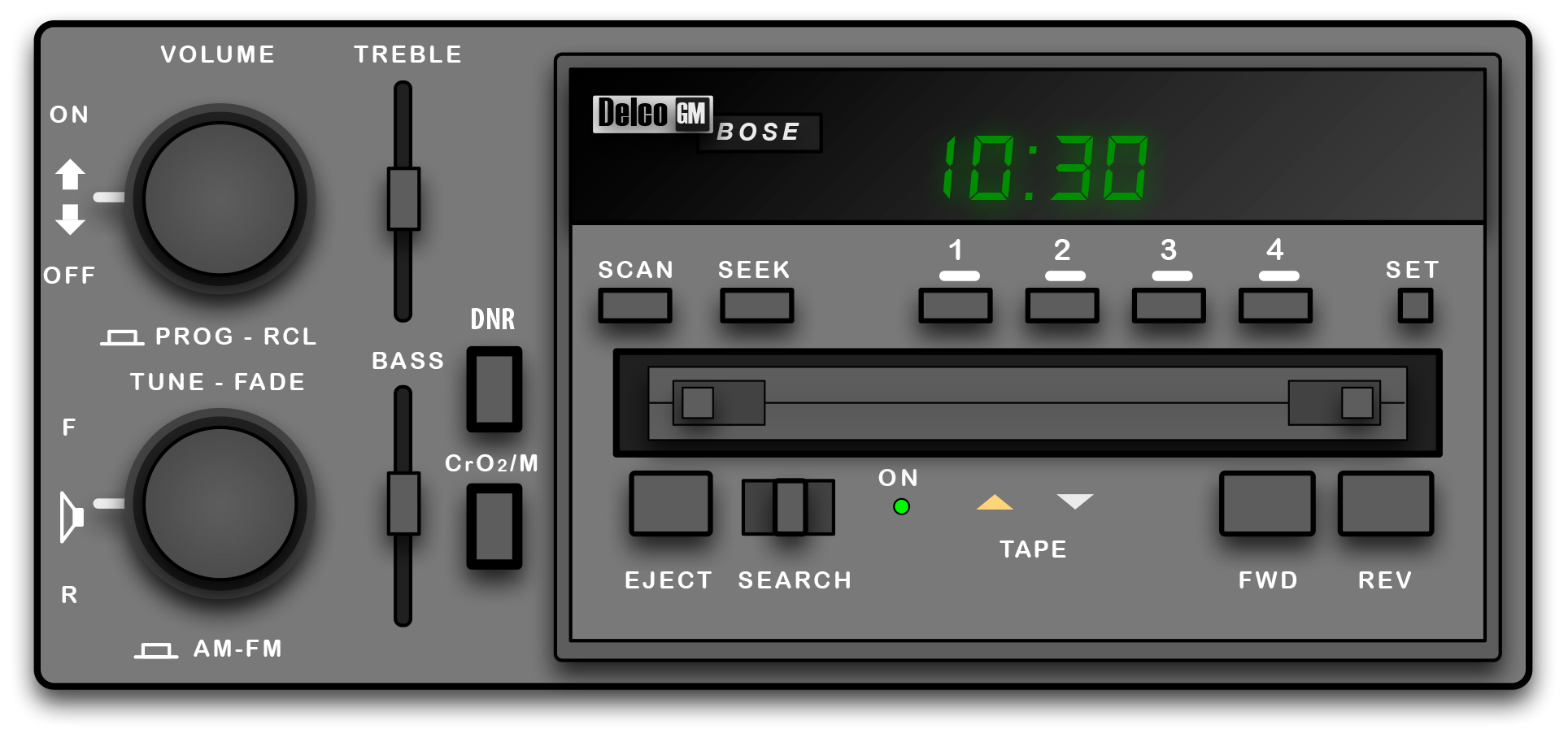
Drawing of Delco-GM/Bose Music System head unit

The Bose’s two main differentiators were excellent sound imaging for the two front passengers and individual equalization for each of the four speakers, each with its own 25-watt amplifier. The system’s head unit looked basic, with fewer controls than some lesser Delco systems—something not typical in the 1980s, where higher-end systems (either in the home or auto) usually had more buttons, dials, and sliders. There was no balance control (having one would mess with what Bose saw as the all-important imaging) and no graphic equalizer.

We’re spoiled in the 2020s, where almost every mid-range car stereo leaves little to be desired, but this was not always the case. Reviews of the Delco-GM/Bose Music System from nearly every source were astoundingly good. Some mainstream home audio magazines devoted several pages each to discussing the fantastic new car stereo. The June 1983 issue of Stereo Review even included a sneak peek of the Bose in the 1984 Corvette, with their finishing sentence being, “That’s some car!—and that’s some car stereo!” Depending on the specific model, 15% to 25% of buyers ordered the expensive ($895) new stereo system—a significantly higher take rate than General Motors had expected.

Of course, there were no Corvettes for the 1983 model year. Chevrolet’s incredibly cheesy introduction commercial for the 1984 Corvette—”You’ve Never Seen … Anything … Like This Before”—explicitly referenced the Bose, with a breathless voiceover mentioning “four never-before speakers separately engineered for sound that is out of this world.” In this case, Chevrolet was actually close to the truth: 1984’s Delco-GM/Bose Music System was light years ahead of the 1982 Corvette’s top-of-the-line UN6 Delco ETR AM/FM stereo radio with cassette player and CB—and only a little more expensive.

When the C4 Corvette did appear in early 1983 as a 1984 model, its take rate for the Delco-GM/Bose Music System (RPO UU8) was an astounding 85%. Some Chevrolet dealers found they could not sell a Corvette if it didn’t have the music system, which was the single most expensive option available on the all-new car.

For the rest of the decade, the take rate for the Bose in the Corvette remained very high, ranging from 89% (1988) to 93% (1986). Pricing edged up to $905 in 1987 and then dropped to $773 in 1988. By 1988, the radio delete option was gone from the Corvette’s RPO list.

Among the many GM cars from the eighties I have written about that offered the Bose include the 1984 Buick Riviera T Type coupe, the 1984 Chevrolet Corvette hatchback coupe, the 1985 Buick Electra sedan, the 1985 Buick Somerset Regal coupe, the 1986 Cadillac Eldorado coupe, the 1986 Chevrolet Corvette convertible, the 1988 Chevrolet Corvette 35th Anniversary Edition hatchback coupe, the 1987 Oldsmobile Delta 88 Brougham coupe, the 1988 Cadillac Eldorado coupe, and the 1989 Buick Electra Park Avenue Ultra sedan. By the late eighties, the Bose brand name was also showing up in other cars, such as the 1989 Nissan Maxima sedan.

Most material in this blog entry was sourced from the unfinished Riviera Project. I have also written about Alpine‘s eighties car stereos.

0-60 Times in the Eighties

One of the canards of eighties cars is how performance returned over the decade. I’ve accepted this for many years, but recently, I got interested enough to put some time into it.

I ended up plotting about 175 individual 0-60 times of cars I have blogged about, and this chart was the result. The curving green trendline is a polynomial best fit, which drops from 12.5 seconds in 1980 to 7.9 seconds in 1989.

Chart of 0-60 mph times by year in the 1980s

The quickest car I’ve written about is the 1989 Turbo Trans Am, which Car and Driver got to 60 mph in 4.6 seconds—still very respectable even in 2025. The slowest car was a 1980 Cadillac Seville with its standard diesel engine, at 19.7 seconds. Outliers on the lower performance side include the 1986 Hyundai Excel (16.1 seconds), while the 1983 Ferrari Berlinetta Boxer stands out with its 5.0 second 0-60.

The chart definitely supports the premise that performance improved in the 1980s, but there are challenges with the data:

  1. The only data points are from my blog entries. I like to think that I write about a wide variety of cars, but I tend to choose the more interesting ones—which are often the faster versions. So, this skews the data, but likely by about the same for every year.
  2. Some 0-60 times are hard to find, especially of less glamorous or little-changed cars. About 15% of my blog entries did not have a reliable enough 0-60 time for me to usefully plot.
  3. I find that the 0-60 estimation tools are often well off compared to “real” 0-60 times. Thus, I do not trust these tools to create reliable placeholders when I do not have actual data.
  4. There are also the classic differences in 0-60 times between various automobile magazines. Car and Driver was almost always faster—sometimes significantly. An example that comes easily to mind is the 1983 Volkswagen Rabbit GTI, where Car and Driver recorded a 9.7 second 0-60 time, and Road & Track managed a 10.6 second 0-60. Which one to trust?

What do you think?

Chrysler Corporation’s Transition To Front-Wheel-Drive

I was working on a blog post on the 1981 Chrysler New Yorker, and I got to thinking about the nuts and bolts of Chrysler’s transition to front-wheel-drive in the United States. For this study, I looked at only non-imported cars (no Arrows, Colts, or Sapporos), and only at offerings from the Chrysler, Dodge, and Plymouth brands.

1977: the year before the Omni/Horizon hatchback sedan debuted, Chrysler Corporation had four platforms, all of them rear-wheel-drive. The F-body Aspen/Volaré compact was by far the sales leader—approximately 48% of Chrysler’s 1.2 million sales. The other offerings were the M-body premium mid-size (new for 1977, with the Dodge Diplomat sedan fated to make it all the way to 1989), the B-body mid-size, and the C-body full-size.

1978: the L-body Omni/Horizon hatchback sold well in its first year, with almost 167,000 exiting Dodge and Plymouth dealerships. These numbers comprised 15% of overall domestic production, with the Aspen/Volaré still being the sales leader. Chrysler Corporation sales declined by about 13%.

1979: a coupe version of the L-body made it to market, branded as Omni 024 and Horizon TC3. Overall Omni/Horizon sales were now 27% of total production, partly because Chrysler’s sales continued to collapse (off another 11%). Chrysler did bring the downsized rear-wheel-drive R-body full-size platform to market, replacing the C-body. 1979 was the last year that the Aspen/Volaré led Chrysler sales.

1980: Omni/Horizon sales increased by 2% to 264,000. They were now 41% of overall domestic production and by far the sales leader in another down year. The rear-wheel-drive J-body coupes (Cordoba and Mirada) replaced the B-body, but didn’t sell any better. 1980 was the final year for the Aspen/Volaré.

1981: a lot changed at your local Dodge or Plymouth showroom in 1981. The Aspen/Volaré was retired, putatively replaced by the heavily publicized Aries/Reliant K-body. Sales of the two front-wheel-drive platforms combined for 81% of overall production, and domestic Chrysler automobile production was up for the first time in many years.

1982: Chrysler added Super K models to the mix—really just slightly nicer versions of the Aries and Reliant. The Chrysler brand got its first front-wheel-drive offering with the LeBaron coupe, sedan, station wagon, and (late in the model year) convertible. The rear-wheel-drive C-body full-size was retired after only three years, with the New Yorker and Gran Fury marques transitioning to the rear-wheel-drive M-body mid-size platform. Despite the increased front-wheel-drive choices, their percentage of production increased only half a percent.

1983: Chrysler introduced the E-body—an extended version of the K-body with three more inches of wheelbase. Dodge got the 600 sedan, while Chrysler got two models—the E Class and the New Yorker (switching platforms yet again). Chrysler’s M-body offering was renamed to New Yorker Fifth Avenue, but I’m betting many potential buyers were still confused. 1983 was also the last year for the J-body coupes, with the Cordoba, Imperial, and Mirada going away.

1984: the sporty G-body Daytona and Laser hatchbacks were announced. Chrysler rebranded the rear-wheel-drive New Yorker Fifth Avenue as simply Fifth Avenue—probably a good idea. With only the M-body as a rear-wheel drive offering, the percentage of front-wheel-drive vehicles reached 88%.

1985: the Chrysler E Class vanished, but magically reappeared as the Plymouth Caravelle. The H-class mid-size sedan debuted in Lancer and LeBaron GTS forms. Dodge kept interest going in the aging L-body with increasingly quicker variants: 1985 had the Omni GLH and the Shelby Charger.

Chart of Chrysler's transition from rear-wheel-drive to front-wheel-drive

1986: unlike the previous five years, things were relatively quiet in 1986, with no model introductions or phase-outs. The K-body convertible was in its final year—there would be no Chrysler LeBarons (Mark Cross or Town & Country) or Dodge 600s after 1986.

1987: the Super K platform disappeared, and the P-body and front-wheel-drive J-body platforms debuted. The K-body offerings no longer included a LeBaron coupe or convertible, but the LeBaron sedan and station wagon and the Aries/Reliant twins were still good for a quarter of overall production. The percentage of front-wheel drive cars hit 90%, but Chrysler still sold over 100,000 of the M-body sedans, with the Chrysler Fifth Avenue being the leader.

1988: the front-wheel-drive C-body debuted, at that point the largest Chrysler front-wheel-drive offering—by an inch of wheelbase. It was seen in the Dodge Dynasty, and yet another version of the New Yorker—the end-of-the-line E-body based New Yorker was branded as New Yorker Turbo. Front-wheel-drive sales hit 93%.

1989: the E-body went away, with the A-body Dodge Spirit and Plymouth Acclaim sedans replacing it. For the first time since 1980, the K-body was not the best-selling platform—the C-body took over the sales crown in its second year, with 207,000 sold. Front-wheel-drive was now 97% of production.

1990: Chrysler Corporation discontinued three platforms in 1990. The K-body and H-body went away, but most important for this narrative is that the rear-wheel-drive M-body was gone. The transition was complete, but Chrysler would return to rear-wheel-drive in 1992 with the Dodge Viper.

Interesting Eighties Vehicles at the 2025 Barrett-Jackson Scottsdale

Barrett-Jackson‘s signature annual Scottdale auction finished on January 26th. In the middle of 2021, I gave up trying to chronicle every eighties vehicle sold at any particular auction—there’s often an endless sameness to them. So, I now only write about the cars and trucks that are less seen at auction. Below are five of the 2,000 or so vehicles sold at Scottsdale that attracted my eye, described and discussed with a little more detail than usual.

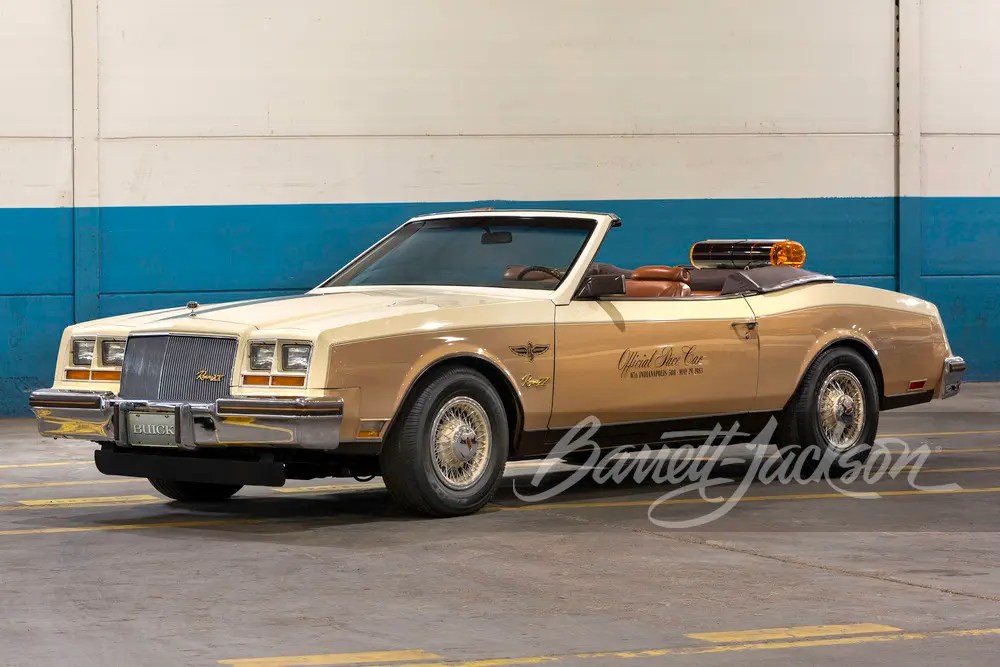
Exterior photo of 1982 Buick Rivera convertible Indy 500 pace car
1982 Buick Riviera,
image linked from Barrett-Jackson’s website

[Lot 113] 1982 Buick Riviera convertible Indianapolis 500 pace car. One of two custom-built for the 1983 Indy 500, with tan two-tone paint and brown leather/suede front bucket seats—a look that resembled, but did not precisely match the 1983 Riviera XX Anniversary coupe. 410 bhp (stock turbo Rivieras never got to half of that) 4.1 liter/252 ci V6 with sequential fuel injection and twin turbochargers, a three-speed automatic, and 12,000 miles—did someone actually daily drive this car at some point, or were most of these shakedown miles? The $47,000 hammer price has to represent an all-time high for a sixth-generation Riviera, though Bring a Trailer and Hagerty are now both showing values in the high $30k range for very nice stock examples.

1980 Datsun 200SX,
image linked from Barrett-Jackson’s website

[140] 1980 Datsun 200SX SL coupe. Satin Blue Metallic with blue cloth/vinyl front bucket seats. Z20 100 bhp 2.0 liter/120 ci inline four with fuel injection, a three-speed automatic, and unstated mileage. $10,000 for a nice-looking example of a car I haven’t seen any examples of in about three decades—despite almost 93,000 being sold in the 1980 model year alone. I should probably write about the 200SX soon [update—I did].

1980 Ford Pinto,
image linked from Barrett-Jackson’s website

[151] 1980 Ford Pinto Squire two-door station wagon. White with woodgrain vinyl bodyside and liftgate paneling and Vaquero cloth front bucket seats. Lima 88 bhp 2.3 liter/135 ci inline four with a two-barrel carburetor, a three-speed automatic, and an indicated 9,500 miles. $6,500 for one of the last and most expensive of the star-crossed Pintos. Who saved this car?

1984 Chevrolet Camaro,
image linked from Barrett-Jackson’s website

[1524.2] 1984 Chevrolet Camaro Z/28 hatchback coupe. Dark Gold Metallic with Camel Custom cloth front bucket seats. L69 “H.O.” 190 bhp 5.0 liter/305 ci V8 with a four-barrel carburetor paired with a five-speed manual (not the four-speed in the on-line listing—those went away after 1982). Eighties Camaros are far from rare at auction (Barrett-Jackson had seven this year), but I loved that this Z/28 had been preserved in its very 80s colors—no red or black here. $13,000 is right at Hagerty’s #3/Good condition money.

1987 Porsche 959, image linked from Barrett-Jackson’s website

[1381] 1987 Porsche 959 Komfort coupe. Silver Metallic with burgundy leather front bucket seats with a silver stripe pattern. 260 bhp 2.8 liter/174 ci flat six with fuel injection, twin turbochargers, and twin intercoolers, a six-speed manual, and 4,000 miles. At $1,325,000, by far the highest eighties vehicle sale at this year’s Barrett-Jackson Scottsdale—almost half a million ahead of an admittedly gorgeous 1989 Porsche 911 Carrera Reimagined by Singer. According to Hagerty, this is merely #3/Good condition money for a Komfort—did someone get a (relative) bargain?

What eighties vehicles did you like at this year’s Barrett-Jackson Scottsdale?

Interesting Eighties Vehicles at the 2025 Mecum Kissimmee

Mecum’s huge annual Kissimmee auction finished on January 19th this year. In the middle of 2021, I gave up trying to chronicle every eighties vehicle sold at any particular auction—there’s often an endless sameness to them. So, I now only write about the cars and trucks that are less seen at auction—and those that sold (a red 1982 Porsche 935/84 race car was a no-sale at $1,100,000). Here are ten that attracted my eye, described in a little more detail than usual.

1982 Oldsmobile Delta 88 interior, linked from Mecum’s website

[Lot E117] 1982 Oldsmobile Delta 88 Royale coupe. White with a White vinyl Landau top and Dark Blue cloth Custom Sport front bench seat. LV2 140 bhp 5.0 liter/307 ci V8 with a four-barrel carburetor, a four-speed automatic, and 8,900 miles. A $20,500 hammer price indicates that these game-changing B-bodies still have their followers. Perhaps I should write about the Oldsmobile version soon.

1989 Buick LeSabre, linked from Mecum’s website

[E194] 1989 Buick LeSabre T-Type coupe. Black with gray cloth front bucket seats. LN3 165 bhp 3.8 liter/231 ci V6 with fuel injection, a four-speed automatic, and 94,000 miles. Flint made a little under 16,000 of these late T-Types over three years—how many are left? $14,000 bought this example, evidently now sporting a BMW shade of black.

1983 Honda Civic, linked from Mecum’s website

[L189] 1983 Honda Civic 1500S hatchback coupe. Victoria Red with black cloth front bucket seats with red inserts. EM 67 bhp 1.5 liter/91 ci inline four with a two-barrel carburetor, a five-speed manual, and 12,600 miles. $25,000 is real money for a non-CRX eighties Civic—but the 1500S was well-regarded when it was new.

1984 Chevrolet Corvette, courtesy of Mecum

[J123] 1984 Chevrolet Corvette hatchback coupe. Experimental tri-coat Tre-Celeste Pearl with medium gray leather front bucket seats. L83 Cross-Fire 205 bhp 5.7 liter/350 ci V8 with throttle-body fuel injection, a four-speed automatic, and 12,500 miles. Eighties Corvettes are a dime a dozen at auction (there were 33 at Mecum Kissimmee this year), but the color (only painted on two Corvettes) sets this one apart. $20,000.

1987 Chevrolet Chevette exterior
1987 Chevrolet Chevette, courtesy of Mecum

[J235] 1987 Chevrolet Chevette CS hatchback coupe. Silver Metallic with gray cloth front bucket seats. LB0 65 bhp 1.6 liter/98 ci inline four with a two-barrel carburetor, a four-speed manual, and 47 miles. $30,000 for perhaps the nicest one remaining, but it’s still a final year Chevette. From the Ray Fauber Estate Collection, which featured many extremely low mileage vehicles.

1987 Lincoln Continental, linked from Mecum’s website

[G322] 1987 Lincoln Continental sedan. Midnight Black with Oxford Gray leather Twin Comfort Lounge front seats. Windsor 150 bhp 4.9 liter/302 ci V8 with fuel injection, a four-speed automatic, and 86,000 miles. You see a reasonable number of eighties Lincoln Marks, but you don’t see nearly as many of these seventh-generation Continentals. $8,500 for another car I should probably write about at some point [update—I did].

1985 Toyota Cressida, linked from Mecum’s website

[W128] 1988 Toyota Cressida sedan. Dark Red Pearl with burgundy leather front seats. 156 bhp 5M-GEU 2.8 liter/168 ci inline six with fuel injection, a four-speed automatic, and 75,000 miles. $20,000 bought this once top-of-the-line North American Toyota offering—produced just before the advent of Lexus. Cressidas are now rarely seen, though there were two at this year’s Mecum Kissimmee.

1984 Ford Mustang, linked from Mecum’s website

[W207] 1984 Ford Mustang GT Turbo convertible. Light Academy Blue Glow with a blue convertible top and charcoal vinyl front bucket seats. Lima 145 bhp 2.3 liter/183 ci inline four with fuel injection and a turbocharger, a five-speed manual, and 7,300 miles. I was completely unaware of this two-year-only nonSVO turbo Mustang until I viewed these auction results. $10,000 for this attractive and rare Fox-body.

1984 Ferrari 512 BBi, linked from Mecum’s website

[F159] 1984 Ferrari 512 BBi coupe. Rossa Corsa (of course!) with beige leather front bucket seats. Tipo F110A 340 bhp 4.9 liter/302 ci flat 12 with fuel injection, a five-speed manual, and 5,100 miles. At $345,000, the highest eighties vehicle sale of this auction—by a cool $80,000 over a 1988 Testarossa.

1983 Lola T700 Cosworth, linked from Mecum’s website

[S153] 1983 Lola T700 Cosworth Indy race car. In Budweiser colors—red and white. Cosworth DFX 2.7 liter turbocharged V8 with a five-speed manual. The first Newman/Haas-campaigned Indy Car, which was twice driven to victory by Mario Andretti in 1983, this was a race car that did sell—for $250,000.

End of the Year Review: 2024

Typewriter icon

I look at the end-of-year results for the blog’s most viewed posts every December. For 2024, it once again looked like the key to an individual post’s popularity was often in the rarity of the other coverage available for that particular vehicle. We’ll discuss this year’s top ten most viewed posts in reverse order.

10) 1980 Pontiac Sunbird Sport Hatch—dropping eight slots this year, but hanging on (still top five all-time with almost 4,000 views). Perhaps the salient example of my rarity theory—any first-generation Sunbird coming up for sale is now a rare sight.

9) 1985 Chevrolet C20 Suburban Silverado SUV—the first eighties SUV to make any year’s top ten dropped two spots this year, proving that SUVs don’t dominate everything in 2024. According to Hagerty, a 1985 C20 Suburban Silverado in #1/Concours condition is $47,300, with a more typical #3/Good condition example going for $20,300.

8) 1984 Dodge Daytona Turbo Z hatchback coupe—a newish post from July 2023 makes its first appearance in the top ten. It’s also the highest ranking MOPAR entry ever.

7) 1983 Honda Civic S hatchback coupe—for me, at least, researching early eighties Hondas is challenging. Thus, this post was a 250-word “short take,” but it makes its first appearance in the top ten.

6) 1988 Mercury Cougar XR-7 coupe—Hagerty does not track these distinctive sixth-generation Cougars, though they do track eighties Thunderbirds on the same platform. Dropping one slot for this year.

5) 1989 Buick Electra Park Avenue Ultra sedan—this 2020 post about the top-of-the-line Buick for 1989 (more expensive than the Riviera) rose four spots in 2024.

4) 1980 Pontiac Grand Prix SJ coupe—a relatively recent post from early 2022 shows some staying power. Up two spots in 2024 for Pontiac’s final Grand Prix SJ.

3) 1985 Buick Somerset Regal coupe—this post has been picked up by other websites a few times, including in 2018 by Jalopnik. Hilariously, I don’t think I would have ever gotten around to writing about the Somerset Regal if I hadn’t seen one on the streets of Philadelphia back in 2014. Returning to the top ten this year, this post is the fourth most popular entry since Eighties Cars debuted over a decade ago.

2) 1981 Oldsmobile Cutlass Supreme coupe—this post is #1 all-time (5,500 views), but drops one spot for 2024. Popularity does not always equal collectability, and Hagerty has yet to track eighties Cutlass Supreme values.

1) 1987 Mercury Lynx XR3 hatchback coupe—Mercury is, of course, an orphan make, but this blog entry has been viewed more than six times more than my write-up on the related 1981 Ford Escort hatchback coupe. Up three spots this year.

Three posts that did not make it into the top ten in 2024 after doing so in 2023 were all Chevrolets—the 1980 Chevrolet Camaro Z28 coupe, the 1983 Chevrolet Monte Carlo SS Sport Coupe, and the 1986 Chevrolet Camaro Berlinetta hatchback coupe. The best-performing European product post was the 1983 Jaguar XJ6 sedan (15th). An entry coming on strong at the end of 2024 was the 1984 Buick Skyhawk coupe.

Thanks to all who viewed this blog in 2024!