1982 Honda Prelude Sport Coupe

“Think of it as a civilized sports car.”

1982 was the final year for the first generation of Honda’s Prelude Sport Coupe. Honda changed little from the 1981 model year—the major variation was more dealer accessories. Two of the three available exterior colors also changed.

The Prelude’s engine was the EK CVCC 75 bhp 1.8 liter inline four with a three-barrel carburetor. The standard transmission was a five-speed manual, and a three-speed automatic was available. 0-60 mph came in about 11.5 seconds in a car with a curb weight of 2,138 pounds. EPA fuel economy ratings with the manual were 29 city/40 highway by the day’s standards. With a 13.2-gallon gas tank, the owner of a 1982 Prelude with the five-speed could expect a range of 335 to 365 miles with a 10% fuel reserve.
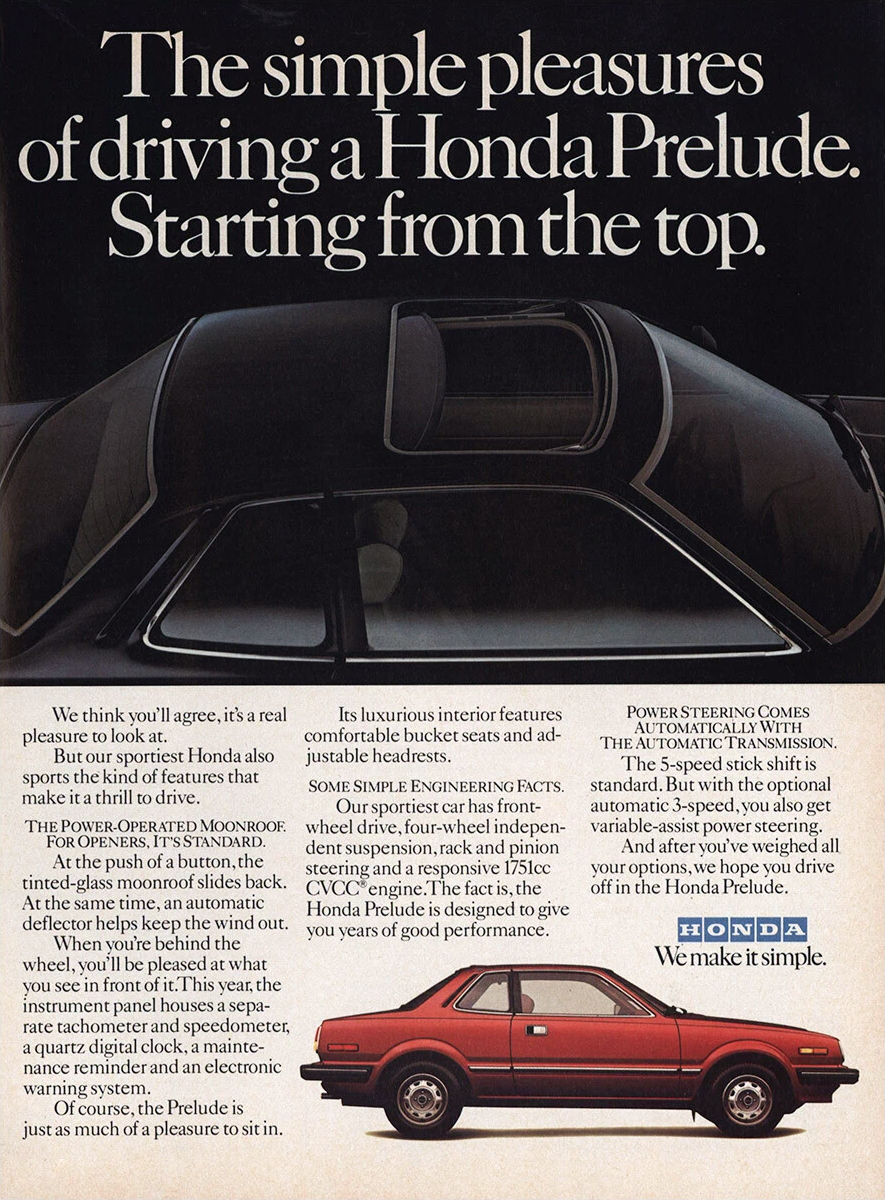
1982 Honda Prelude print advertisement

The 1982 Prelude Sport Coupe’s base price was $7,995—about $27,700 in today’s dollars or almost exactly what a 2025 Honda Civic hatchback sedan goes for. Standard exterior and mechanical equipment included tinted glass, a power-operated moonroof, rack and pinion steering, power-assisted front disc/rear drum brakes, and 175/70SR13 steel-belted radial ply tires (a size still available) on 13-inch wheels with bright metal wheel trim wings. Inside, reclining front bucket seats with 4-way adjustable headrests, a four-spoke Sport steering wheel, two-speed plus intermittent wipers, a quartz digital clock, front side window defrosters, a remote trunk release, and a rear window defroster were included.

Accessories & Production Numbers

There were no factory options for the Prelude other than transmission and paint color. Dealer accessories included aluminum alloy wheels and air conditioning. Dealers also offered twelve (!) audio choices, ranging up to an AM/FM stereo radio with electronic tuning, a digital display, and an autoreverse cassette with Dolby—but I would probably have just given Crutchfield a call.

Honda sold 37,872 Preludes in the United States in the 1982 model year—a solid finish for the first generation.

The View From 2025

There’s Prelude news right now—Honda promises that the Prelude will be coming back for the 2026 model year. Closer to our topic, first-generation Preludes were once commonly seen on American roads, but have virtually disappeared by now. You occasionally see these Preludes for sale in the Hemmings Motor News classifieds, on eBay Motors, and on Bring a Trailer.

Make mine Windsor Blue Metallic, please. Honda offered a grand total of three color choices for the 1982 Prelude. More color choices for the Prelude wouldn’t come until the 1985 model year arrived.

Other Hondas I have written about include the 1983 Accord sedan, the 1983 Civic S hatchback coupe, the 1984 Civic DX hatchback coupe, the 1984 Civic CRX hatchback coupe, the 1985 Civic CRX Si hatchback coupe, the 1986 Accord sedan, the 1986 Prelude Si coupe, and the 1988 Civic sedan.
1983 Honda Accord sedan

“Simply beautiful to own and drive.”

November 1, 1982 was an incredibly important date for Honda. That day, a Charcoal Gray Metallic 1983 Honda Accord sedan rolled off the production line at Honda’s Marysville, Ohio plant. That car is currently on exhibition at the marvelous Henry Ford Museum of American Innovation.

The only engine available for any 1983 Accord was the EK1 75 bhp 1.8 liter/107 ci inline four with a three-barrel carburetor. A five-speed manual was standard, while a four-speed automatic transmission was newly available. Consumer Guide clocked a 13.0-second 0-60 time with the manual, which they charitably described as “brisk.” Fuel economy ratings were 32 city/45 highway by the day’s standards (25/32 by today’s measures). With a 15.9-gallon gas tank, an Accord driver could expect a range of between 410 and 495 miles.

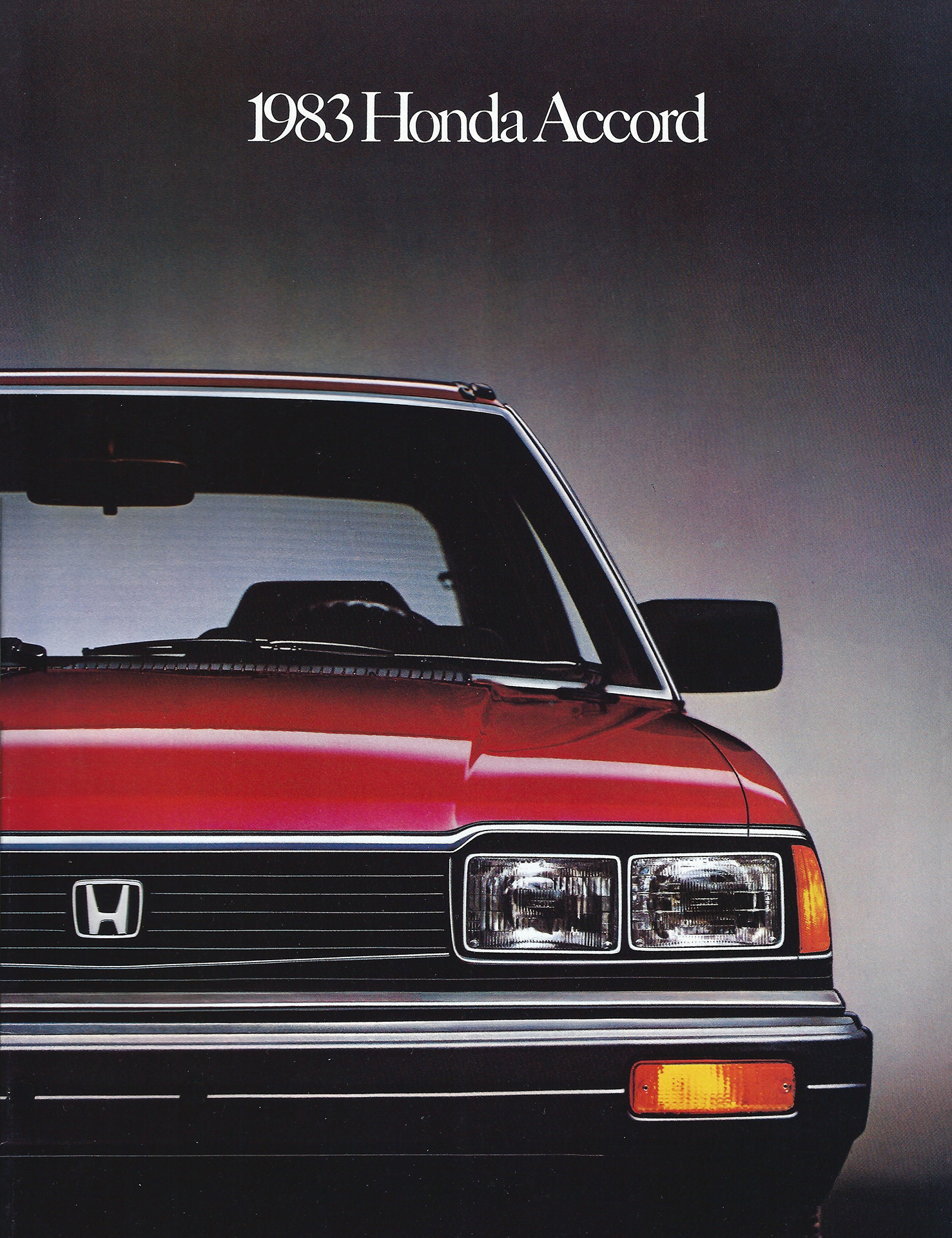
Cover of 1983 Honda Accord brochure

The 1983 Honda Accord sedan’s base price was $8,345—about $27,500 in today’s dollars, which is almost exactly what a 2025 Honda Accord LX sedan goes for. Standard exterior and mechanical equipment included dual halogen headlights, tinted glass, variable-assist power rack and pinion steering, power disc/rear drum brakes, and P185/70R13 steel-belted radial ply tires on 13-inch wheels. Inside, cloth reclining front bucket seats with adjustable headrests, cruise control, two speed plus intermittent wipers, a rear window defroster, a remote-control outside rearview mirror, a remote trunk lid release, a tachometer, and a quartz clock with a sweep hand were standard.

One Package, Dealer Options, & Production Numbers

In the middle of the model year, Honda released the Accord Special Edition. The SE added a power sunroof, aluminum alloy wheels, Michelin steel-belted radial tires, leather seats, air conditioning, dual remote-controlled outside mirrors, power windows, power locks, and an AM/FM digital electronic stereo with a stereo cassette player with Dolby noise reduction, a seven-band graphic equalizer, and a power antenna.

There were no factory options—you chose the transmission and the color, and that was it. All options were dealer-installed, including air conditioning for non SE‘s ($500) and eight different radios.

Honda produced 221,137 Accords for the 1983 model year. Comments on the Accord’s build quality from the automotive press continued to range from admiring to stunned—Consumer Guide commented on their test Accord’s “lustrous” paint and “formidable” quality control.

The View From 2025

Second-generation Accords were once prevalent on American roads, but have virtually disappeared by now. You occasionally see these Accords for sale in the Hemmings Motor News classifieds, on eBay Motors, and on Bring a Trailer, but there were no sedans out there as I write this in May 2025.

Make mine Paisley Red Metallic, please.

Other Hondas I have written about include the 1982 Prelude Sport Coupe, the 1983 Civic S hatchback coupe, the 1984 Civic DX hatchback coupe, the 1984 Civic CRX hatchback coupe, the 1985 Civic CRX Si hatchback coupe, the 1986 Accord sedan, the 1986 Prelude Si coupe, and the 1988 Civic sedan.

Last updated September 2025.

1986 Honda Prelude Si coupe

In February 2022, a 1986 Honda Prelude Si sold on Bring a Trailer for $7,500. This appearance made me wonder why I hadn’t yet written about any Prelude.

“We are lots of fun.”

1986 brought few changes to Honda’s Prelude sports coupe, which continued in both base and Si versions. A visual distinction from 1985 was the high-mounted brake lamp, along with a few more exterior color choices.

The Si‘s salient feature was its engine—the B20A 110 bhp 2.0 liter/120 ci inline four with three valves per cylinder and fuel injection. Making ten more horsepower than the base Prelude meant that it was about half a second faster to get from 0-60 mph—spritely but not fast at a little over 9 seconds.

A five-speed manual transmission was standard, with a four-speed automatic optional. Fuel economy was respectable at 25 city/30 highway by the day’s standards with the manual transmission (22/28 by modern measures). As might be expected, the automatic dropped ratings by 8% in the city and 3% on the highway. With a 15.8-gallon fuel tank, a Prelude Si‘s proud new owner could expect a range of 335 to 390 miles with a 10% fuel reserve.

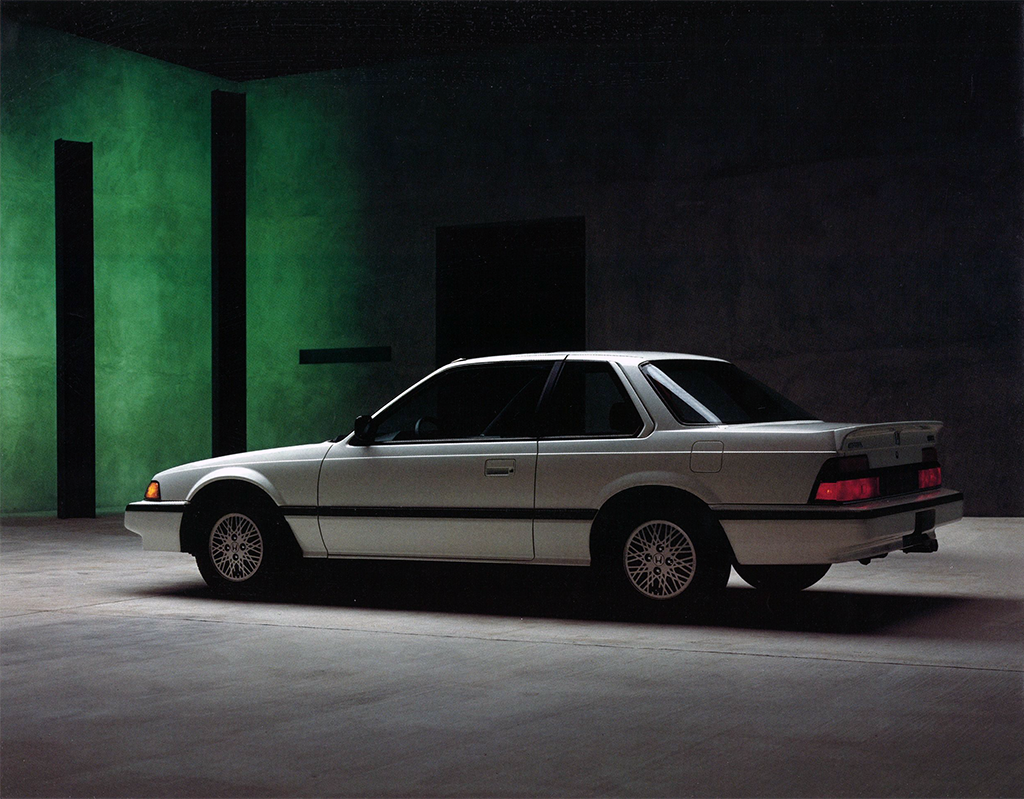
Prelude Si photo from the 1986 Honda full-line brochure

By 1986 standards, the $12,955 Prelude Si—about $38,700 in today’s dollars or about what a 2026 Prelude is expected to go for—came well-equipped. Standard exterior and mechanical equipment included a power moonroof (a Prelude trademark), power windows, power mirrors, power disc brakes, and Michelin 185/75R13 steel-belted radial tires (a size still somewhat available) on Custom 13-inch alloy wheels. Inside, air conditioning, cruise control, a leather-wrapped steering wheel, and cloth front bucket seats were included. The stereo featured electronic quartz tuning, an autoreverse cassette player, a seven-band graphic equalizer, and four speakers.

These second-generation Preludes were a revelation when introduced for the 1983 model year, replacing the somewhat ungainly first-generation coupes that had been introduced in the late 1970s. They come from a period when Honda styling seemingly could do no wrong—Road & Track called the second-generation Preludes “handsome, satisfying, exciting.”

The View From 2025

Second-generation Preludes attract collector interest, and there is some online forum support. They are sometimes available in the Hemmings Motor News classifieds, on eBay Motors, and at online auctions such as Bring a Trailer that cater to the eighties car market.

Make mine Sonic Blue Metallic, please.

Other Hondas I have written about include the 1981 Prelude Sport Coupe, the 1983 Civic S hatchback coupe, the 1984 Civic DX hatchback coupe, the 1984 Civic CRX hatchback coupe, the 1985 Civic CRX Si hatchback coupe, the 1986 Accord sedan, and the 1988 Civic sedan.

Last updated October 2025.

1984 Honda Civic DX hatchback coupe

The 1984 model year brought the third generation Honda Civic, which was available in hatchback coupe, notchback sedan, and wagon versions—along with the CRX, of course. The topic of this post is the hatchback coupe in the upscale DX trim. With its Kammback design, Honda’s new hatchback brought unprecedented style to the compact car segment.

The Civic’s standard powertrain was a 60 bhp 1.3 liter/82 ci inline four with a CVCC three-barrel carburetor and a four-speed manual. However, the DX received a more powerful EW 76 bhp 1.5 liter/91 ci inline four with three valves per cylinder and a CVCC three-barrel carburetor along with a five-speed manual. DX purchasers could also choose an automatic. In a DX with the manual transmission, 0-60 came in about 11 seconds—more than competitive in class in 1984.

With its standard manual transmission, fuel economy ratings for the DX were an excellent 35 city/45 highway by the standards of the day and a still respectable 27/32 by today’s standards. Despite the small 11.9-gallon fuel tank, a new DX owner could expect a range of from 315 to 425 miles with a 10% fuel reserve.

1984 Honda Civic Hatchback advertisement

At the beginning of the model year, the base Civic hatchback coupe went for $5,242—about $13,500 in 2020 dollars. Standard mechanical equipment on every Civic hatchback included front-wheel-drive, rack and pinion steering, and 155/80R13 steel-belted radial tires (a size still available thanks to Kumho) on 13-inch wheels. Inside, every Civic hatchback included a day/night rearview mirror and reclining front bucket seats.

The $6,292 DX—about $16,200 in today’s dollars and almost exactly what a base 2020 Honda Fit hatchback sedan goes for—added the aforementioned engine and transmission upgrades. It also included tinted glass, a rear window defroster, and reclining rear seatbacks.

There were few factory options beyond the automatic transmission, but many accessories listed in the brochure. Air conditioning was a dealer-installed option for the Civic—and would be so well into the 1990s.

Overall, the 1984 Civic sold very well—at 184,846, it set a new sales record for Honda. Third-generation Civics rarely show up for sale in the Hemmings Motor News classifieds but have more of a presence on eBay Motors—though most are either highly modified or with substantial miles.

Make mine Claret Red Metallic, please.

Other Hondas I have written about include the 1983 Civic S hatchback coupe, the 1984 CRX hatchback coupe, the 1985 CRX Si hatchback coupe, the 1986 Accord sedan, and the 1988 Civic sedan.

1988 Honda Civic sedan

There’s a white fourth-generation Honda Civic sedan routinely parked on the street about two blocks from my house. You can tell that it hasn’t led a particularly sheltered life, but it’s obviously still in regular use. That makes it time to add one of those sedans to my suite of eighties Hondas: the 1983 Civic 1500 S hatchback coupe, the 1984 Civic CRX hatchback coupe, the 1985 Civic CRX Si hatchback coupe, and the 1986 Accord sedan.

“That was then. This is now.”

For the 1988 model year, the Honda Civic was completely revised, with a brand new design with a lower hood line, an innovative four-wheel double wishbone suspension, and a wheelbase up almost two inches to 98.4 inches. All Civic sedans for the North American market were built in Honda’s still relatively new Marysville, Ohio factory.

1988 Honda Civic sedan advertisement

The Civic sedan’s standard powertrain was the D15B2 92 bhp 1.5 liter/91 ci inline four with twin-injector fuel injection mated with a five-speed manual. Fuel economy was quite good—33 city/37 highway by the standards of the day (28/34 by 2018 standards). An optional four-speed automatic took mileage down to 28 city/33 highway. With an 11.9-gallon gas tank, a Civic owner could expect a range of between 330 and 375 miles with a 10% fuel reserve.

The Civic’s performance was competitive for the class—0-60 came in about 11 seconds with the five-speed manual in a car whose curb weight ranged from 2,039 to 2,205 pounds. The sedan was almost a second slower with the automatic; common in many cars in the eighties.

For $8,795 (about $19,200 in today’s dollars), the base DX version of the sedan came with flush low profile halogen headlights, tinted glass, rack and pinion steering, front disc/rear drum brakes, and 175/70R13 steel-belted radial tires (a size still readily available) on 13 x 5 inch wheels. Inside, the DX included an adjustable steering column, a rear window defroster, intermittent wipers, and full carpeting.

Moving up to $9,625 LX (about $21,000 in 2018 dollars or about $1,500 more than a 2019 Civic LX sedan goes for) added power brakes, a tachometer, power windows, power door locks, power side mirrors, and a digital quartz clock.

Other than the choice of trim level, exterior and interior colors, and transmission, there were no options. Air conditioning was available only as a dealer accessory, as was a choice of various car stereos: Honda would continue to sell AC as a dealer accessory well into the 1990s.

The larger 1988 Civic was well received—it made Car and Driver‘s 10 Best list and sold like hot cakes; a 1988 Civic LX sedan marked the one-millionth car built at the Marysville plant in early April 1988. They were still small cars by modern standards—the 1988 Civic was only about five inches longer than the current Honda Fit.

In 2018, this generation of Civic sedan rarely comes up for sale in the Hemmings Motor News classifieds. Some do show up on eBay Motors, but they’re often in sketchy condition.

Make mine Cardinal Red Metallic, please.

1986 Honda Accord sedan

“Once again, other manufacturers will be forced to return to their drawing boards.”

The Honda Accord was all-new for 1986, with a brand-new body and an upgraded base engine—the standard powertrain was the A20A 98 bhp 2.0 liter/120 ci inline four with a two-barrel carburetor paired to a five-speed manual transmission (a four-speed automatic was optional). Acceleration was acceptable: 0-60 came in a little under 11 seconds in the approximately 2,400-pound car. On the other hand, fuel economy was good: 27 city/33 highway by the day’s standards (about 23 city/30 highway by 2025 measures). With a 15.9-gallon fuel tank, Accord drivers could expect a range of from 380 to 430 miles with a 10% fuel reserve.

By modern standards, the 1986 Accord was not a large car: with a 102.4-inch wheelbase and a 178.5-inch length, it was more than five inches shorter in both wheelbase and length than a 2025 Honda Civic sedan and was classified by the EPA as a subcompact car (the modern Accord is classified as a large car). What’s even more striking is the height or lack thereof: at 53.3 inches, the Accord was only three inches taller than the same year’s Camaro. The 1986 Accord had a six-inch longer wheelbase, three inches more of length, and was almost an inch shorter than the 1985 version.

1986 Honda Accord advertisement.

Standard exterior and mechanical equipment on the base Accord DX sedan included front wheel drive, a double wishbone front and rear suspension, power brakes, variable-assist power steering, pop-up halogen headlights, hidden wipers, and P185/70R13 tires (a size still available) on 13-inch wheels with full wheel covers. Inside, reclining front bucket seats, an adjustable steering column, and cruise control were included. The DX went for $9,299—about $27,800 in 2025 dollars.

Moving up to the LX added air conditioning, power door locks, power windows, and an AM/FM stereo with cassette player and power antenna. The top-of-the-line LXi went for $12,675 (about $37,900 in today’s dollars or just a little under what a 2025 Accord Touring Hybrid sedan goes for) and added the 110 bhp fuel-injected engine, cast aluminum alloy wheels, and a power moonroof.

Period Reviews & Production Numbers

The 1986 Honda Accord was well-received. It was present on Car and Driver‘s 10 Best list and got good reviews from the other “buff books.” Honda sold 325,000 in the United States, making it the fifth best-selling car model that year.

The View From 2025

Third-generation Accords were once prevalent on American roads, but have virtually disappeared by now. You do occasionally see these Accords for sale in the Hemmings Motor News classifieds, on eBay Motors, and on Bring a Trailer.

Make mine Montreal Blue Metallic, please.

Other Hondas I have written about include the 1982 Honda Prelude Sport Coupe, the 1983 Accord sedan, the 1983 Civic S hatchback coupe, the 1984 Civic DX hatchback coupe, the 1984 Civic CRX hatchback coupe, the 1985 Civic CRX Si hatchback coupe, the 1986 Prelude Si coupe, and the 1988 Civic sedan.

Last updated December 2025.

1985 Honda Civic CRX Si hatchback coupe

“Fuel injected fun.”

For 1985, Honda put one of its hottest four-cylinder engines into its tiny CRX, creating the Si. Si stood for Sports, injected, and the new EW3/4 engine was a multiport fuel-injected version of the carburetted 1.5 liter/91 ci engine that had been the top of the line in 1984.

Horsepower was 91 bhp at 5,500 rpm, up 20% from the carburetted engine. This increase doesn’t sound like much, but the CRX only weighed about 1,800 pounds—to get the same power-to-weight ratio in a 2025 Honda Civic sedan, you would need 150 bhp (interestingly, the 2025 Civic coupe has a … 150 bhp engine). Car and Driver recorded a 0-60 time of 9.1 seconds (Motor Trend reported 8.5 seconds) and a top speed of 112 mph. The EPA fuel economy rating with the required five-speed manual transmission was 32 city/36 highway by the day’s standards (27/33 by today’s measures).

Pages from the 1985 Honda CRX Si brochure

The CRX Si’s base price was $7,999—about $24,500 in 2025 dollars or almost exactly what a 2025 Civic sedan costs. Standard exterior equipment included a deep front air dam, halogen headlights, tinted glass, a power sunroof, a rear wiper/washer, and a rear spoiler molded of soft urethane instead of the hard plastic in other CRXs. Mechanical equipment included rack and pinion steering, power-assisted front disc/rear drum brakes, and 175/70R13 tires (a size last seen on the 2005 Hyundai Accent) on 5.0-inch-wide aluminum alloy wheels. Inside, reclining Sport bucket seats with adjustable headrests, a tachometer, and a trip odometer were standard.

Since the CRX Si came pretty loaded by Honda standards, there were no factory options. The Si received an exclusive black paint option in place of the white available in other CRXs—red or blue were also available. Air conditioning was available only as a dealer accessory, as were a rear speaker and a choice of various car stereos: Honda would continue to sell AC as a dealer accessory well into the 1990s.

The View From 2025

According to Hagerty’s valuation tools, all the money for a 1985 CRX Si in #1/Concours condition is an astounding $57,900, with a more normal #3/Good condition car going for $20,800. I don’t see many first-generation CRX Si’s come up for sale in either the Hemmings Motor News classifieds or on eBay Motors. However, there is good club support for the CRX at Red Pepper Racing, and they maintain a semi-regular presence on Bring a Trailer.

Make mine Black, please. It looks sharp with the red band on the new for 1985 charcoal gray body cladding.

Other Hondas I have written about include the 1982 Honda Prelude Sport Coupe, the 1983 Accord sedan, the 1983 Civic S hatchback coupe, the 1984 Civic DX hatchback coupe, the 1984 Civic CRX hatchback coupe, the 1986 Accord sedan, the 1986 Prelude Si coupe, and the 1988 Civic sedan.

Last updated August 2025.

1983 Honda Civic S hatchback coupe

Finding detailed information about the 1983 Honda Civic S turned out to be surprisingly hard, so this was initially my first “Short Take”—a post that I didn’t consider long enough to be a complete discussion. Time and better sources have changed that.

“We Make It Simple”

Honda continued to hit on all (four) cylinders in 1983 with the introduction of the Civic S.

The engine in the S was not specific to it, but was the optional EM 1.5 liter/91 ci inline four with a three-barrel carburetor, making 63 bhp. Car and Driver recorded a 0-60 time of 12.1 seconds and a top speed of 94 mph in the last of the second-generation Civics—only six years earlier, the Civic’s 0-60 time had been about 15 seconds. Mileage with the standard five-speed manual transmission was 35 city/46 highway by the day’s standards. With a 10.8-gallon gas tank, a Civic S driver could expect a range of 320 to 350 miles with a 10% fuel reserve.

1983 Honda Civic brochure cover

At $6,399 (about $21,100 in 2025 dollars and about 32% less than a 2025 Honda Civic hatchback costs), the 1500 S was the top of the two-door hatchback line and over 30% more than the base 1300 model. A handsome little car, the Civic S was fitted with firmer suspension (with rear stabilizer bar) and 165/70R13 Michelin tires (a size still available thanks to Vredestein) on 13-inch wheels. A red accent stripe encircled the S—this, a black grille, and blackout paint around the window frames set it apart from other Civics. Standard equipment on the S included a front spoiler, a tachometer, and a quartz digital clock.

Standard equipment on all 1983 Civics included front wheel drive, rack and pinion steering, power-assisted front disc/rear drum brakes, and MacPherson struts on all four corners. Inside, full carpeting, reclining front bucket seats with adjustable headrests, and a fold-down rear seat were included. Dealer-installed options included air conditioning and a radio.

The View From 2025

Second-generation Civics rarely show up for sale in the Hemmings Motor News classifieds but have more of a presence on eBay Motors—though most are either highly modified or with substantial miles. Bring a Trailer has auctioned nine examples from this Civic generation, including one black Civic S.

There were only two color choices for a 1983 Civic S. Make mine Black, please.

Other Hondas I have written about include the 1983 Accord sedan, the 1984 Civic DX hatchback coupe, the 1984 Civic CRX hatchback coupe, the 1985 CRX Si hatchback coupe, the 1986 Accord sedan, the 1986 Prelude Si coupe, and the 1988 Civic sedan.

Last updated August 2025.

1984 Honda Civic CRX hatchback coupe

“Are you using the right car for your gasoline?”

Even for the 1980s, the 1984 Honda Civic CRX two-seater was absolutely tiny, with a length of a little over 12 feet and a weight of around 1,800 pounds. The CRX debuted as a new model included with the introduction of the all-new third generation Civic line.

There were two engine choices for the CRX in 1984. The CRX got a 1.3 liter/82 ci inline four with a three-barrel carburetor and all of 60 bhp—but this got you 46 city/52 highway by the standards of the day (still 38/47 by today’s standards). It also got you a 0-60 time of about 12 seconds.

Moving up to the 1.5 got you the EW1 76 bhp 1.5 liter/91 ci inline four with a three-barrel carburetor—enough to reduce the 0-60 time to just over 10 seconds and still get 32 city/38 highway by the eighties standards (28/35 by the current standard). A five-speed manual was standard with both engines, but you could get a three-speed automatic with the 1.5—though I’m not at all sure why you’d want one.

All CRXs included a front air dam, a rear spoiler, tinted glass, a front stabilizer bar, rack and pinion steering, power-assisted front disc/rear drum brakes, and 165/70R-13 steel-belted radial tires on 13-inch wheels. Inside, reclining front bucket seats, a 3-spoke Sport steering wheel, and a tachometer were included.

1984 Honda Civic CRX print advertisement
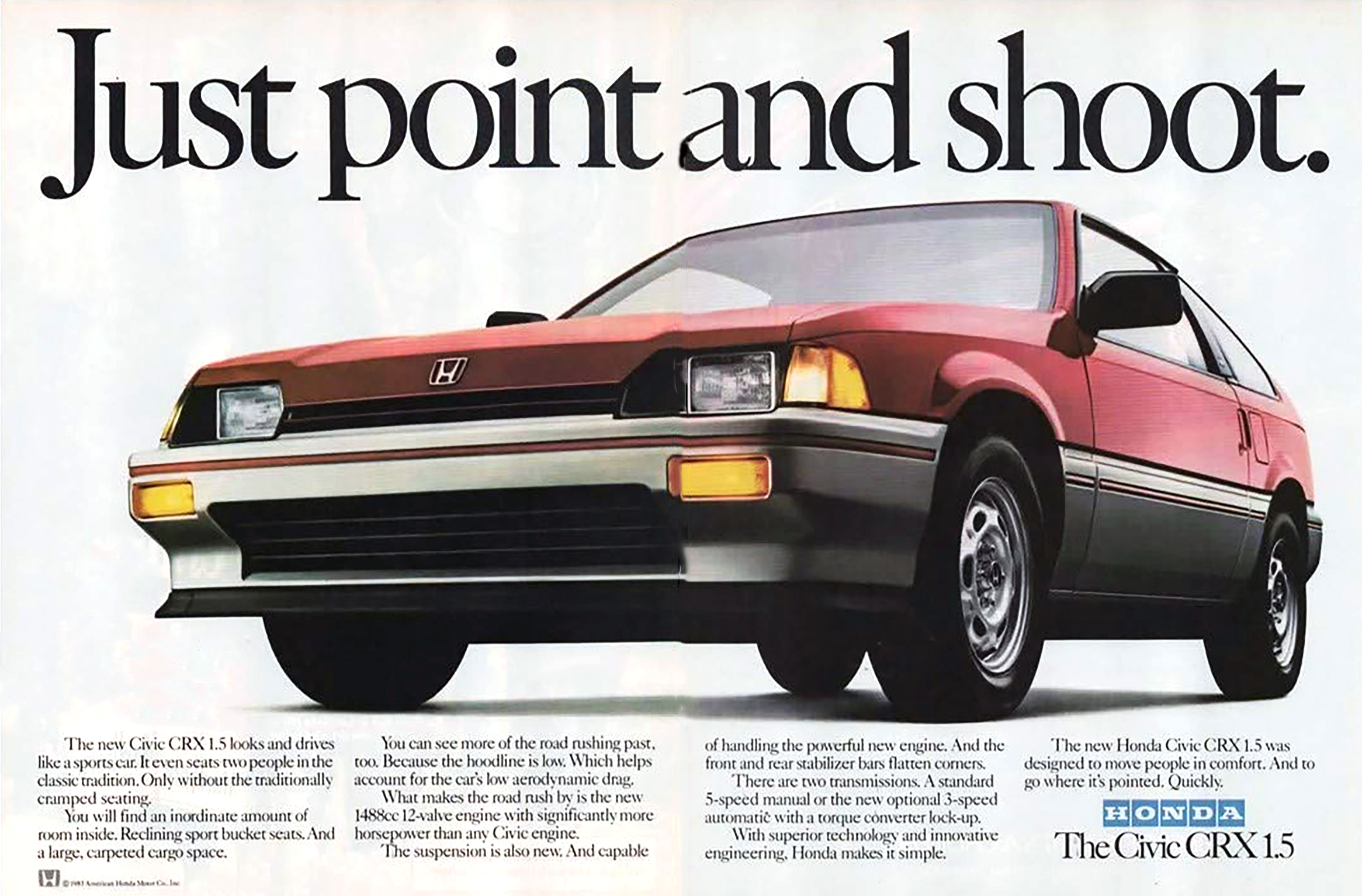
1984 Honda Civic CRX 1.5 print advertisement

The 1.5 added halogen headlights, dual remote-control outside mirrors, a sport suspension, a rear stabilizer bar, vented front disc brakes, and Michelin 175/70R-13 steel-belted radial tires (a size still somewhat available) on wider wheels. Inside, a quartz digital clock was added.

Options & Production Numbers

Past the engine and transmission choices, California emissions, and the three initial factory colors, the CRX had no factory options. Dealer installed options included air conditioning, aluminum alloy wheels, and a selection of radios.

The first generation CRX found its markets and sold quite well, with over 48,000 in 1984 and a total of 218,000 over four years. In 1985, the fuel injected 91 bhp Si would come along—but that is a topic for another blog post.

The View From 2025

I see early CRX’s occasionally, but they’ve become rarer and rarer on the roads in the northeast. I have yet to see one at an auto show, but I’d love to. First-generation CRX’s are sometimes available in the Hemmings Motor News classifieds, on eBay Motors, and at online auctions such as Bring a Trailer that cater to the eighties car market.

Make my 1984 CRX a 1.5 in Baltic Blue (with the standard metallic gray lower rocker panels), please.

Other Hondas I have written about include the 1983 Civic S hatchback coupe, the 1984 Civic DX hatchback coupe, the 1985 Civic CRX Si hatchback coupe, the 1986 Accord sedan, the 1986 Prelude Si coupe, and the 1988 Civic sedan.

Last updated June 2025.