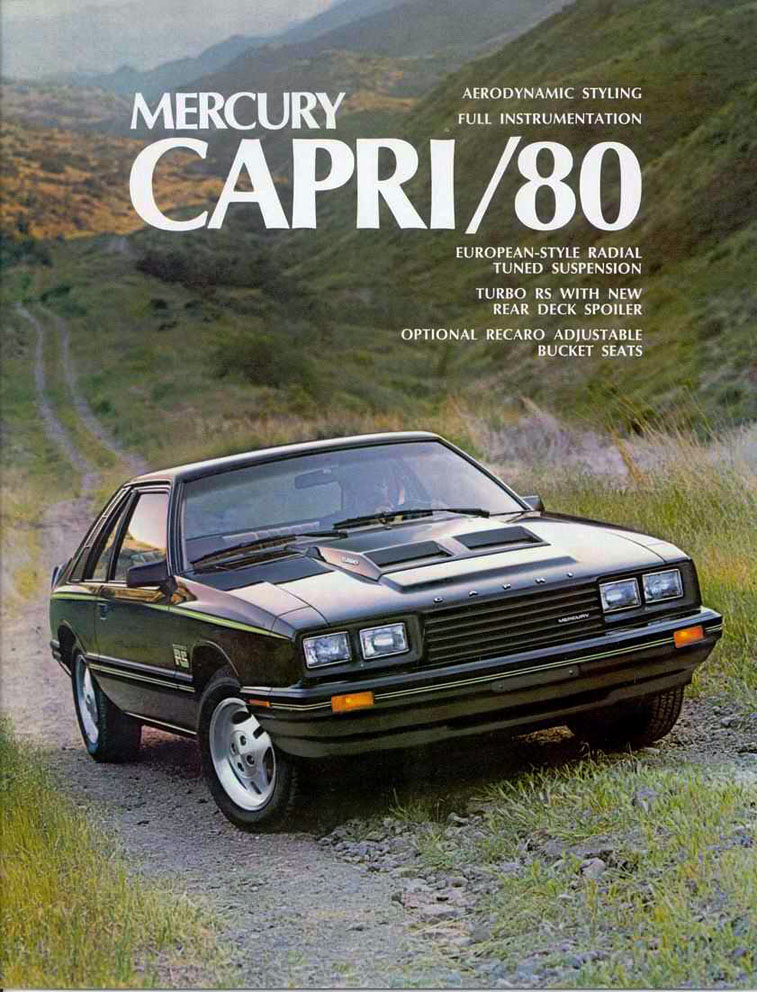
1980 Mercury Cougar XR-7 coupe

In October 2025, a Mercury Cougar XR-7 coupe with 16,000 miles came up for auction on Bring a Trailer. It was the first fifth-generation Cougar to appear on BaT—enough to get me to write a blog entry about this era of Mercury’s personal luxury car.

“From a pedigree of personal luxury.”

Mercury made big changes to the Cougar for the 1980 model year, moving from six separate models to just one. The Cougar sedan was gone entirely, and both the base and the Brougham coupes were no more. Only the XR-7 coupe remained, and it was all new.

The third Mercury based on the “Fox” platform (the Zephyr and the Capri had come first), the fifth-generation Cougar was one of the more radically downsized automobiles in the North American auto industry. In comparison to its 1979 predecessor, the 1980 Cougar XR-7 was 17 inches shorter and 700 pounds lighter.

Standard power for 1980 was a Windsor 118 bhp 4.2 liter/255 ci V8 with a Motorcraft two-barrel carburetor paired with a SelectShift three-speed automatic transmission. Powertrain upgrades were available; buyers could specify a $150 Windsor 131 bhp 4.9 liter/302 ci V8 with a two-barrel carburetor and then add a $138 automatic overdrive transmission (available only with that engine). Buyers who purchased both powertrain upgrades got a sprightlier car with a slightly longer range.

Windsor
(4.2 liter V8)
Windsor
(4.9 liter V8)
Windsor
(4.9 liter V8)
Transmission3-speed Select Shift3-speed Select Shift4-speed Automatic Overdrive
0-60 mph
(approximate)
14.9 seconds12.7 seconds11.1 seconds
Fuel mileage
(1982 standards)
18 city/26 highway17 city/26 highway17 city/29 highway
Range
(10% fuel reserve)
285 to 310 miles275 to 300 miles295 to 325 miles

The XR-7‘s base price was $6,569—about $28,300 in today’s dollars. Standard exterior and mechanical equipment included a half vinyl roof, variable ratio power rack-and-pinion steering, power front disc/rear drum brakes, and P185/75R14 black sidewall steel-belted radial tires on 14-inch wheels with full wheel covers. Inside, a cloth front Flight Bench seat, a four-spoke color-keyed steering wheel, a two-tier instrument panel, a trip odometer, and an analog clock were standard. The XR-7 had no standard radio of any type—interestingly, all Thunderbirds included at least an AM radio.

Groups, Individual Options, & Production Numbers

Mercury offered three groups to upgrade the base XR-7:

  • The Decor Group ($516) added Luxury wheel covers, dual bright remote control mirrors, Twin Comfort Lounge front seats, a Luxury steering wheel, and Deluxe seat belts
  • The Luxury Group ($1,987) added a Luxury half vinyl roof, dual remote control sail-mounted mirrors, and metric TR Type radial white sidewall tires on cast aluminum wheels. Inside, it included Twin Comfort Lounge front seats with Luxury trim, the Electronic Instrument Panel, a Luxury steering wheel, power windows, and Light Group
  • The Sports Group ($1,687) added a Tu-tone paint treatment, metric TR Type radial white sidewall tires on cast aluminum wheels, dual bright remote control mirrors, Recaro front bucket seats with a console, and power side windows

Individual options included tinted glass ($71), a flip-up moonroof ($219), air conditioning ($571), and automatic speed control ($108). Leather interior trim ($303) was only available with the Luxury Group. A choice of nine radios, ranging up to an AM/FM stereo with auto-search ($333), was available. A well-equipped Cougar XR-7 could easily reach $10,500—about $45,200 in 2025 dollars.

To say the market was not ready for the 1980 Cougar XR-7 is a distinct understatement. Despite a significantly higher level of standard equipment, the XR-7 was less than five inches longer than the Zephyr Z-7 coupe, whose base price was almost 20% less. Sales of Mercury’s halo coupe collapsed, dropping from 163,716 in 1979 to 58,082 in 1980, and losing substantial sales share during a year when none of the leading General Motors competitors in the personal luxury coupe market had more than a facelift.

The View From 2025

For unclear reasons, Hagerty’s valuation tools do not track any Cougar after 1973, although they do value Ford Thunderbirds through their entire production history. Fifth-generation Cougars occasionally appear in the Hemming’s Motor News classifieds and on eBay Motors. As I write this blog entry in October 2025, there’s a Medium Blue Metallic 1980 Cougar XR-7 coupe with a dark blue vinyl top and a blue interior for sale on Hemmings, showing 31,000 miles and asking $12,000.

Make mine the same Silver Metallic/Back Tu-tone that is in those brochure pages, please.

The only other Cougar I have written about so far is the 1988 XR-7 coupe. I’ve also written about the 1980 and 1982 versions of the Thunderbird. Other Mercury models include the 1983 Grand Marquis sedan, the 1984 Grand Marquis Colony Park LS station wagon, the 1986 Capri hatchback coupe, the 1987 Lynx XR3 hatchback coupe, and the 1988 Grand Marquis Colony Park station wagon.

1988 Mercury Grand Marquis Colony Park station wagon

“The shape you want to be in.”

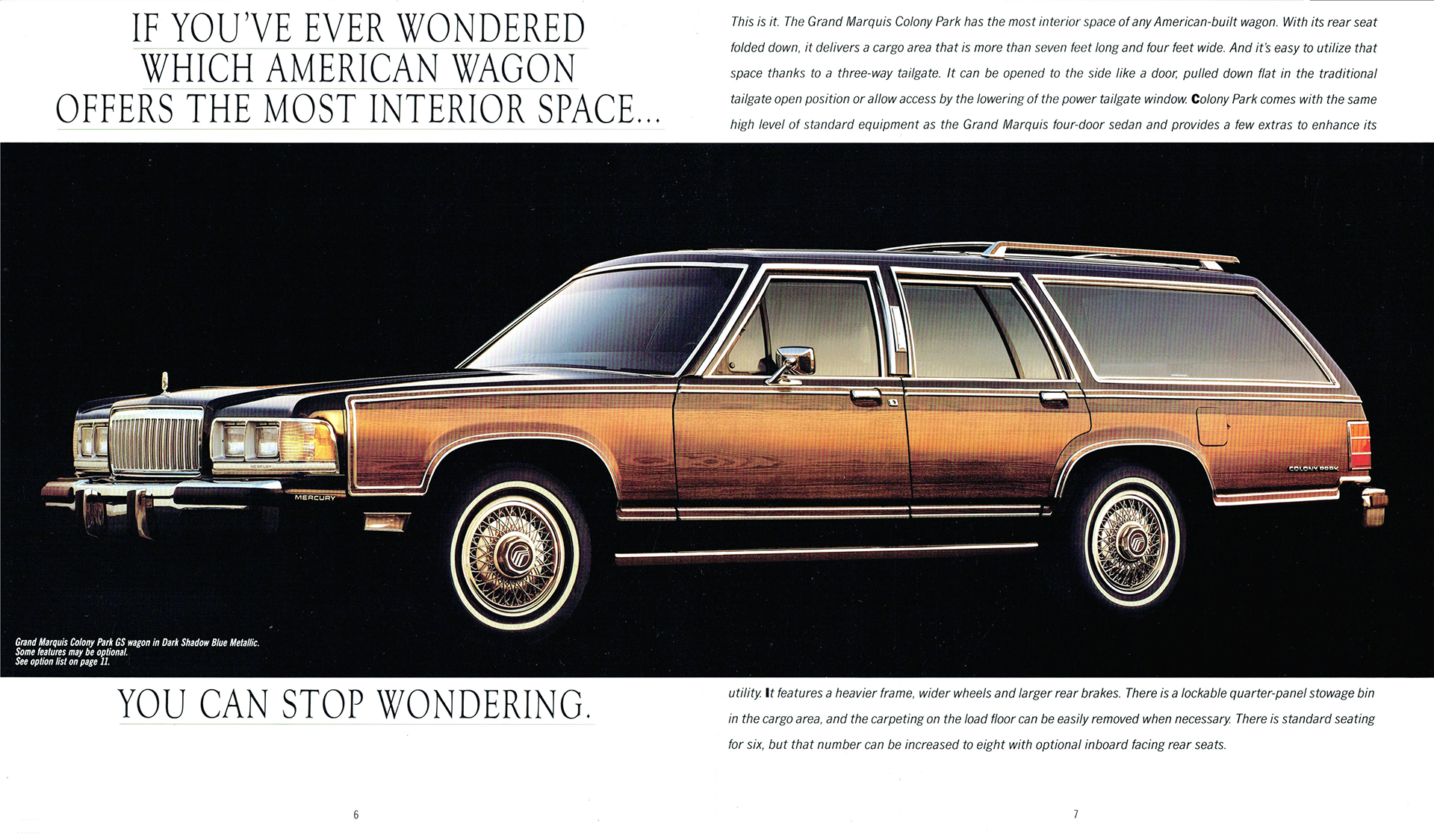
For 1988, Mercury’s full-size Colony Park station wagon gained a new and at least somewhat more aerodynamic front end that better integrated the fenders, grille, headlights, and bumper. Inside, the front seats were updated, and the Insta-Clear heated windshield was newly available.

The Colony Park name had a long history within Mercury. The first Colony Park branded wagons appeared in 1957 as the “glamorous style leader” of Mercury’s wagon line. Because there were no Lincoln wagons, the Colony Park was consistently the highest-end wagon available from Ford Motor Company for almost 35 years, and it could be equipped to near-Lincoln levels.

The only powertrain available on the 1988 Colony Park was the Windsor 150 bhp 4.9 liter/302 ci V8 with multi-port fuel injection paired with a four-speed automatic transmission. Acceleration figures are hard to find for this 4,000-pound wagon, but it certainly wasn’t fast. Fuel economy ratings were 17 city/24 highway by the day’s standards (15/22 by today’s measures). With an 18.0-gallon gas tank, Colony Park owners could expect a range of 300 to 330 miles with a 10% fuel reserve.

Colony Park pages from the 1988 Mercury Grand Marquis brochure

The 1988 Mercury Grand Marquis Colony Park GS station wagon’s base price was $16,341—about $45,500 in today’s dollars. Standard exterior and mechanical equipment included a bodyside rosewood appliqué, tinted glass, a rear-bumper step pad, power brakes, power steering, and P215/70R15 tires on 15-inch wheels with Deluxe full wheel covers. Inside, vinyl twin comfort seats with dual recliners, Luxury sound insulation, air conditioning, power side windows, a power tailgate window, a quarter-panel stowage bin with lock, a tailgate-activated cargo compartment light, and an electronic AM/FM stereo with four speakers were standard.

For an additional $585, the LS added turbine spoke aluminum wheels, Luxury twin comfort lounge seats with high level cloth, a rear seat center armrest, and the Light Group.

Packages, Options, & Production Numbers

Two packages were available on the Colony Park:

  • Preferred Equipment Package 192A (about $1,700) included front cornering lamps, a Deluxe luggage rack, a 6-way power driver’s seat, dual inboard facing rear seats in vinyl, a tilt steering wheel, fingertip speed control, an electric rear window defroster, and the Power Lock Group.
  • Preferred Equipment Package 193A included everything in 192A and added a power antenna, a leather-wrapped steering wheel, dual illuminated vanity mirrors, and the Premium Sound System (power amplifier, upgraded front and rear speakers, plus two additional speakers).

Exterior and mechanical options included a narrow bodyside molding ($66), the Insta-Clear heated windshield ($250), an automatic leveling suspension ($195), a heavy-duty suspension ($26), and an engine block heater ($18). Inside, buyers could add Automatic Climate Control ($211), a Tripminder computer ($215), and a high-level AM/FM stereo cassette audio system ($472). LS purchasers could also add leather seating surfaces ($415). A loaded LS could near $20,500—not that far from Lincoln Town Car money.

Mercury sold 9,456 Colony Park wagons in the 1988 model year—down about 12% from the previous year despite the freshened styling. Mercury’s offering continued to be outsold by both Buick’s Estate wagons (Electra and LeSabre) and Oldsmobile’s Custom Cruiser wagons—likely its natural competitors.

The View From 2025

Sixth-generation Colony Park wagons sometimes show up for sale in the Hemmings Motor News classifieds, on eBay Motors, and on Bring a Trailer. As I write this blog entry in June 2025, there’s a Silver Metallic 1986 Colony Park with 117,000 miles for sale on Hemmings, asking $12,500.

Make mine Medium Cabernet Metallic, I think.

Other Mercurys I have written about include the 1983 Grand Marquis sedan, the 1986 Capri hatchback coupe, the 1987 Lynx XR3 hatchback coupe, and the 1988 Cougar XR-7 coupe.

1984 Mercury Grand Marquis Colony Park LS station wagon

At Mecum Kansas City 2021, a Light Desert Tan Mercury Grand Marquis Colony Park LS station wagon with bodyside and tailgate rosewood woodtone appliques sold for $8,500. For Boxing Day 2021, here’s a big American station wagon.

“luxurious working cars”

For 1984, Mercury’s Grand Marquis Colony Park station wagon was little changed. The Colony Park name had been around since 1957 as a signifier of Mercury’s top-of-the-line station wagon.

The Colony Park’s only powertrain—indeed the only powertrain available for any Grand Marquis—was a Windsor 140 bhp 4.9 liter/302ci V8 with fuel injection paired with a four-speed automatic. Fuel economy was 17 city/27 highway by 1984 standards (14/20 by current measures). With an 18.5-gallon fuel tank, a Colony Park owner could expect a range of between 285 and 365 miles with a 10% fuel reserve.

The Colony Park was a large car, with a 114.1-inch wheelbase and 218-inch length. It had changed little since 1979, when Ford downsized its full-size cars to the Panther platform. Changes over the next five years were mostly confined to trim and color variations, along with powertrain changes.

Colony Park pages from the 1984 Grand Marquis brochure

Standard exterior and mechanical equipment on the $11,816 Grand Marquis Colony Park (about $32,500 in today’s dollars or about what a base 2022 Ford Explorer goes for) included the distinctive “bodyside and tailgate rosewood woodtone applique,” a three-way tailgate, a power tailgate window, power steering, power front disc/rear drum brakes, and P215/75R14 white sidewall tires (a size still available thanks to Hankook) on 14-inch wheels with Deluxe wheel covers. Inside, reclining Twin Comfort Lounge front seats in vinyl, a fold-down rear seatback, and AM/FM stereo radio with two rear speakers were included.

At $12,437, the Colony Park LS added tinted glass, Luxury cloth seat trim for the Twin Comfort Lounge front seats, seatback map pockets, and 18-ounce color-keyed cut-pile carpeting.

Packages, Options, and Production Numbers

Packages available for the Colony Park included Convenience Group, Lock Group, Light Group, and the Trailer Towing Package.

Since there were no Lincoln station wagons, the Colony Park LS was the top-of-the-line wagon available from Ford Motor Company in the mid-1980s. Despite all the luxury Mercury implied the Colony Park LS had, it still didn’t include standard air conditioning, though the take rate on the two air conditioning options—one manual ($743) and one automatic ($809)—must have been high.

Other options available included “glamour” paint ($77), a luggage rack ($104), a Traction-Lok axle ($95), fingertip speed control ($176), a leather-wrapped steering wheel ($59), a tilt steering wheel ($110) and the Premium Sound System. Optional P205/75R15 tires ($17/$178 if puncture sealant) required the optional turbine spoke cast aluminum wheels ($361). A well-equipped Colony Park could easily get to $14,600—not that many thousand dollars from Lincoln money.

Mercury sold 17,421 Colony Park wagons in 1984, but the split for the base versus the LS versions is unknown.

Make mine Medium Canyon Red Metallic, please.

Two other Panther-based cars I have written about are the 1980 Lincoln Continental Mark VII coupe and the 1983 Mercury Grand Marquis sedan.

1988 Mercury Cougar XR-7 coupe

“The shape you want to be in.”

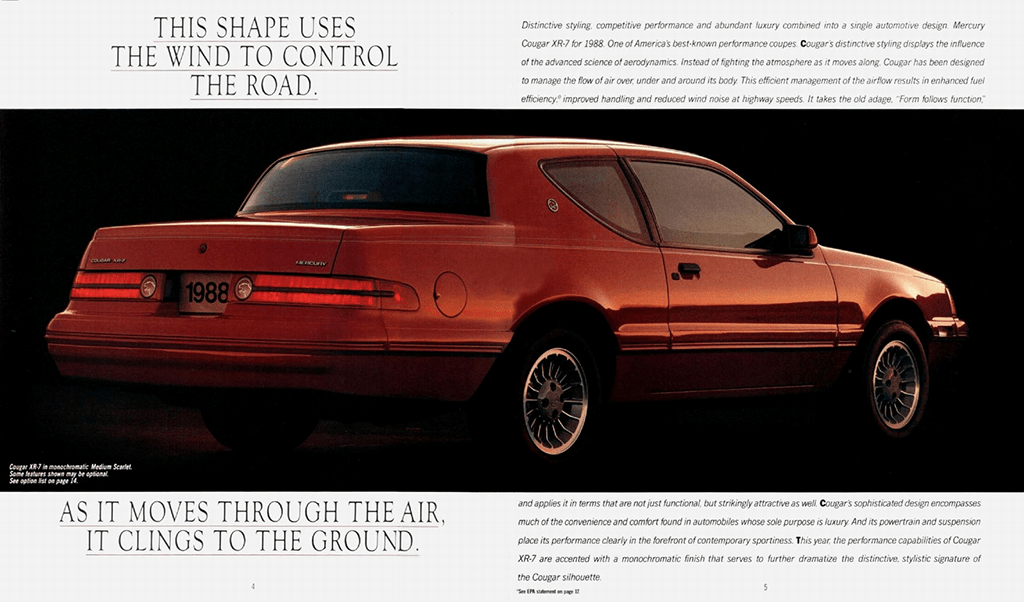
For 1988, Mercury’s Cougar personal luxury coupe received relatively few changes after 1987’s substantial restyling. For one year only, the XR-7 received a distinctive monochromatic paint scheme, available only in Oxford WhiteMedium Scarlet, and Black. Creating this look involved changing the wraparound bumper and body-side moldings from black to body color, and deleting the Medium Smoke lower-body accent used in 1987.  The sportiest Cougar also received 15-inch cast-aluminum wheels that had previously been seen on contemporary Ford Mustang GTs. Finally, analog instruments returned to the XR-7 after one year with a digital dashboard.

Though the Cougar LS made do with an Essex 140 bhp 3.8 liter/232 ci V6 with fuel injection as standard power, all XR-7s came with a Windsor 155 bhp 4.9 liter/302 ci V8 with sequential fuel injection. Both engines received power increases in 1988, with multi-port fuel injection and a balance shaft for the V6 being worth 20 bhp, while a split dual exhaust brought another five bhp for the V8. No matter what the engine, all Cougars came with Ford’s corporate AOD four-speed automatic transmission with overdrive.

Recorded 0-60 mph times are spare for the 1988 XR-7, but would likely have been a little under 10 seconds in the 3,485-pound car. Fuel economy ratings are more readily available; the XR-7 was rated 18 city/25 highway by the day’s standards (16/23 by today’s measures). With a 22.1-gallon gas tank, a Cougar XR-7 owner could expect an impressive range of 390 to 430 miles with a 10% fuel reserve.

Standard exterior and mechanical equipment on all Cougars included tinted glass, aero halogen headlamps, a front air dam, dual outside power mirrors, power-assisted rack-and-pinion steering, and power-assisted front disc/rear drum brakes. Inside, air conditioning, cloth upholstery, and an electronic AM/FM stereo with four speakers were included. The Cougar’s base price was $14,134—about $39,200 in 2025 dollars.

XR-7 pages from the 1988 Mercury Cougar brochure

With a base price of $16,266 (about $45,100 in today’s dollars or about what a 2025 Ford Mustang GT fastback goes for), the XR-7 added a Traction-Lok rear axle, a Quadrashock suspension, and P225/60R15 performance tires (a size still readily available) on 15-inch body-color cast-aluminum wheels. Inside, a sport steering wheel, articulated sport seats with power lumbar support, and a full-length center console were included.

Options & Production Numbers

Exterior and mechanical options for the XR-7 included a power moonroof ($841), an electric rear window defroster ($145), an engine block heater ($18), and Argent versions of the standard body-color cast-aluminum wheels. Inside, automatic temperature control ($162), power windows ($222), fingertip speed control ($182), and a tilt steering wheel ($124) were all available. Upholstery options included a leather-wrapped steering wheel ($59), leather seating surfaces ($415), and six-way power seats (either driver’s side only [$251] or driver and front passenger [$502]). A range of audio options included an electronic AM/FM stereo with a cassette player and four speakers ($137), the Premium Sound System with a power amplifier, two additional door-mounted speakers, and premium rear speakers ($168), a graphic equalizer ($218), and a power antenna ($76).

The 1988 Cougar sold well—Mercury moved a total of 113,801 units, with 14,488 (almost 13%) being XR-7s.

The View From 2025

Badge for 2,500 web hits

For unclear reasons, Hagerty’s valuation tools do not track any Cougar after 1973, though they do value Ford Thunderbirds through their entire production history. Eighties Cougars occasionally appear in the Hemming’s Motor News classifieds, on eBay Motors, and on Bring a Trailer.

Make mine Black, please.

Thanks to COOL CATS (a site devoted to the 1983-1988 Mercury Cougar) for providing helpful context for this post.

Other Mercurys I have written about include the 1983 Grand Marquis sedan, the 1986 Capri hatchback coupe, and the 1987 Lynx XR3 hatchback coupe. Regarding the Cougar’s Ford Thunderbird sister, I’ve written about the 1980 coupe and the 1983 Turbo Coupe.

Last updated April 2025.

1986 Mercury Capri hatchback coupe

Hemmings has been making a go at auctions. One of their first offerings was a white 1982 Mercury Capri RS coupe with red vinyl bucket seats, a Windsor 157 bhp 4.9 liter/302 ci V8 with a Motorcraft 356CFM two-barrel carburetor, a four-speed manual, and 33,000 miles. That was enough to get me to generate an update to this eight-year-old post about the later 1986 version.

“Proof that getting there can be a fun experience in itself.”

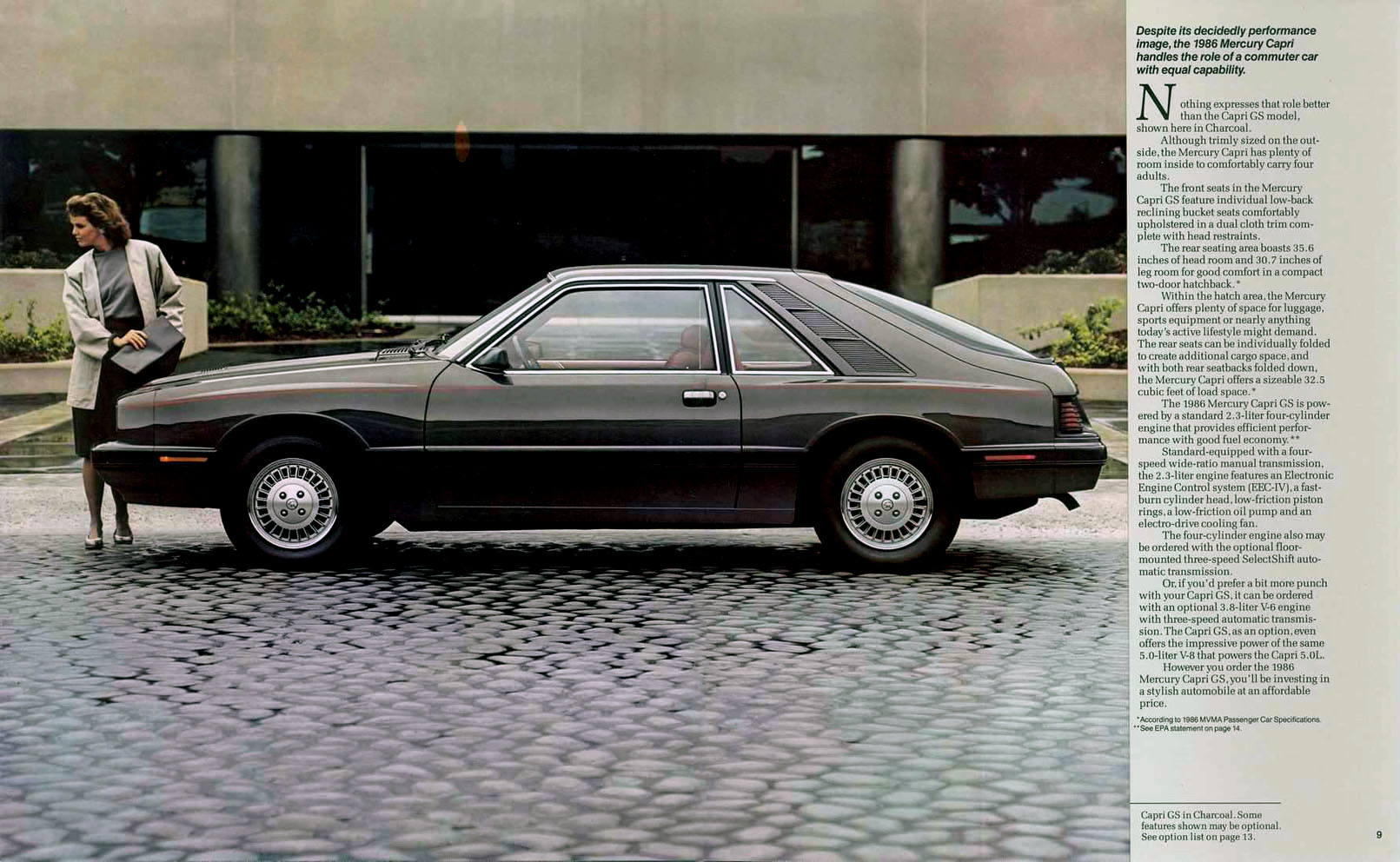
For 1986, Mercury’s Capri had three engine choices and two transmission choices. Standard on the GS was the Lima 88 bhp (aargh!) 2.3 liter/140 ci in-line four with a Carter YFA one-barrel carburetor mated to a four-speed manual transmission. Power options for the GS included the Essex 120 bhp 3.8 liter/231 ci V6 with fuel injection and the (wonderful) Windsor 200 bhp 4.9 liter/302 ci V8 with sequential fuel injection that was standard on the 5.0L. All three engines could be paired with a three-speed automatic transmission for an additional $510 (the V6 required the automatic while the 5.0L came standard with a five-speed manual transmission with overdrive).

Mileage ratings for the various configurations ranged from 23 city/28 highway (21/26 by today’s standards) for the four-speed manual/in-line four combination that I’m not convinced that anyone bought to 17/25 for the “big daddy” five-speed manual paired with the V8.

Performance with the 2.3 liter four paired with either transmission was ghastly. 0-60 came in about 15 seconds, which meant a Capri driver with the Lima engine would see only the taillights of Iron Duke-powered Camaros and Firebirds (such a sad competition!). Moving to the V6 paid significant performance dividends, dropping the 0-60 time by about 3.5 seconds. Of course, the V8 was by far the best: even the automatic was in the 7 second range, while the manual could do 0-60 in about 6.5 seconds.

Mercury made three attempts at the Capri. The first was an imported version of the European Ford Capri and was sold from the 1970 to 1978 model years, first as the Capri and then as the Capri II. The second was Mercury’s version of the Fox body Mustang and was sold from 1979 to 1986. The final version of the Capri was an imported version of the Australian Ford Capri, sold from 1991 to 1994. Sense a trend here?

The base price for a Capri GS was $8,331 (about $24,800 in 2025 dollars). For that money, the Capri came relatively well equipped by mid-1980s standards. External features included halogen headlamps, tinted glass, and the distinctive bubble-back rear hatch with rear-window defroster. Mechanical equipment included power steering, power brakes, and P195/75R14 tires (still available thanks to Hankook and Kumho) on 14-inch wheels with turbine wheel covers. Inside, power windows, interval wipers, tilt steering wheel, and an AM/FM stereo radio were standard.

Pages from the 1986 Mercury Capri brochure

The more sporty Capri 5.0L stickered for $10,950 (about $32,500 in today’s dollars) and added the V8 mentioned above, dual exhaust, a Traction-Lok rear axle, and P225/60VR15 low-profile tires (a size still readily available) on cast-aluminum performance wheels.

Options & Production Numbers

Exterior options for both the GS and the 5.0L included a flip-up open-air roof ($315) or a T-Roof ($1,100). Inside, buyers could add air conditioning ($762), power door lock group ($182), speed control ($176), and an AM/FM stereo radio with cassette ($300).

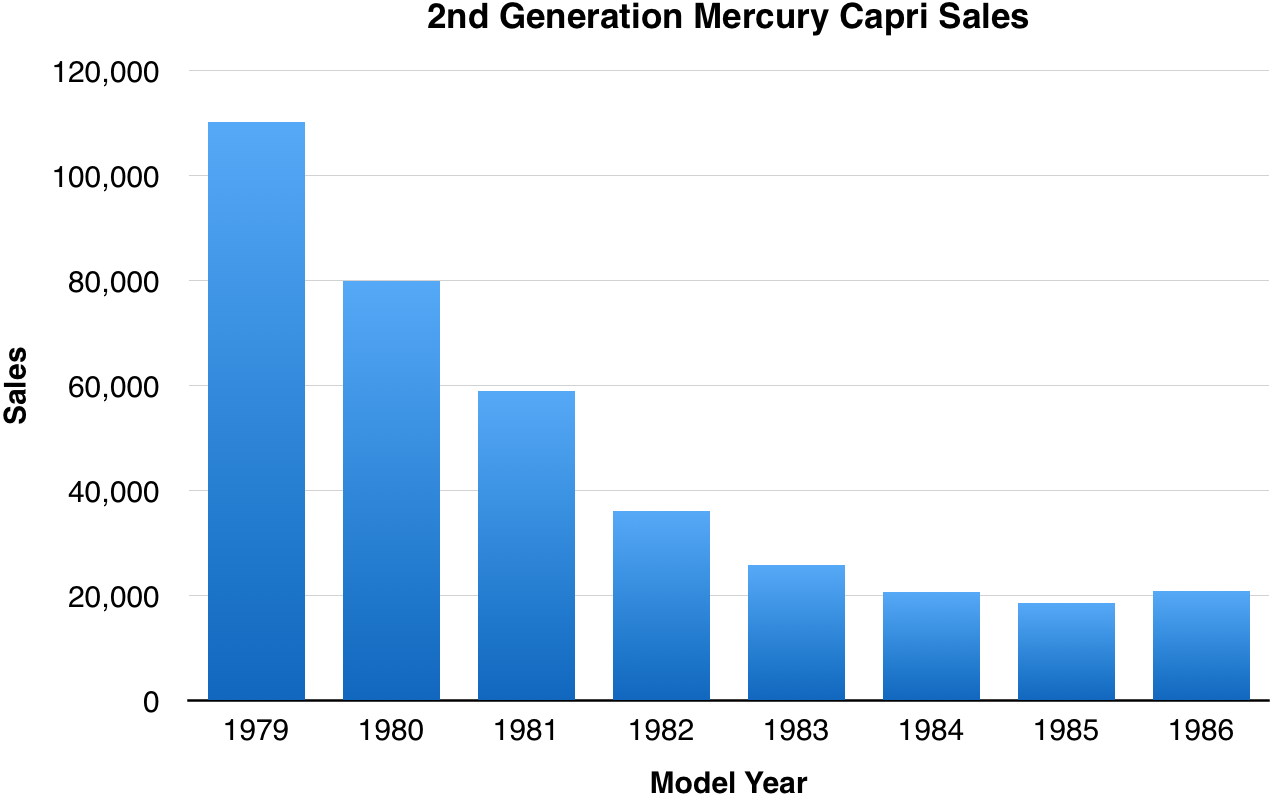
MercuryCapriSales

Sales for the last of the second-generation Capris were not at all good, but Capri sales had not been good for years—Mercury’s traditional problem wedged between Ford and Lincoln. By 1986, Capri sales were about 9% of Mustang sales.

The View From 2025

Fox body Capris sometimes show up in the Hemming’s Motor News classifieds and eBay Motors, but there’s not a lot of activity. Bring a Trailer has auctioned a total of ten second-generation Capris, most of them the specialty ASC McLaren version. I’ll say that Capris are uncommon rather than unloved.

Make mine Smoke Metallic, please.

Other Mercury models I have written about include the 1983 Grand Marquis sedan, the 1984 Grand Marquis Colony Park LS station wagon, the 1987 Lynx XR3 hatchback coupe, the 1988 Cougar XR-7 coupe, and the 1988 Grand Marquis Colony Park station wagon. I seem to like the big Mercury’s.

Last updated September 2025.

1987 Mercury Lynx XR3 hatchback coupe

This post is consistently one of the most popular every year and has been so since the first full year after I originally posted it. It seems to me the key to an individual post’s popularity is often in the rarity of the other coverage available for that particular vehicle.

“… the sporting side of Lynx.”

1987 was the final year for the Lynx—Mercury’s version of Ford’s Escort compact. The Escort would soldier on for many more years (through model year 2002), but from 1988 forward, the smallest American-built Mercury would be the Topaz—still a compact, but larger in almost every dimension. For 1986 and 1987, the top-of-the-line Lynx was the XR3 hatchback coupe.

The XR3 designation was not random, but may not have been obvious to much of the North American market. In Europe, XR3 (and later XR3i) was a sporty trim of the Mark III Ford Escort from 1980 forward. Why Ford’s marketers chose to make XR3 the sportiest Lynx instead of using the name for the stateside Escort (which used GT in the mid-1980s) is a question lost in the mists of time, but may have had something to do with XR-7 designation for the sportiest Mercury Cougar.

The Lynx XR3‘s standard (and only) powertrain was a “High Output” 115 bhp 1.9 liter/113 ci inline four with Bosch multi-port fuel injection paired with a five-speed manual transmission. Mileage was good—25 city/34 highway by the day’s standards (about 22 city/31 highway by 2025 measures). Acceleration was reasonably quick: 0-60 came in about 10 seconds in the approximately 2,400-pound car. With a 13-gallon fuel tank, Lynx XR3 drivers could expect a range of 310 to 345 miles with a 10% fuel reserve.

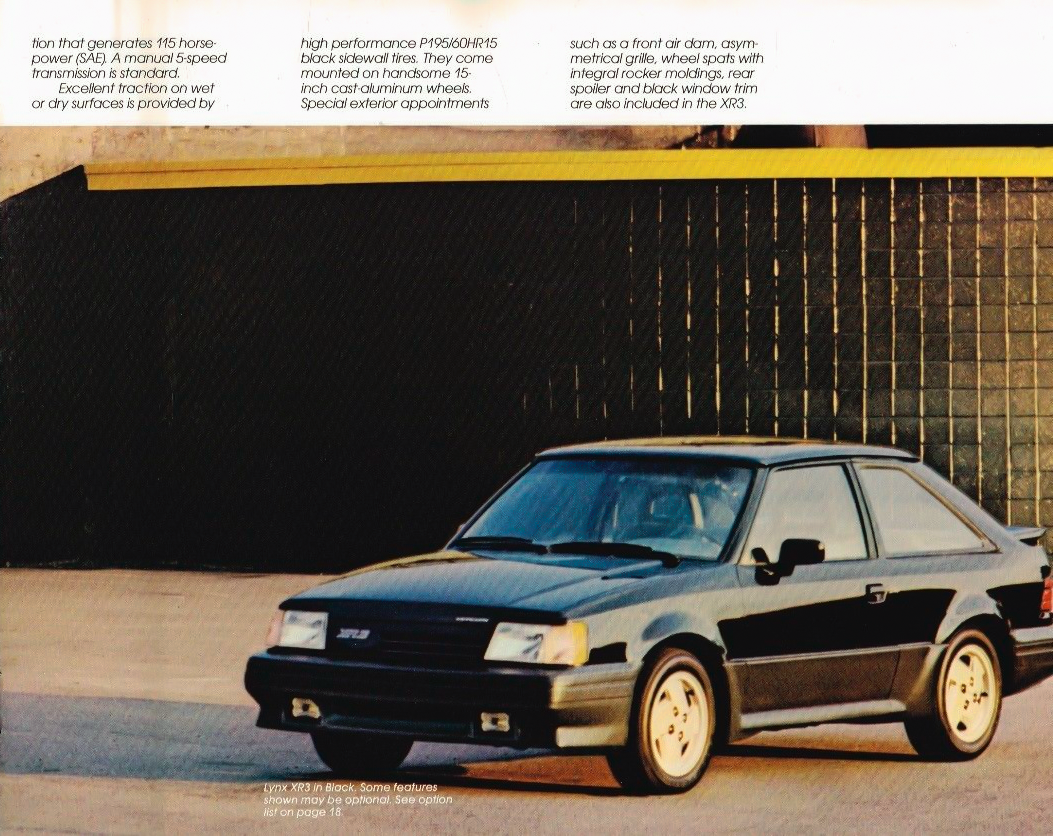
XR3 page from the 1987 Mercury Lynx brochure

Standard exterior and mechanical equipment on the $8,808 Lynx XR3 (about $25,400 in today’s dollars) included an asymmetrical grille, an aerodynamic front air dam with built-in fog lamps, wide wheel flairs, a rear spoiler, dual power mirrors, power steering, and P195/60R15 Goodyear Eagle GT tires (a size still readily available) on 15-inch four-flag cast-aluminum wheels. Inside, cloth sport bucket seats, a full console with a graphic alert display, a split folding rear seat, a leather-wrapped steering wheel, a locking fuel filler door with remote release, and an electronic AM/FM stereo radio with four speakers were included.

Standard exterior and mechanical equipment on every Lynx included aero halogen headlamps, front-wheel-drive, a four-wheel independent suspension, rack-and-pinion steering, and power front disc/rear drum brakes. The Lynx was not a large car—there aren’t many current small coupes remaining to compare it to, but the 2025 Honda Civic hatchback sedan is 5 inches wider and about a foot longer.

Options & Production Numbers

Few options were available since the XR3 came relatively well-equipped for a compact car in the eighties. In fact, seven separate options available for lesser Lynxes were standard on the XR3. Exterior and mechanical options for the XR3 included tinted glass ($105), a rear window wiper/washer ($126), and an engine block heater ($18). Inside, air conditioning ($688), speed control ($176), and a tilt steering wheel ($179) were available.

The final-year Lynx didn’t sell very well: a total of 39,039 in a year when Ford sold 374,765 Escorts. It’s reasonable to say that very few of the 20,930 hatchback coupes were XR3s.

The View From 2025

Badge for 2,500 web hits

First-generation Escorts and Lynxes were once so prevalent on American roads, but have now virtually disappeared. You occasionally see Lynxes for sale in the Hemming’s Motor News classifieds and on eBay Motors. Bring a Trailer has auctioned a grand total of two Lynxes, neither of them XR3s.

Make mine Smoke, please.

Other Mercurys I have written about are the 1983 Grand Marquis sedan, the 1986 Capri hatchback coupe, and the 1988 Cougar XR-7 coupe. I have also written about the 1981 Ford Escort hatchback coupe.

Last updated March 2025.

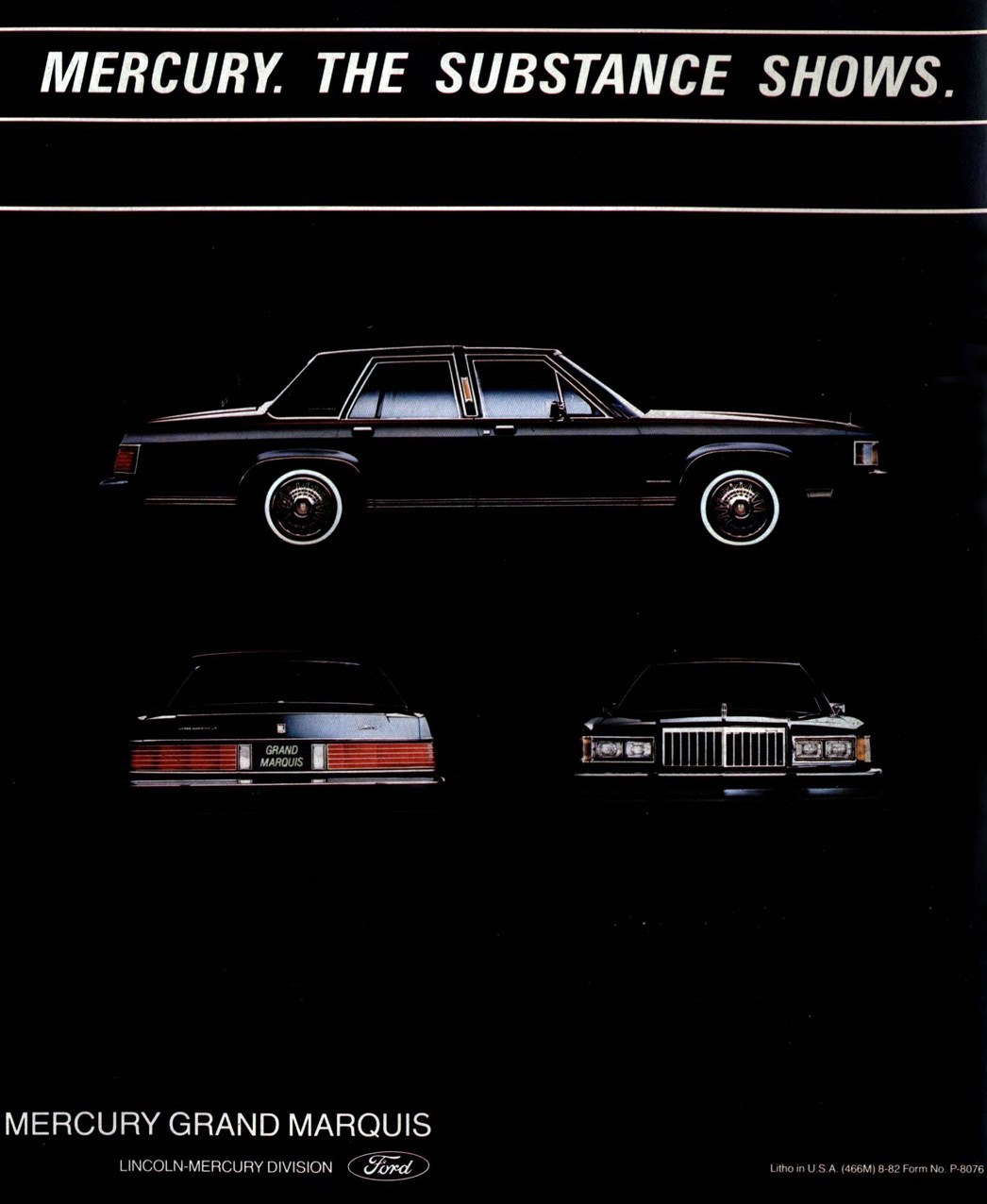
1983 Mercury Grand Marquis sedan

As I walked to the train in October 2017, I saw an eighties Mercury Grand Marquis sedan idling on Chestnut Street in Philadelphia. It stood out because of its size—at 214 inches, these cars are longer than a 2025 Lincoln Navigator—and its new for 1979 squareness. That was reason enough to write a relatively rare Mercury blog entry.

“A Lesson In Luxury”

For the 1983 model year, Mercury renamed all versions of the full-size Marquis to Grand Marquis and moved the Marquis name to the mid-size Fox platform. Other than the name change, changes for the Grand Marquis were relatively modest: there were new full-width wraparound tail lamps and a modified grille. New options included a remote locking fuel filler door ($24), locking wire wheel covers ($168), and a Tripminder trip computer ($261), which showed month/day/time, elapsed time, average speed, average MPG, instantaneous MPG, and gallons of fuel used. In their annual “Charting the Changes” roundup, Car and Driver once again made the ritual complaint that there was still no de Sad package.

The standard engine in 1983 was Ford’s 130 bhp 4.9 liter/302 ci V8 with fuel injection paired to a four-speed automatic. Somewhat strangely to our modern eyes, the optional power upgrade was a carburetted version of the same motor with 145 bhp. These were not fast cars—with an almost 3,800-pound curb weight, 0-60 came in about 12 seconds. Mileage with the standard powertrain was 17 city/27 highway by the day’s standards (14/20 by today’s standards). With the 18-gallon fuel tank, Grand Marquis drivers could expect a range of 275 to 355 miles with a 10% fuel reserve.

Standard exterior and mechanical equipment on the $10,718 Grand Marquis (about $34,700 in today’s dollars) included a coach vinyl roof, coach lamps, halogen headlamps, power brakes (front disc and rear drum), power steering, and P215/75R14 steel-belted white sidewall radial tires on 14-inch wheels with deluxe wheel covers. Inside, cloth/vinyl Twin Comfort Lounge seats with dual front seat recliners, a four-spoke Luxury (the Grand Marquis brochure mentioned luxury a lot) steering wheel, an analog quartz clock, and an AM/FM stereo radio with four speakers were included. Standard items that Mercury proudly listed that do not impress in 2025 included a front stabilizer bar, seat belt warning chimes, and carpeted lower door trim panels.

Packages, Options, & Production Numbers

Upgrading to the $11,273 LS added tinted glass, luxury cloth Twin Comfort Lounge seats, cloth-trimmed headrests, right-hand visor vanity mirror, map pockets in front seatback, luxury door trim with armrest woodtone inserts and courtesy lights, dual beam dome/map light, dual fold-down front center armrests, rear-seat folding center armrest, and the all-important LS badge on the rear decklid.

Exterior and mechanical options included the Traction-Lok differential ($95) and cast aluminum turbine spoke wheels ($361), which required P205/75R15 tires ($17). Interior options included manual air conditioning ($724), automatic air conditioning ($802), 6-way power driver’s seat ($210) or driver’s and passenger’s seats ($420), power door locks ($123), fingertip speed control ($170), and tilt steering wheel ($105). Audio options included a host of optional radios with 8-track or cassette player, a power antenna ($60), and the Premium Sound System with two additional speakers in the front doors, upgraded rear speakers, and an extra power amplifier ($175 base/$145 LS). Leather seating surfaces ($418) were only available on the LS. All these options meant that a loaded Grand Marquis LS could quickly get close to the Lincoln Town Car’s pricing territory—I quickly priced one to $14,584 (about $47,200 in 2025 dollars).

The Grand Marquis sold well for Mercury in 1983—72,207 sedans, 11,117 coupes, and 12,394 Colony Park wagons made it one of the division’s best sellers—23% of sales in a year when Mercury also offered the Capri, Cougar, LN7 (remember the LN7?), Lynx, Marquis, and Zephyr.

The View From 2025

The first-generation Grand Marquis sometimes shows up for sale in the Hemmings Motor News classifieds, on eBay Motors, and on Bring a Trailer.

Make mine Midnight Blue Metallic, I think.

Other Mercury’s I have written about include the 1986 Capri hatchback coupe, the 1987 Lynx XR3 hatchback coupe, and the 1988 Cougar XR-7 coupe.

Last updated March 2025.

Sav

Sav

Sa