1980 Lincoln Versailles sedan

“Plush, inviting elegance”

1980 was the final year for Lincoln’s Versailles sedan, and little was changed. There was a new starter under the hood and an improved jack in the trunk. Twin Comfort Lounge seats replaced 1979’s Flight Bench seats. Two options were no more—the full vinyl roof and the floor-mounted shift lever. Otherwise, only color and trim changes were visible.

The 1980 Versailles’ only available powertrain was a Windsor 132 bhp 4.9 liter/302 ci V8 with a Variable Venturi carburetor mated to a three-speed automatic transmission. Car and Driver recorded a 0-60 time of 12.7 seconds, making the 3,880-pound Versailles somewhat less than a hot rod Lincoln. Fuel economy ratings were 15 city/20 highway by the day’s standards. With a 19.3-gallon gas tank, a Versailles owner could expect a range of 250 to 270 miles with a 10% fuel reserve.
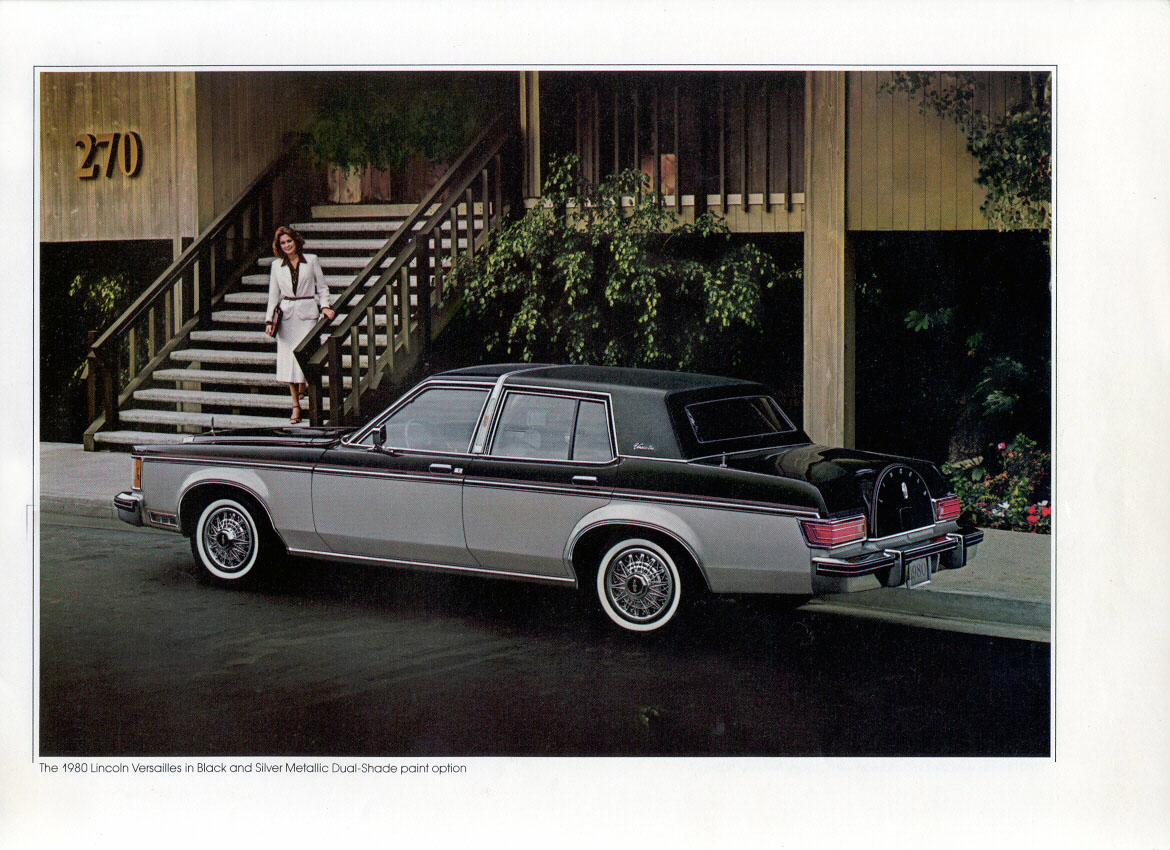
Page from the 1980 Lincoln Versailles brochure

The Versailles’ base price was $14,674 for 1980—approximately $63,000 in today’s dollars. Standard exterior and mechanical equipment included tinted glass, power steering, four-wheel power disc brakes, and FR78-14 tires (the modern semi-equivelant P205/75R14 is somewhat available). Inside, every Versailles for that year included Twin Comfort Lounge seats with fold-down center armrests, a leather-wrapped Luxury steering wheel, the Automatic Temperature Control air conditioning/heater, power windows, and an electronic AM/FM stereo search radio with a power antenna.

By 1980, base exterior and mechanical equipment included quad halogen headlamps, an illuminated/keyless entry system, an Electronic Air Suspension with automatic level control, and P215/75R15 white sidewall tires (a size still readily available) on 15-inch forged aluminum wheels. Inside, every Continental for that year included fingertip speed control, interval windshield wipers, and power door locks.

Options & Production Numbers

The Versailles had two no-cost options. Buyers got to choose either forged aluminum wheels or wire wheel covers. They also got to choose either a coach roof with a frenched backlite in Valino vinyl or convertible theme styling in Calvary Twill vinyl—no Versailles roof went unadorned.

A defroster group was $132, while a power lock group was $169. The reclining bucket seat group was $416.

Extra-cost exterior and mechanical options included dual-shade paint ($80) and a power glass panel moonroof ($1,128). Inside, leather/vinyl interior trim ($416), a tilt steering wheel ($81), and an electric rear defroster ($109) were available.

A mere 4,784 copies of the Versailles were sold in its final model year. This meant that it had failed utterly in its stated goal of competing with Cadillac’s Seville, which sold about ten times as many units in the 1979, 1980, and 1981 model years.

The View From 2025

Versailles do attract some collector interest—though not as much as the Mark VIIs and Town Cars—and there is club support. According to Hagerty’s valuation tools, a 1980 Versailles in #1/Concours condition is $17,200, while a far more normal #3/Good condition version goes for $6,900. They are sometimes available in the Hemmings Motor News classifieds and on eBay Motors, and they occasionally show up at in-person auctions. Bring a Trailer has sold a grand total of one Versailles—a 1978.

Make mine Cabernet Clearcoat Metallic, please.

Other Lincolns I have covered include the 1980 Continental Mark VI coupe, the 1984 Continental Mark VII LSC coupe, the 1986 Mark VII coupe, the 1987 Continental sedan, and the 1989 Town Car sedan.

1989 Lincoln Town Car sedan

“Luxury that needs no introduction.”

For the 1989 model year, the final big Lincoln of the 1980s remained essentially unchanged. The base version gained a fancier “Frenched” back window on its standard vinyl roof. Otherwise, only color and trim changes were visible.

The 1989 Town Car’s only available powertrain was a Windsor 150 bhp 4.9 liter/302 ci V8 with sequential multi-port fuel injection mated with a four-speed automatic with overdrive. An optional dual exhaust added 10 bhp. 0-60 came in a little over 11 seconds in a car with about a 4,100-pound curb weight. Fuel economy was 17 city/24 highway by the day’s standards (15/22 by 2025 measures). With a smallish 18.0-gallon gas tank (compared to the competition), a Town Car owner could expect a middling range of 300 to 330 miles with a 10% fuel reserve.

Front cover of the 1989 Lincoln Town Car brochure

The Town Car’s base price was $25,205 for 1989—approximately $67,700 in today’s dollars, or almost exactly what the 2025 Lincoln Aviator Reserve SUV goes for. Standard exterior and mechanical equipment included quad-rectangular halogen headlamps, tinted glass, power recirculating ball steering, power front disc/rear drum brakes, and P215/70R15 white sidewall steel-belted radial tires (a size still readily available) on 15-inch steel wheels with full wheel covers. Inside, 50/50 Twin Comfort Lounge cloth front seats, a six-way power driver’s seat, interval wipers, fingertip speed control, Automatic Climate Control, power windows, power vents, power door locks, and an AM/FM stereo cassette radio with a six-speaker Premium Sound System were included.

Series’, Options, & Production Numbers

For $3,301 over the base Continental, the Signature Series added the Comfort/Convenience Group, which included a six-way power front passenger’s seat, rear floor mats, dual illuminated visor vanity mirrors, a headlamp convenience system, and a power decklid pulldown. A Luxury half-vinyl coach roof with a frenched rear window, turbine-spoke aluminum wheels, and an illuminated/keyless entry system also came with the Signature Series.

For an additional $1,326, the Cartier Designer Series included everything in the Signature Series and added Dual-Shade paint in Silver Frost Clearcoat Metallic over Pewter Clearcoat Metallic, a Silver Frost coach roof, and maroon accent stripes. Inside, a leather-wrapped steering wheel and front floor mats with the Cartier logo were included. Cartier purchasers got a no-cost choice of either leather and cloth seat trim or all leather seat trim.

Exterior and mechanical options included a power glass moonroof ($1,420), a Traction-Lok differential ($101), and wire-spoke aluminum wheels ($873 for the base car, $395 otherwise). Interior options included an automatic-dim day/night mirror ($89), an Anti-Theft Alarm System ($200), a twelve-speaker Ford JBL Audio System with a 140-watt amplifier ($525), and a compact disc player ($617). The Cartier Designer Series was the only way to get Dual-Shade paint in the 1988 model year.

1989 was a good year for Lincoln’s traditional full-size sedan. 123,669 were sold, making the Town Car almost 60% of total Lincoln production, and marking the peak for the first-generation Town Car.

The View From 2025

Town Cars of this era attract collector interest—and there is club support. According to Hagerty’s valuation tools, a 1989 Town Car in #1/Concours condition is $26,900, with a far more normal #3/Good condition version going for $4,800. These Town Cars are often available in the Hemmings Motor News classifieds, on eBay Motors, and on Bring a Trailer. As I write this blog entry in September 2025, there’s a Cinnabar Clearcoat Metallic 1989 Town Car with 8,700 miles for sale on Hemmings, asking $34,500.

Make mine that same Cinnabar Clearcoat Metallic, please.

Other Lincolns I have covered include the 1980 Continental Mark VI coupe, the 1984 Continental Mark VII LSC coupe, the 1986 Mark VII coupe, and the 1987 Continental sedan.

1987 Lincoln Continental sedan

A black 1987 Lincoln Continental with 86,000 miles hammered sold for $8,500 at the 2025 Mecum Kissimmee auction.

“The first thing you’ll notice is that everyone else does.”

In the final year of its seventh generation, the “Fox” Lincoln Continental was little changed. The real wood trim in the interior was retired in favor of imitation wood, and 1986’s weird-looking “geometric cast aluminum” wheels were gone. Otherwise, only color and trim changes were visible.

The V6 and the BMW diesel were long gone, so the 1987 Continental’s only available powertrain was a Windsor 150 bhp 4.9 liter/302 ci V8 with sequential multi-port fuel injection mated with a four-speed automatic with overdrive. 0-60 came in about 11 seconds in a car with a 3,800-pound curb weight. Fuel economy was respectable: 17 city/27 highway by the standards of the day (16/24 by 2025 measures). With a 20.3-gallon gas tank, a Continental owner could expect a range of 365 to 400 miles with a 10% fuel reserve.

The Continental’s base price was $26,402 for 1987—approximately $75,500 in today’s dollars. That’s about $20,000 more than the 2025 Lincoln Corsair Grand Touring SUV goes for—with about the same interior dimensions, including somewhat tight rear legroom.

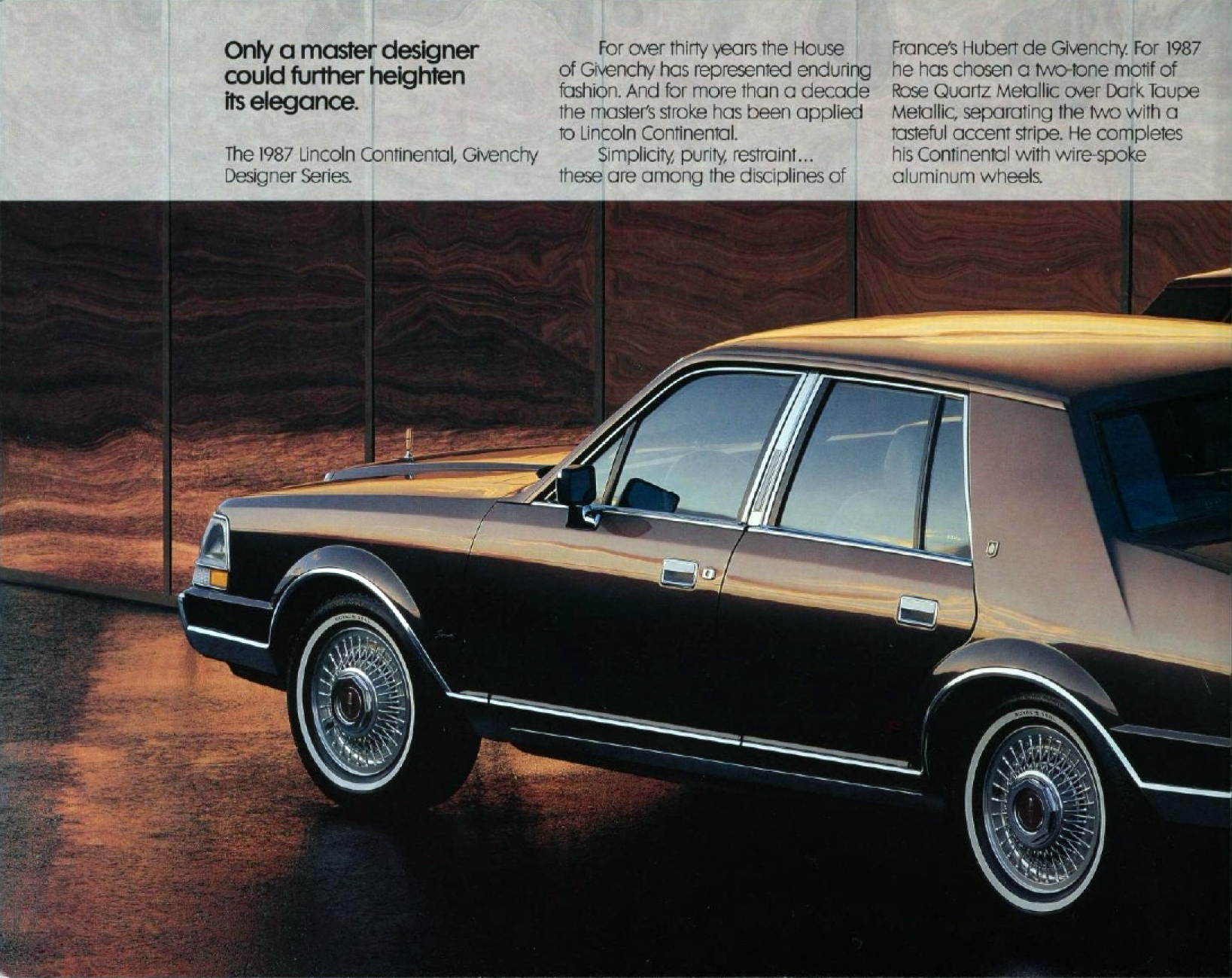
Page from the 1987 Lincoln Continental brochure

Over its six-year lifespan, Lincoln notably increased the Continental’s base equipment level. By 1987, base exterior and mechanical equipment included quad halogen headlamps, an illuminated/keyless entry system, a power antenna, power-assisted rack-and-pinion steering, an Electronic Air Suspension with automatic level control, four-wheel anti-lock disc brakes, and P215/75R15 white sidewall tires (a size still readily available) on 15-inch forged aluminum wheels. Inside, every Continental for that year included fingertip speed control, interval windshield wipers, Automatic Climate Control, power windows, power door locks, six-way power-adjusted Twin Comfort Lounge cloth seats, and an AM/FM stereo cassette radio with a six-speaker Premium Sound System.

Options & Production Numbers

The now well-equipped Continental offered relatively few options for 1987. Exterior and mechanical options included Glamour paint ($268), dual-shade paint ($320), a power glass moonroof ($1,319), a Traction-Lok differential ($101), puncture sealant white sidewall tires ($200), and wire-spoke aluminum wheels ($693). Interior options included an automatic-dim day/night mirror ($89), an Anti-Theft Alarm System ($200), leather seat surfaces ($569), and the Ford JBL high fidelity 12-speaker audio system ($506).

For $4,300 over the base Continental, the Givenchy Designer Series made the wire-spoke aluminum wheels and leather seat surfaces standard. Special Givenchy two-tone paint and specific trim were also added.

1987 was a decent year for Lincoln’s mid-size sedan. Despite being at the end of its life cycle, 17,597 were sold. This Continental was also the last of the bustlebacks, as Cadillac’s second-generation Seville sedan (1985) and Chrysler’s Imperial coupe (1983) had already departed.

The View From 2025

Continentals of this era do attract some collector interest—though not as much as the Mark VIIs and Town Cars—and there is club support. Being based on the Fox platform means that some mechanical issues are more straightforward and less expensive to solve than they might otherwise be (and that some mild performance upgrades are easier).

According to Hagerty’s valuation tools, all the money for a 1987 Continentals in #1/Concours condition is a somewhat astounding $21,100, with a far more normal #3/Good condition version going for $6,800. These Continentals are sometimes available in the Hemmings Motor News classifieds, on eBay Motors, or on Bring a Trailer, and, as previously discussed, they occasionally show up at auction.

Make mine Cabernet Clearcoat Metallic, please.

Other Lincolns I have covered include the 1980 Continental Mark VI coupe, the 1984 Continental Mark VII LSC coupe, and the 1986 Mark VII coupe. I’m a little surprised that I haven’t written about at least one Town Car.

1986 Lincoln Mark VII coupe

Back when I lived in Bryn Mawr, PA, a Silver Blue Lincoln Mark VII sat on a driveway about three blocks from my house. The sporty LSC version attracts most of the attention with these cars—it has previously attracted mine. However, this post is about the “base” coupe.

“The most completely equipped car sold in America”

Lincoln dropped the Continental sub-marque name from the Mark series in 1986. That was probably the biggest news in the Mark VII’s third year, but there were other enhancements and changes. The standard V8 gained 10 bhp, while the LSC got a 60 bhp bump. Lincoln added the newly required high-mount rear stop lamp, and both anti-lock brakes and keyless entry became standard across the line. Inside, power front seat recliners and the Premium Sound System were newly standard. The Versace Designer Series was no more, but the Bill Blass Designer Series continued.

The base Mark’s only available powertrain was a Windsor 150 bhp 4.9 liter/302 ci V8 with fuel injection mated with a four-speed automatic with overdrive. 0-60 came in about 10.5 seconds in a car with a curb weight approaching 3,700 pounds. Fuel economy was respectable: 18 city/26 highway by the day’s standards (16/24 by 2025 measures). With a 22.1-gallon gas tank, a Mark VII owner could expect a range of 400 to 435 miles with a 10% fuel reserve.

1986 Lincoln Mark VII brochure pages
Pages from the 1986 Lincoln Mark VII brochure

The Mark VII’s base price was $22,399 for 1986—approximately $65,900 in today’s dollars, or about what a 2025 Lincoln Aviator Reserve mid-size SUV goes for. Standard exterior and mechanical equipment included flush-mounted aerodynamic halogen headlamps, tinted glass on all windows, a power antenna, power-assisted rack-and-pinion steering, an Electronic Air Suspension with automatic level control, and P215/75R15 white sidewall tires (a size still readily available) on 15-inch cast-aluminum road wheels. Inside, every Mark VII included fingertip speed control, interval windshield wipers with speed controls, Electronic Automatic Climate Control, cloth six-way power seats, and an AM/FM stereo cassette radio with four speakers.

Options & Production Numbers

The well-equipped Mark VII offered relatively few options for 1986. Items buyers could choose included a power glass moonroof ($1,319), a Traction-Lok differential ($165), strange-looking geometric cast-aluminum wheels ($298), wire-spoke aluminum wheels ($693), and leather seating surfaces ($551).

1986 was a solid year for Lincoln’s big coupe. Sales increased by 9% over the previous year, and Car and Driver chose the LSC variant as one of their 10Best. All of this happened while sales of the newly downsized Buick Riviera, Cadillac Eldorado, and Oldsmobile Toronado collapsed.

The View From 2025

Mark VIIs do attract collector interest, and there is model-specific club support along with the bigger Lincoln car clubs. According to Hagerty’s valuation tools, all the money for a 1986 Mark VII in #1/Concours condition is $35,900, with a far more normal #3/Good condition version going for $9,200. These Marks are often available in the Hemmings Motor News classifieds, on eBay Motors, and on Bring a Trailer, and they sometimes show up at in-person auctions. As I update this post in April 2025, a Dark Shadow Blue Clearcoat Metallic 1988 Mark VII Bill Blass Edition with shadow blue leather seats and 53,000 miles is for sale on Hemmings, asking $33,000.

Make mine the extra-cost ($268) Flemish Blue Glamour Clearcoat Metallic, please. What a name!

Other Lincolns I have written about include the 1980 Continental Mark VI coupe, the 1984 Continental Mark VII LSC coupe, and the 1987 Lincoln Continental sedan.

Last updated April 2025.

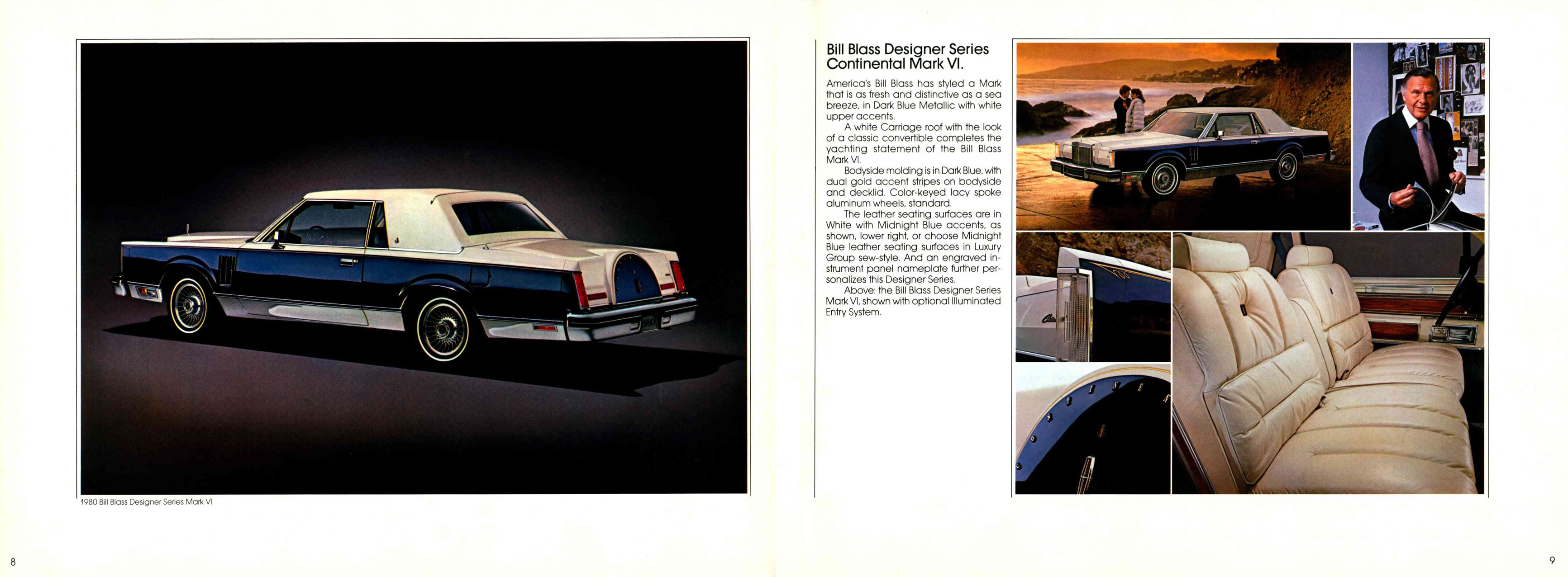
1980 Lincoln Continental Mark VI coupe

“A car befitting its illustrious heritage”

For 1980, Lincoln completely revised the Continental Mark series, downsizing it for the first time and adding a sedan. The coupe was over 14 inches shorter than the 1979 Mark V and about 750 pounds lighter. However, the Mark VI was still a big car by any standard—more than two feet longer than a 2025 Mercedes-Benz CLE coupe.

Standard power for 1980 was a Windsor 129 bhp 4.9 liter/302 ci V8 with throttle-body fuel injection paired with a four-speed automatic overdrive transmission. Buyers could specify a $160 upgrade, which was the Windsor (not Cleveland) 140 bhp 5.8 liter/351 ci V8 with a Motorcraft 7200 VV two-barrel carburetor. With the standard powertrain, 0-60 took about 14 seconds in the 3,892-pound car. Mileage was 17 city/24 highway by the day’s standards—with the 18-gallon gas tank, Mark VI owners could expect a range of 300 to 330 miles with a 10% fuel reserve.

Standard exterior and mechanical equipment on the $16,291 base Mark VI ($70,200 in today’s dollars or a little over what a 2025 Lincoln Aviator Reserve mid-size SUV costs) included hidden halogen headlamps, luxury wheel covers, and Michelin P205/75R15 white sidewall steel-belted radial tires (a size still readily available) on 15-inch wheels. Inside, cloth Twin Comfort lounge seats, power windows, an electronic instrument panel with message center, a four-spoke color-keyed steering wheel, automatic temperature control air conditioning, and an AM/FM stereo radio with power antenna were all standard.

Packages, Options, & Production Numbers

As had been true for many years, there were multiple Designer Series packages available for the Mark VI:

Bill Blass pages from the 1980 Lincoln Continental Mark VI brochure
  • The Bill Blass Designer Series package ($1,825) included Dark Blue Metallic paint with white upper accents, a white Carriage roof, dark blue bodyside moldings, dual gold accent stripes on bodyside and decklid, and color-keyed lacy spoke aluminum wheels. Inside, leather seating surfaces were a choice of white with blue accents or midnight blue in the Luxury Group sew-style.
  • The Cartier Designer Series package ($2,191) included Light Pewter Metallic/Medium Pewter Metallic two-tone paint, a Medium Pewter Landau roof, color-keyed turbine spoke aluminum wheels, light pewter bodyside moldings, single dark red accent stripes on the body and decklid, the Cartier signature in the opera windows, and the Cartier monogram on logo on the front fender louvers and the decklid. Inside, there was a choice of either cloth or leather seating surfaces in the Luxury Group sew-style.
  • The Givenchy Designer Series package ($1,739) included Light Fawn Metallic/Bittersweet Metallic two-tone paint, with tri-band pinstriping, a Light Fawn full vinyl roof, wire wheel covers, and the Givenchy monogram on the hood and the rear decklid. Inside, the Givenchy had bittersweet six-way power Twin Comfort seats in the Luxury Group sew-style.
  • The Pucci Designer Series package ($2,191) included Light Fawn Metallic/Medium Fawn Metallic two-tone paint, with tri-band pinstriping, a Light Fawn Landau roof, color-keyed lacy spoke aluminum wheels, and the Pucci logo on the front fender louvers and the decklid. Inside, leather seating surfaces had light champagne bolsters with medium champagne inserts in the Luxury Group sew-style.

—all four Designers Series packages included a personalized engraved nameplate on the instrument panel.

There was also the Signature Series ($5,485), which added just about every major option and brought the price to $21,776 (about $93,800 in 2025 dollars). Standard exterior and mechanical features on the Signature Series included a Valino grain vinyl Landau roof and color-keyed turbine spoke cast aluminum wheels. Inside, the Signature Series included Twin Comfort Lounge six-way power seats, the Keyless Entry System, an Automatic Garage Door Opener Control, Speed Control, a tilt steering wheel, the defroster group, illuminated visor vanity mirrors, and a six-speaker Premium Sound System. The Signature Series was available in Silver Metallic or Dark Maroon and could be ordered with Dark Red Signature Body Cloth or leather seating surfaces.

Individual options included touring lamps ($67), a power glass moonroof, wide white sidewall tires, Twin Comfort Lounge six-way power seats ($171), a tilt steering wheel ($83), and Speed Control ($149).

Like the Ford Thunderbird of the same year, the 1980 Continental Mark VI did not sell. Sales of the coupe dropped to 27% of the 1979 number—even if you added the newly available sedan, they were still down 49%; not a good look for a brand-new model. To make the news worse, the virtually unchanged Cadillac Eldorado (which had been downsized in 1979) more than doubled the Mark VI coupe’s sales. The agony would continue for several years, only changing with the release of the aerodynamic and significantly smaller Mark VII in 1984.

The View From 2025

According to Hagerty’s valuation tools, a 1980 Continental Mark VI coupe in #1/Concours condition is $23,000, with a far more typical #3/Good car going for $6,300. Values slide up with the various Designer Series packages and the Signature Series, but only by about 5% to 10%. This generation of Marks maintains some presence in the Hemmings Motor News classifieds, on eBay Motors, and on Bring a Trailer. As I update this blog entry in October 2025, there’s a French Vanilla Metallic 1982 coupe with a black vinyl roof, midnight blue leather seats, and 11,000 miles for sale on Hemmings, asking $11,000.

Make mine Dark Maroon, please.

Other Lincolns I have written about include the 1984 Continental Mark VII LSC coupe, the 1986 Mark VII coupe, the 1987 Continental sedan, and the 1989 Town Car sedan.

Last updated October 2025.

1984 Lincoln Continental Mark VII LSC coupe

This was one of my early posts in this blog. I’ve updated it to reflect both changes in my posting style and substantial improvements in available data.

“The ultimate American road car.”

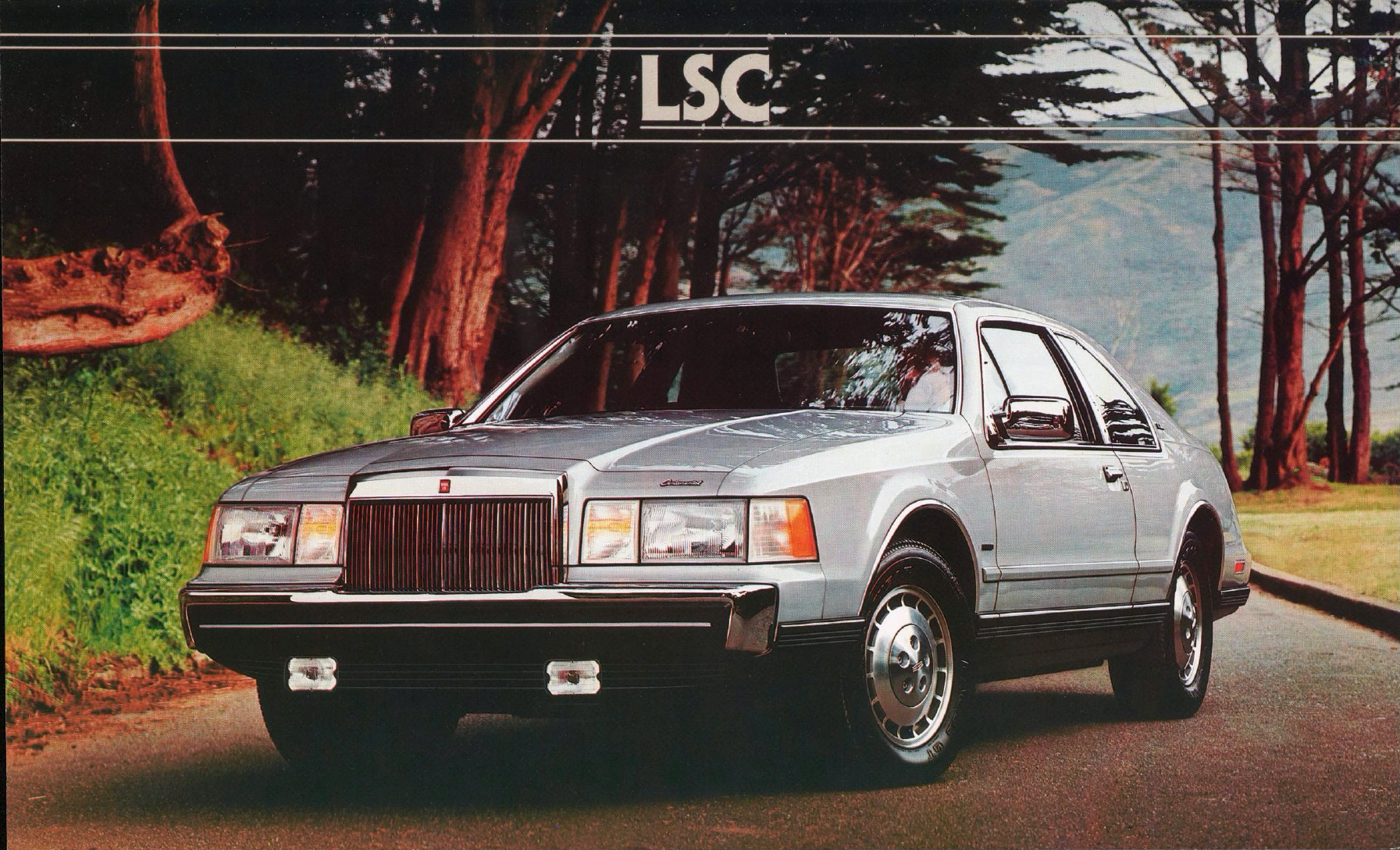
The Lincoln Continental Mark VII was all new for 1984. The standard powertrain for 1984 was a Windsor 140 bhp 4.9 liter/302 ci V8 with throttle-body fuel-injection connected to a four-speed automatic transmission. Despite the LSC’s 3,600 pound weight, 0-60 still came in under 9 seconds. Mileage by the standards of the day was 17 city/22 highway (14/20 by today’s standards). With a 22.3-gallon fuel tank, a Mark VII owner could expect a range of 340 to 390 miles with a 10% reserve.

Standard mechanical equipment on all Mark VIIs included four-wheel disk brakes, four-wheel air ride suspension, and the first composite headlights available in the United States. Inside, a Trip Minder computer, air conditioning, rear window defroster, interval wipers, tilt steering, cruise control, remote release fuel door, power windows, power door locks, power side view mirrors, power six-way driver’s seat, and an AM/FM stereo were all included.

Continental Mark VII LSC page from the 1984 Lincoln brochure

The new LSC trim level added about $2,000 to the base Mark VII’s non-trivial $21,707 price (making the LSC start at about $54,400 in 2014 dollars). LSC-specific components included a stiffer air suspension, dual exhaust, leather seats, fog lamps, and P215/65R15 Goodyear Eagle GT radial tires (a size still readily available) on forged aluminum 15 x 6-inch wheels. A Traction-Lok limited slip differential was optional for $95.

Ford wanted the LSC to compete with the big BMW (635 CSi) and Mercedes-Benz (500 SEC) coupes, but it seems more likely that most LSC buyers were cross-shopping cars like the Buick Riviera T-Type, the Cadillac Eldorado Touring Coupe, or (horrors!) the Ford Thunderbird Turbo Coupe.

I always liked the look of the LSC—I think the stylists combined “traditional” Mark traits such as the rear spare tire hump with Ford’s new aerodynamic direction very effectively. At the time, people complained about the somewhat limited interior room and the quite small trunk for such a large car. The period of the big coupe was beginning to fade, but the LSC was indeed an interesting approach.

According to Hagerty’s valuation tools, all the money for a 1984 Continental Mark VII LSC in #1/Concours condition is $9,100, with a more “normal” #3/Good condition LSC fetching $4,200. Lincoln Mark VIIs show up in the Hemmings Motor News classifieds reasonably regularly—as I write this in July 2014,  there’s a Sandstone 1988 LSC with 55,000 miles listed for $8,000.

Make mine Platinum Clearcoat Metallic, please.