
With the announcement of the 2015 Mustang and its available EcoBoost turbocharged inline-four, my mind turned back to the 1984 to 1986 Mustang SVO.
“Sophisticated performance for the knowledgeable driver.”
Created by Ford’s Special Vehicle Operations department, the 1984 Ford Mustang SVO was an admirable attempt to take a different and more advanced approach to the pony car market. Released in mid-April 1984, this version of the Fox-body Mustang was built around the Lima turbocharged and fuel-injected 2.3 liter/140 ci inline four, making 175 bhp paired with a Borg-Warner T5 five-speed manual. By the day’s standards, this combination yielded a reasonable 19 city/26 highway (it would be 17/24 by current standards). Car and Driver recorded a respectable 7.5 second 0-60 time and a 128 mph top speed.

Other modifications over the standard Mustang included ventilated four-wheel power disc brakes (replacing the Mustang GT‘s front disc/rear drum setup), and a Koni suspension system featuring adjustable struts and shocks. 16 × 7 inch aluminum wheels with 225/50VR16 Goodyear NCT tires (a size still readily available) were standard for the first year—Gatorbacks didn’t become available until 1985.
The exterior featured an SVO-specific front grille, tinted glass, a functional hood scoop, and a “dual wing” spoiler that was also unique to the SVO. Inside, standard features included SVO-specific adjustable performance seats with lumbar support, a leather-wrapped tilt steering wheel, and an AM/FM stereo radio with a four-channel amplifier and four speakers.
Options & Production Numbers
You could have the interior in any color you wanted as long as that was Charcoal, but you did get to choose from the standard cloth or optional leather seats. A flip-up open air roof ($315), air conditioning ($743), a cassette player ($222), power lock group ($177), and power windows ($198) all remained optional—this was 1984, after all.
With a base price of $15,585 (about $49,200 in 2026 dollars or a little more than what a loaded 2026 Mustang EcoBoost Premium Fastback goes for), sales did not come close to meeting Ford’s hopes—less than 10,000 buyers took home a Mustang SVO over its three years of production. The reasons for its relative failure were many, but I think the most significant problems were:
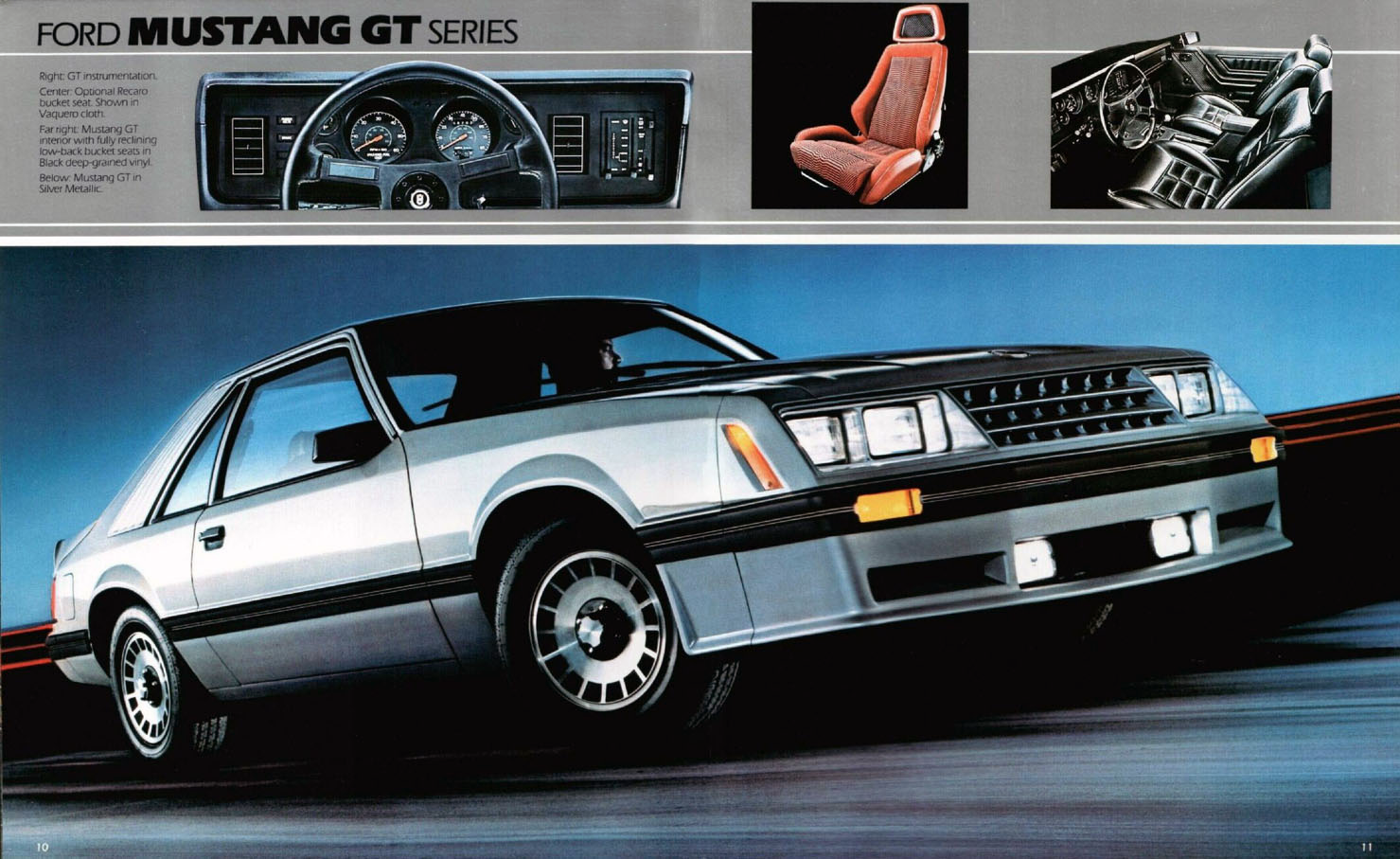
- The average Mustang buyer was happier with a Mustang GT, which, with a base price of $9,578, cost substantially less.
- The potential buyer of a vehicle with a turbocharged and intercooled four, four-wheel disc brakes, and an adjustable suspension wasn’t looking to Ford for this car.
The View From 2026
It is interesting to note that Ford was much more successful in the 1990s and 2000s in selling high-end Mustangs. They’ve also done decently with the 2.3 liter (there’s a coincidence!) 315 bhp EcoBoost turbocharged inline-four, which first became available in 2015.
According to Hagerty’s valuation tools, all the money for a 1984 Mustang SVO in #1/Concours condition is $50,100, while a more typical #3/Good car goes for $11,300. SVOs often show up in the Hemmings Motor News classifieds, on eBay Motors, and on Bring a Trailer—as I update this blog entry in February 2026, there’s an Oxford White 1986 Mustang SVO with Charcoal cloth front bucket seats and an indicated 21,000 miles for sale on Hemmings, asking $27,800.
Make my SVO Silver Metallic, please.
Other Mustangs I have written about include the 1980 Cobra hatchback coupe, the 1981 coupe, the 1982 GT hatchback coupe, the 1983 GT convertible, and the 1987 LX 2-door sedan.
Last updated February 2026.

 Eighties Cars