1982 Toyota Celica Supra hatchback coupe

This post was one of my first entries in this blog. I’ve updated it to reflect both changes in my posting style and substantial improvements in available data.

“The ultimate performance Toyota.”

Remember when Toyota produced a reasonable amount of cool sporty cars?

I do—I believe they nailed it with the Mark II Celica Supra. First, the styling: although based on the Celica, the longer hood (to accommodate the Supra’s inline six) along with the retractable headlights (you’ll have to believe me that they were very cool in the 1980s) substantially changed the car’s look. It wasn’t just the styling—Supras also included a notably higher level of interior equipment.

The engine was Toyota’s 145 bhp 5M-GE 2.8 liter/168 ci dual overhead cam fuel injected inline six, giving a 0-60 time of slightly under 9 seconds (spritely for 1982) and a top speed of approximately 125 mph. Over the next few years, engine power would climb to 161 bhp.

Mileage with the standard five-speed manual transmission was 21 city/34 highway by the day’s standards (19/31 by today’s measures). Choosing the optional four-speed automatic transmission—available only for the L-Type submodel—reduced highway mileage to 32. With a 16.1-gallon gas tank, Supra drivers could expect to travel approximately 355 miles before seeking more fuel.
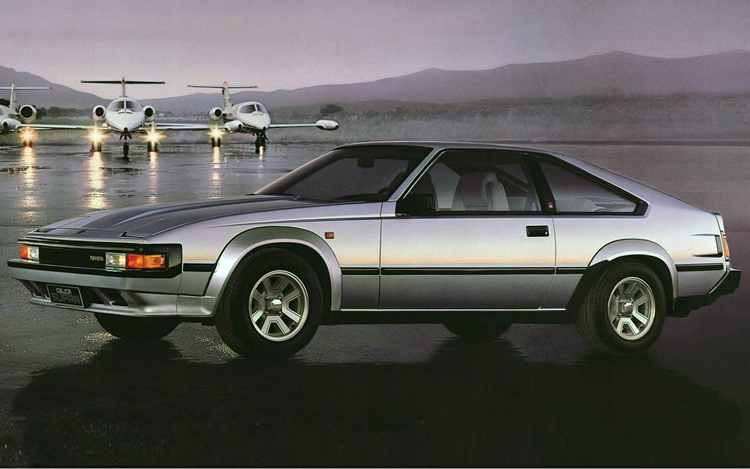
1982 Toyota Celica Supra, the 1982 Motor Trend Import Car Of The Year.
1982 Toyota Celica Supra,
photo courtesy of Motor Trend from their Import Car Of The Year photo shoot.

All Celica Supras included tungsten halogen headlights, a four-wheel independent suspension, rack-and-pinion steering with variable power assist, and ventilated and power-assisted 4-wheel disc brakes. Inside, automatic temperature control air conditioning, power windows, power door locks, cruise control, and a tilt steering wheel were included.

Two models were available: the L– (for “Luxury”) Type and the P– (for “Performance”) Type. The $13,598 L-Type (about $46,800 in 2025 dollars) included standard power mirrors and P195/70R-14 steel-belted radial tires (a size still readily available) on 14 x 5.5-inch aluminum alloy wheels. Inside, striped velour cloth bucket seats were standard.

The $14,598 P-Type (about $50,200 in today’s dollars) included fender flares, a limited-slip differential, Sport Seats with driver’s side 8-way adjustment and pneumatic lumbar support adjustment, and P225/60HR-14 steel-belted radial tires (a size currently available only from BFGoodrich) on 14 x 7 inch aluminum alloy wheels.

Options, Publicity, Period Reception, & Sales Numbers

Options include two-tone exterior paint ($120), black high gloss paint ($70), and an electric sunroof ($440). Options only available for the L-Type included a four-speed automatic transmission, a digital display instrument panel and trip computer ($450), and leather seat trim. Options only for P-Type buyers included a spoiler-type sunshade ($120).

At right is a classic commercial, with legendary (and very tall) race car driver Dan Gurney shilling for the then brand-new Mark II Celica Supra. The second-generation Supra was well-received—Car and Driver included it in their first 10Best list in 1983. Toyota sold 34,048 Celica Supras in 1982.

The View From 2025

According to Hagerty’s valuation tools, a 1982 Toyota Celica Supra in #1/Concours condition is $40,300. The value for a more “normal” #3/Good condition example is $12,400. This generation of Supras maintains a presence in the Hemming’s Motor News classifieds, on eBay Motors, and on Bring a Trailer. When I last updated the contents of this post in July 2025, a Red Metallic 1985 Supra with Gray cloth seats and 114,000 miles was for sale in Hemmings, asking $29,000.

Make mine Silver Gray Metallic, please.

Other Toyotas I’ve written about include the 1980 Corolla Tercel Liftback, the 1981 Celica Sport Coupe, the 1983 Camry sedan, the 1984 Corolla SR5 Sport Coupe, the 1985 MR2 coupe, and the 1988 Supra hatchback coupe.

Last updated July 2025.

1982 Jaguar XJ-S H.E. coupe

“Never has a more exciting car been offered with so much, to so few.”

Significantly changed for 1982 (there was no 1981 XJ-S), the Jaguar XJ-S received a substantially updated H.E. 5.3 liter/326 ci fuel-injected V12 engine with higher compression, upping horsepower to 263 bhp and increasing efficiency. The other end of the powertrain remained a three-speed automatic transmission sourced from General Motors.

Performance was quite respectable for the almost 4,000-pound coupe: 0-60 in about 8.0 seconds. Despite the efficiency upgrades, mileage remained what you might expect from a V12—14 city/22 highway by the day’s standards (13/20 by today’s measures). A 24-gallon gas tank meant that an XJ-S owner could expect a range of between 355 and 385 miles with a 10% fuel reserve.

XJS
Jaguar XJ-S coupe

With its flying buttresses in the rear, the basic XJ-S exterior design from 1976 was nothing if not distinctive. Standard equipment included power-assisted rack and pinion steering and four-wheel power disk brakes. 15-inch five spoke cast aluminum-alloy wheels were paired with Pirelli 215/70VR15 tires (a size still readily available).

Inside, the buyer received air conditioning with automatic temperature control, leather seats, power windows, power mirrors, intermittent windshield wipers, cruise control, and an AM/FM stereo cassette with Dolby and metal tape capability. Burl elm on the dashboard and door panels was a new addition to the still somewhat cramped interior for 1982.

There were no options—probably a good idea in a car that used a six-year-old design and cost $32,100 (about $109,700 in today’s dollars). The approximately 3,100 buyers for the 1982 model year picked their exterior color, and that was it.

The View From 2025

The Jaguar XJ-S has good club support, and there are some restoration parts available. There’s also a free 738-page (!) ebook written by an XJ-S H.E. owner named Kirby Palm which features much hard-earned advice. Keeping an XJ-S at 100% is non-trivial—as it is with so many high-end eighties cars. Current discussions in the XJ-S portion of the Jag-lovers forums are replete with transmission issues, brake system replacements, gas tank challenges, and ECU problems.

Like all Jaguars, the XJ-S H.E. has a following and frequently appears in the Hemming’s Motor News classifieds, on eBay Motors, and on Bring a Trailer. According to Hagerty’s valuation tools, all the money for a 1982 XJ-S H.E. in #1/Concours condition is $54,800, with a far more typical #3/Good car going for $13,900.

Make mine Racing Green Metallic, please.

Two other eighties Jaguars I have written about are the 1983 XJ6 sedan and the 1989 XJ-S convertible.

Last updated March 2025.

1982 Pontiac Firebird Trans Am hatchback coupe

“From saber-like nose to rakish tail, the Trans Am is a brilliant orchestration of aerodynamic function.”

It is hard now to remember how new and wildly aerodynamic the 1982 Pontiac Firebird Trans Am looked when it debuted—Car and Driver wrote that its “exterior sculpturing is an absolute knockout.” The Trans Am suddenly made every other American car (and more than a few European ones) look like they were standing still.

The Trans Am didn’t just look aerodynamic, either: the drag coefficient of .323 is still respectable even in 2025. Pontiac’s choice of pop-up headlights (over the Camaro’s open headlights) and careful airflow tuning yielded an impressive result. According to Autopolis’ excellent article on the 1980-1981 Turbo Trans Am, the third-generation Trans Am’s distinctive hood bulge was intended for a turbocharged V8.

Unfortunately, the mechanicals did not come close to backing up the looks. The top-of-the-line engine for the Trans Am was the LU5 Cross-Fire 165 bhp 5.0 liter/305 ci V8 with throttle-body fuel injection—and that was only available with a three-speed automatic transmission, yielding about a nine-second zero to sixty time (Motor Trend managed to do it in 8.89 seconds). If you wanted the four-speed manual transmission, the best engine choice available on the Trans Am was the base LG4 145 bhp 5.0 liter/305 ci V8 with a four-barrel carburetor—and approximately ten seconds from 0 to 60 mph.

These performance challenges, however, did not prevent Pontiac from implying the world in its commercials for the Trans Am—and having Richard Basehart do the narration.

Standard exterior and mechanical equipment on the $9,658 Trans Am (about $33,500 in today’s dollars) included power brakes (front disc/rear drum), hidden electronically-controlled halogen headlamps, dual sport mirrors, an all-glass rear hatch, a rear decklid spoiler, and 205/70R14 steel-belted radial tires (still a readily available size) on 14-inch turbo cast-aluminum wheels. Inside, reclining front bucket seats, a folding rear seat, a Formula steering wheel, and side window defoggers were included.

Options & Production Numbers

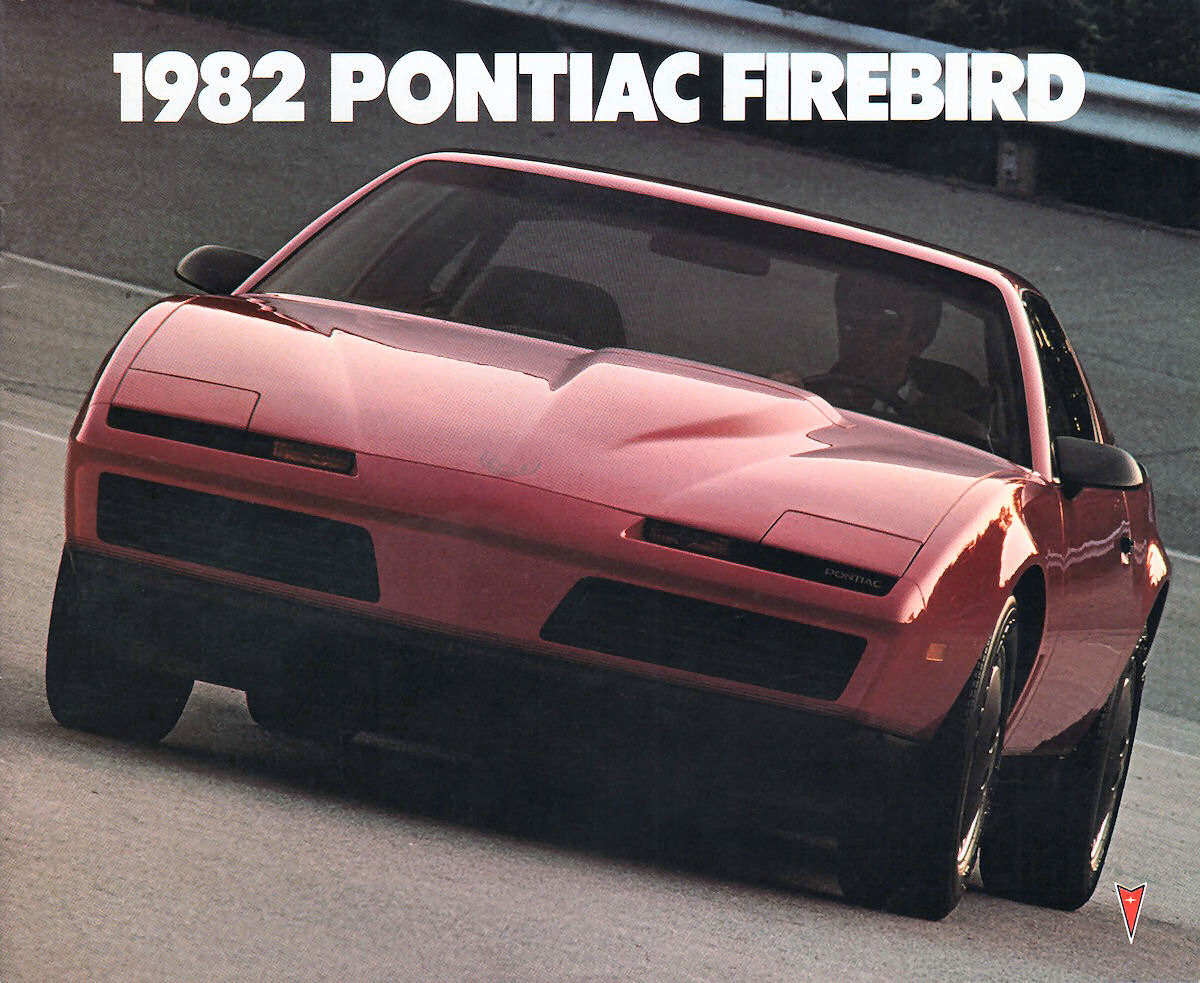
Cover of the 1982 Pontiac Firebird brochure

Options included a special performance package ($387 bought you the special handling package, four-wheel disc brakes, and 215/65R15 blackwall tires on 15 x 7 aluminum wheels), tinted glass, a rear hatch washer/wiper, power windows ($165), power door locks ($106), a tilt steering wheel ($95), and air conditioning ($675).

Pontiac sold 52,962 Trans Ams in the 1982 model year, with 2,000 of those having the Recaro package.

The View From 2025

Third-generation Firebirds have a strong following, and 1982 Trans Ams appear regularly in the Hemming’s Motor News classifieds, on eBay Motors, and on Bring a Trailer. According to Hagerty’s valuation tools, a 1982 Trans Am with the Cross-Fire engine, the Recaro package, and T-tops in #1/Concours condition is $34,600, with a more normal #3/Good base Trans Am going for $9,800.

Please make mine Black, but I think I’d hold out for the 1983 version and its five-speed manual transmission/190 bhp L69 HO engine combination.

I evidently can’t help myself with eighties Trans Ams; I’ve written about the 1981, the 1984, the 1985, and the 1989 Turbo. I have also written about the 1986 SE and the 1987 Formula, but I probably should write about the base car at some point.

Last updated November 2025.